We may earn revenue from the products available on this page and participate in affiliate programs. Learn More ›
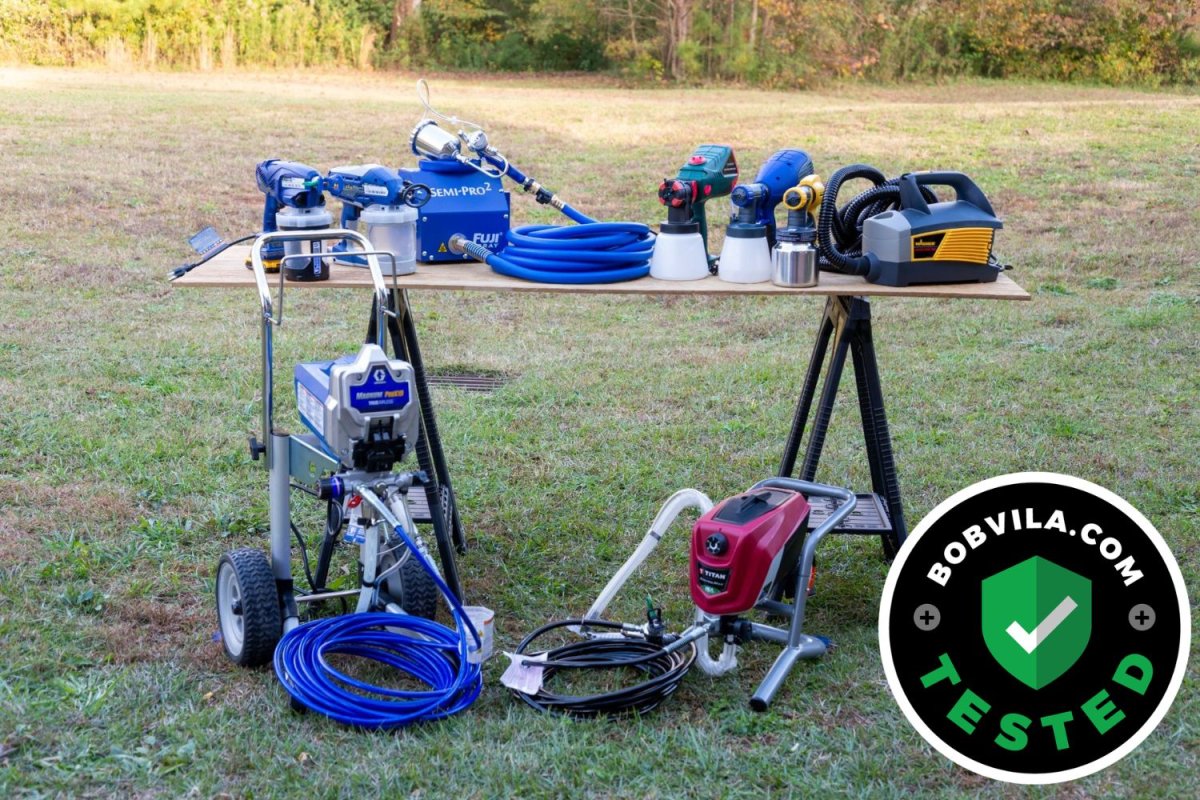
Paint sprayers make quick work of paint jobs large and small, helping DIYers and pros alike achieve smooth, even finishes with less effort than traditional brushes or rollers. To help you find the right painting tool for projects like cabinets, walls, fencing, or furniture, we tested eight of the most capable, popular, and affordable models on the market, evaluating ease of use, coverage, and finish quality in real-world scenarios. We also interviewed a professional painter with over 20 years of experience to round out our findings.
After hands-on testing and research, we selected the Wagner Control Spray Max Sprayer as the best overall pick for most users. It’s relatively quiet, offers adjustable power settings, and delivers consistent, high-quality results across multiple surfaces during testing. While it remains our top choice, several other sprayers stood out for specific uses, including fine-finish cabinet work and larger exterior projects.
Below, we break down our top picks, highlighting where each model excels along with key features to consider before buying. Whether you’re tackling detailed trim or broad exterior surfaces, this guide will help you choose the best paint sprayer.
Key Takeaways
- Top Pick: Wagner Control Spray Max. Offers adjustable settings and consistent results across surfaces.
- Best Value: HomeRight Quick Finish HVLP. Ideal for small projects with easy setup and cleanup.
- Specialty Use: Wagner FLEXiO 5000 for Cabinets. Provides precision and ease for detailed work.
- Professional Choice: Fuji Semi-Pro 2. Durable metal design with excellent coverage for pros.
Bottom line: We tested top paint sprayers for various projects, highlighting the best models for different needs and budgets.
- BEST OVERALL: Wagner Control Spray Max Sprayer
↓ Jump to Review - BEST BANG FOR THE BUCK: HomeRight Quick Finish HVLP Paint Sprayer
↓ Jump to Review - BEST FOR CABINETS: Wagner FLEXiO 5000 Stationary Paint Sprayer
↓ Jump to Review - BEST FOR PROS: Fuji Semi-Pro 2 Gravity Paint Sprayer System
↓ Jump to Review - BEST HEAVY-DUTY: Graco Magnum ProX19 Electric Paint Sprayer Cart
↓ Jump to Review - BEST PORTABLE: Graco Ultra Cordless Handheld Airless Paint Sprayer
↓ Jump to Review - ALSO CONSIDER: Titan Tool ControlMax 1700 Paint Sprayer
↓ Jump to Review
Best Paint Sprayers at a Glance
| Product | Type | Fluid Volume | Range | Our Rating |
| Wagner Control Max Sprayer | HVLP | 1 to 1.5 quarts | 20-foot air hose, 6-foot power cord | 4.7/5 |
| HomeRight Quick Finish Paint Sprayer | HVLP | 0.84 quarts | 5-foot power cord | 4.5/5 |
| Wagner FLEXiO 5000 Stationary Paint Sprayer | HVLP | 40 fl oz | 11.5 feet air hose | 4.7/5 |
| Fuji Semi-Pro 2 Gravity Paint Sprayer System | HVLP | 1 quart | 25-foot air hose, 6-foot power cord | 4.5/5 |
| Graco Magnum ProX19 Cart Airless Paint Sprayer | Airless | Direct suction from paint pail, up to 5 gallons | 50-foot airless hose, 6-foot power cord | 4.8/5 |
| Graco Ultra Cordless Airless Handheld Paint Sprayer | Airless | 1 quart | Unlimited, cordless | 4.6/5 |
| Titan Control Max 1700 Paint Sprayer | Airless | Direct suction from paint pail, up to 5 gallons | 30-foot airless hose (can be extended to 80 feet), 2-foot power cord | 4.7/5 |
Our Top Picks
The best paint sprayers for cabinets, walls, and other surfaces not only significantly reduce project time but also consistently provide high-quality results. Read on to learn how each spray paint machine we recommend performed in our hands-on tests.
Best Overall
Photo: Paul Rankin for BobVila.com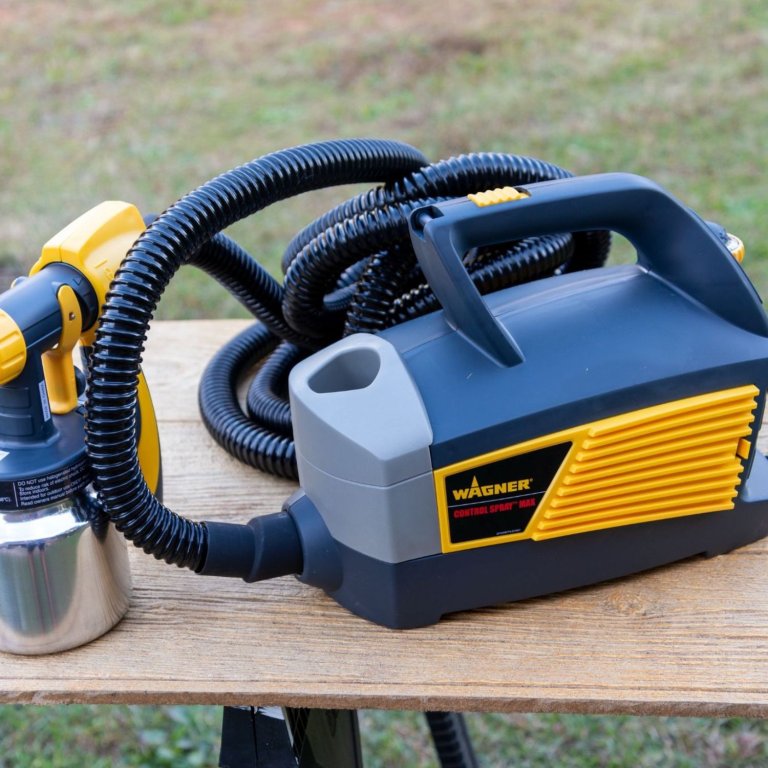
What We Like
- Variable power settings and 2-stage turbine for customizing flow
- Suitable for latex paint, stains, and poly
- Great for medium-sized areas like furniture or decks
- Comes with 1-quart aluminum and 1.5-quart nylon paint cups
- Easy to assemble, disassemble, and clean up after use
What We Don’t Like
- Plastic components may not hold up long-term
- Viscous paint must be thinned
Product Specs
- Type: HVLP
- Fluid volume: 1 to 1.5 quarts
- Range: 20-foot air hose, 6-foot power cord
Our Ratings
| Ease of Use | 5/5 | Coverage | 5/5 | Cleanliness | 4/5 | Noise | 5/5 | Value | 4.7/5 |
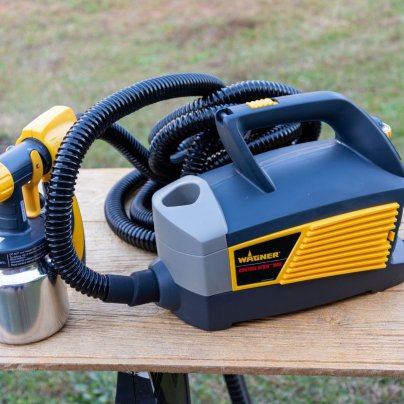
Boasting a 20-foot-long flexible hose, this 11.2-pound, 110-volt, air-powered paint spray gun unleashes a high volume of paint or stain at low pressure. The sprayer’s 1.5-quart capacity hopper and two-stage turbine accommodate virtually any finish, be it as viscous as latex paint or as thin as wood stain. With a simple twist of the air cap, you can spray in a vertical, horizontal, or round pattern. At the same time, the sprayer’s variable air pressure control, ranging from 1.50 to 2.63 psi (pounds per square inch), reduces the risk of overspray.
This Wagner sprayer uses HVLP (high volume-low pressure) technology to deliver a professional finish by atomizing materials into fine particles. Its adjustable flow control lets you match paint output to your project’s size and complexity, making it suitable for larger areas like decks and detailed work such as trim or cabinetry. Overall, we think this sprayer offers excellent performance for the price, plus relatively quick and easy cleanup, making it our top pick for home use.
What our tester says: “We got great coverage and finish results using this sprayer on a medium air setting with water-based interior latex paint thinned by about 25 percent. Applying oil-based stain with this sprayer was even easier since no thinning was necessary.”—Mark Wolfe, Product Reviews tester and writer
Get the Wagner paint sprayer at Amazon or Walmart.
Best Bang for the Buck
HomeRight Quick Finish HVLP Paint Sprayer
Buy at AmazonWhat We Like
- Adjustable air cap for multiple spray patterns
- Compatible with thinned chalk, milk, and latex paint, stain, sealer, lacquer, and varnish
- Great for cabinetry, furniture, crafting, and small fences
- Lightweight and easy to maneuver
- Smooth and consistent finish
What We Don’t Like
- Speed isn’t adjustable
- Small fluid volume reservoir
- Paint and stain must be thinned
Product Specs
- Type: HVLP
- Fluid volume: 0.84 quarts
- Range: 5-foot power cord
Our Ratings
| Ease of Use | 4.7/5 | Coverage | 4/5 | Cleanliness | 4.5/5 | Noise | 4/5 | Value | 4.7/5 |
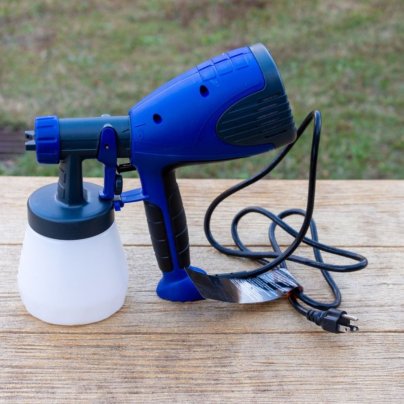
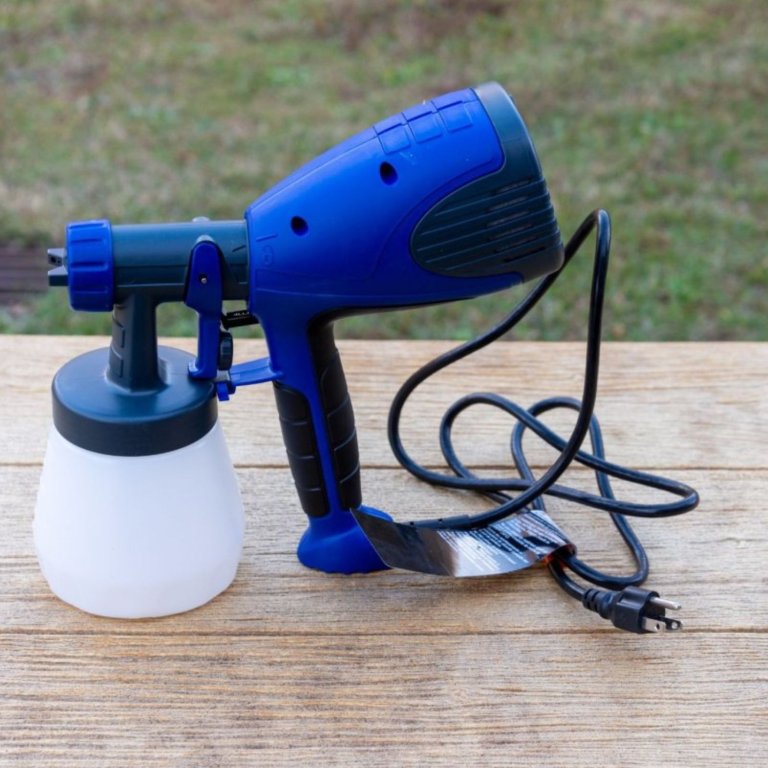
This 3.6-pound air-driven electric paint spray gun is great for small- and medium-sized projects like painting kitchen cabinets, wood doors, or furniture. The adjustable air cap unleashes a high volume of air at low pressure to allow more paint to reach surfaces, while the adjustable nozzle allows you to spray on a smooth finish using a vertical, horizontal, or round spray pattern. Once you’ve achieved a look you love, cleanup is easy—simply fill the hopper with water and spray until the water runs clear.
HomeRight’s handheld paint sprayer is priced right for quick projects. It’s even small enough to stow away in a drawer or hang on a pegboard. In our tests, it laid down good coverage and a smooth finish with both thinned water-based paint and oil-based stain. It does not work with viscous paint that has not been thinned. Setup and cleanup were relatively fast and easy, except for one small O-ring in the sprayer gun that must be carefully removed, cleaned, and replaced.
Get the HomeRight paint sprayer at Amazon.
Best for Cabinets
Photo: Paul Rankin for BobVila.com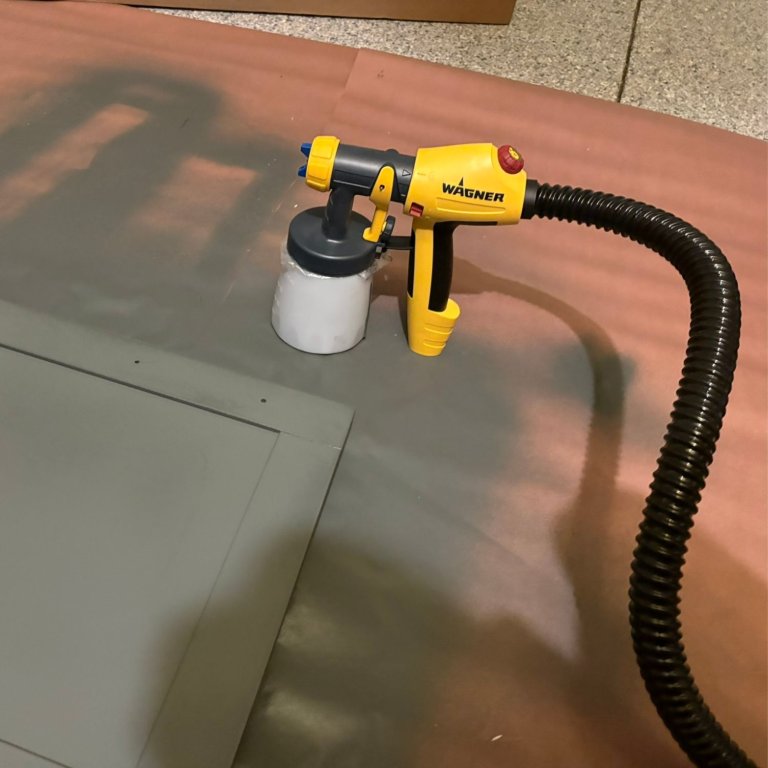
What We Like
- Excellent control for detailed cabinet work
- Lightweight gun reduces fatigue
- Adjustable settings are easy to fine-tune
- Smooth, even finish with minimal overspray
What We Don’t Like
- Separate base takes up more space
- Hose can feel slightly cumbersome
Product Specs
- Type: HVLP
- Fluid volume: 40 fl oz
- Range: 11.5 feet air hose
Our Ratings
| Ease of Use | 5/5 | Coverage | 4.5/5 | Cleanliness | 4.5/5 | Noise | 4/5 | Value | 5/5 |
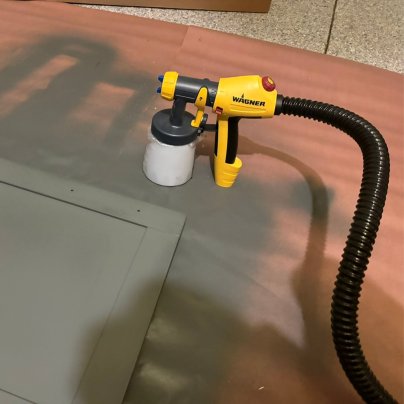
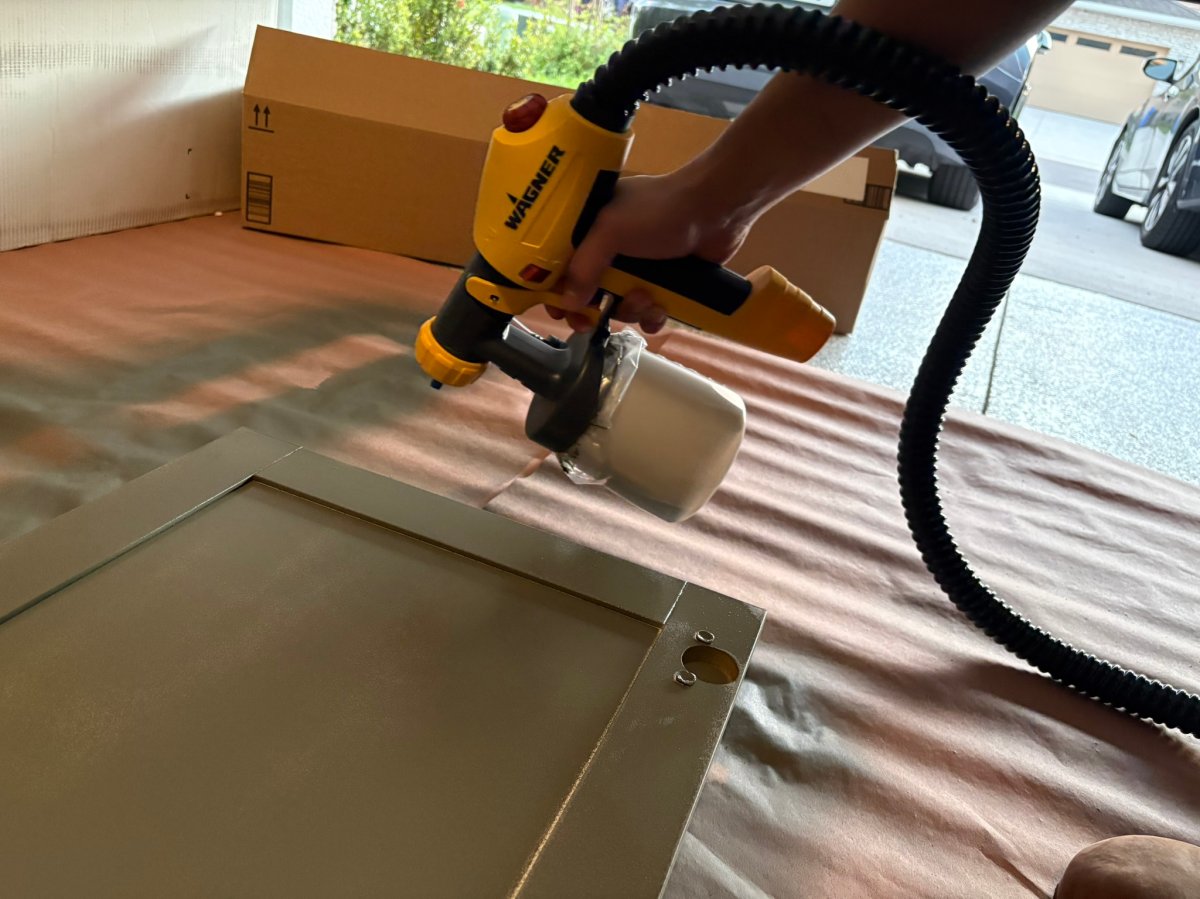
The Wagner FLEXiO 5000 earns our top paint sprayer for cabinets thanks to its strong balance of control, coverage, and ease of use. Cabinet projects demand precision, and this HVLP sprayer delivers with adjustable pattern, flow, and power settings that can be fine-tuned mid-project. It also features a 1.5-quart paint cup, which helped reduce interruptions for refills during testing.
One standout design feature is the separate turbine base connected by a hose. This keeps the spray gun lightweight and easy to maneuver, which is especially helpful when working on cabinet doors and tight angles. The base doubles as storage, neatly housing the components when not in use. Setup was straightforward. We simply connected the hose, filled the cup, and adjusted the settings. During testing, we used it to repaint white bathroom cabinets a near-black green, and the sprayer produced a smooth, even finish without runs or noticeable texture.
Cleanup was also refreshingly simple, requiring only a quick rinse of the parts that come into contact with paint. While it’s not the most compact option due to the separate base, the improved control and finish quality make it a worthwhile trade-off for detailed work like cabinets and furniture.
Get the Wagner FLEXiO 5000 paint sprayer at Amazon or Walmart.
Best for Pros
Photo: Paul Rankin for BobVila.com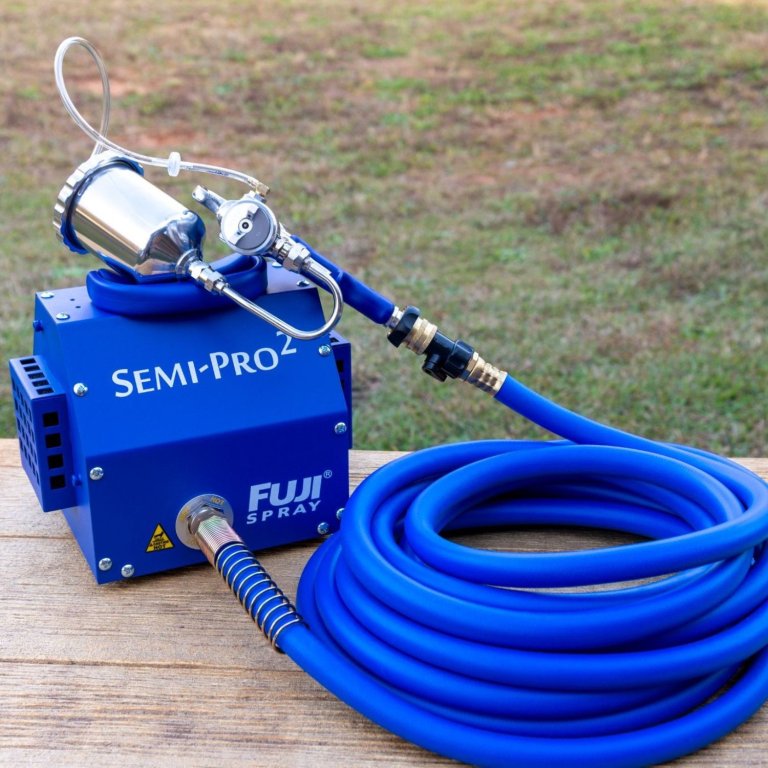
What We Like
- 1,400-watt 2-stage bypass motor
- Quick-connect coupling and air control valve
- Rear-situated fan for fully adjustable spray pattern control
- Suitable for small and large projects
What We Don’t Like
- Gravity feed cup is small and may require frequent refilling
- Hose and gun are on the heavy side
- Thinned paint may not provide adequate coverage
Product Specs
- Type: HVLP
- Fluid volume: 1 quart
- Range: 25-foot air hose, 6-foot power cord
Our Ratings
| Ease of Use | 4.7/5 | Coverage | 5/5 | Cleanliness | 4.5/5 | Noise | 5/5 | Value | 4/5 |
This spray system is powered by a 1,400-watt electric turbine motor housed in a heavy-duty metal case. It includes a 25-foot high-flex hose for an extended range on larger projects, plus a spray gun with a 1-quart gravity feed cup and a 1.3-millimeter air cap set preinstalled for spraying medium to thin materials. The fan spray pattern adjusts between horizontal, vertical, and circular, which is easy to widen or narrow for broader coverage or greater detail.
As with other HVLP spray guns, the Fuji Semi-Pro 2 works best with oil- or water-based paints and stains thinned to the proper consistency. In our tests, it delivered excellent coverage and finish results with latex paint thinned by 25 percent as well as with oil-based stain. Its metal provides more durability than the plastic used by other models, and additional air cap sizes are available for various material types. The entire spray gun and gravity cup can be disassembled for cleaning and maintenance, and replacement parts are available if needed.
Get the Fuji paint sprayer at Amazon or The Home Depot.
Best Heavy-Duty
Photo: Paul Rankin for BobVila.com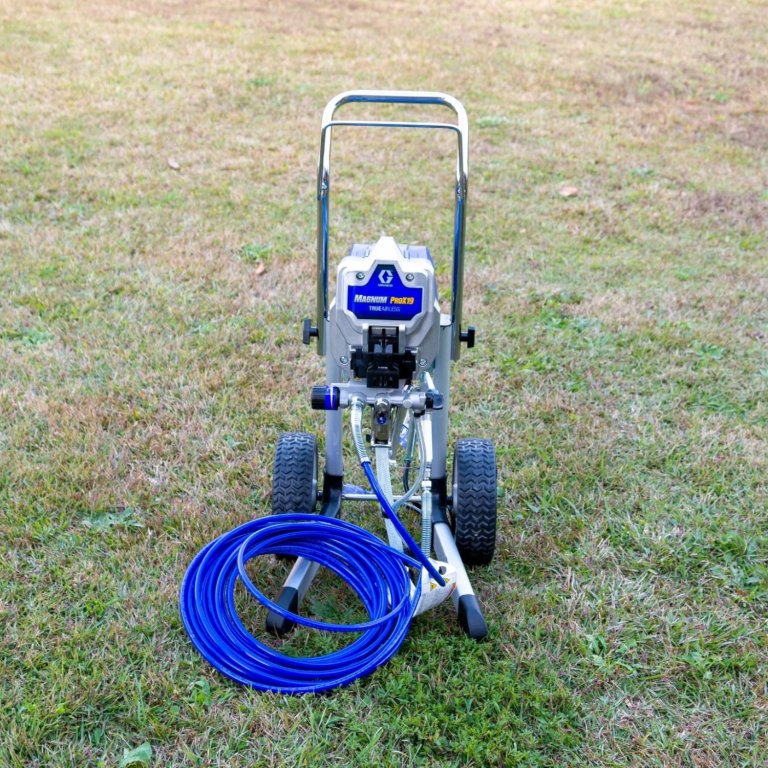
What We Like
- Changeable spray gun tips prevent clogs and overspray
- Great for houses, rooms, fences, and decks
- No need to thin paint
- Swivel connectors make moving easier
- Hose and sprayer store on included cart
What We Don’t Like
- Somewhat complicated cleanup and storage
- Not a good choice for smaller projects
Product Specs
- Type: Airless
- Fluid volume: Direct suction from paint pail, up to 5 gallons
- Range: 50-foot airless hose, 6-foot power cord
Our Ratings
| Ease of Use | 4.7/5 | Coverage | 5/5 | Cleanliness | 4.8/5 | Noise | 5/5 | Value | 4.7/5 |
This professional-grade 27.3-pound spray unit features adjustable pressure, a stainless steel piston pump, and a flexible suction tube that lets you spray paint at your preferred rate of flow directly from a 1- or 5-gallon paint can. The built-in wheeled cart helps you haul cans of paint, and the 50-foot flexible hose allows you to spray hard-to-reach surfaces, such as the side of a multistory house. The Graco is rated for use for up to 500 gallons of paint annually.
The Graco Magnum ProX19 is the perfect choice for large projects like decks or a whole-house exterior, and is an ideal fence paint sprayer. In our tests, it offered ample power to spray unthinned, water-based latex paint with outstanding coverage, good accuracy, and a nice, even finish. The 50-foot airless hose was surprisingly agile, thanks to swivel connectors at both the spray gun and pump connection points. Cleanup was more time-consuming and complicated than with smaller handheld paint sprayers, but not difficult.
Get the Graco ProX19 paint sprayer at Amazon, Lowe’s, Ace Hardware, The Home Depot, Walmart, or Blain’s Farm & Fleet.
Best Portable
Graco Ultra Cordless Handheld Airless Paint Sprayer
Buy at Amazon Buy at Ace Hardware Buy at WalmartWhat We Like
- Rechargeable battery sprays up to 1 gallon per charge
- Sprays at any angle, including upside down
- Spray tips are interchangeable with other Graco airless spray guns
- No paint thinning necessary
What We Don’t Like
- Runtime likely too short for large jobs
- Needs repriming if air enters FlexLiner
- More time-consuming to prep than others
Product Specs
- Type: Airless
- Fluid volume: 1 quart
- Range: Unlimited, cordless
Our Ratings
| Ease of Use | 4.7/5 | Coverage | 5/5 | Cleanliness | 5/5 | Noise | 4/5 | Value | 4.3/5 |
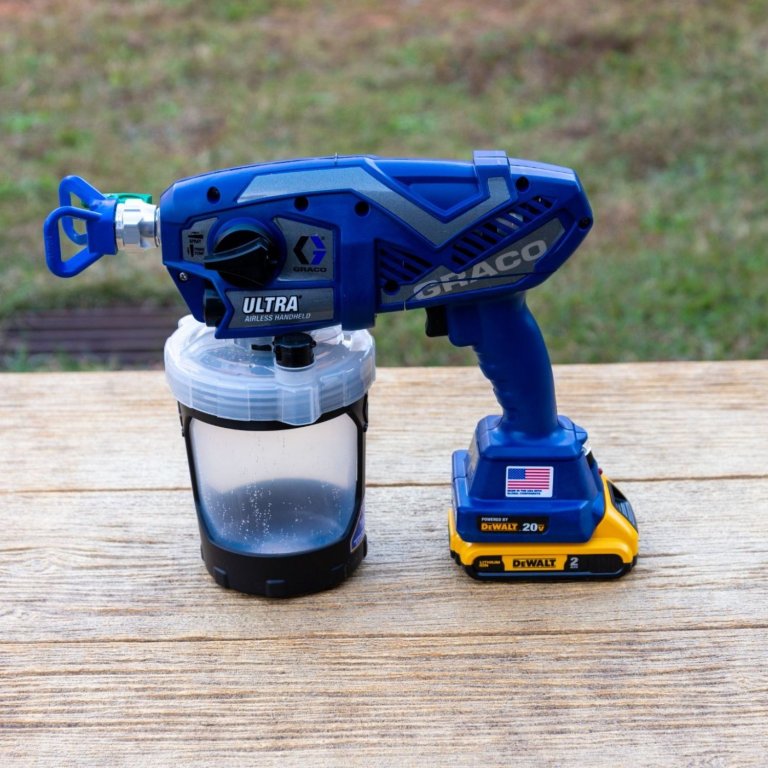
This portable paint sprayer offers the spraying power of an airless with the mobility of a handheld cordless. The kit includes the small paint sprayer and FlexLiner cupholder with two spray tips, four FlexLiner paint cups, two rechargeable 20-volt DeWalt batteries, a battery charger, and a soft-sided carrying case. The spray gun produces operating pressure between 500 and 2,000 psi and can spray virtually any viscosity paint or stain without thinning.
The Graco Ultra cordless performed as well in our testing as the traditional stand-up and cart-type airless sprayers. An ideal paint sprayer for latex paint, it had no trouble producing an even finish of unthinned water-based latex paint without runs, clogs, or leaks. Oil-based stain worked equally well. We applied quarts of both products on the same battery without losing charge or any noticeable reduction of power. This is an excellent battery-powered paint sprayer for smaller projects, but the somewhat complicated and time-consuming reloading process makes it less convenient for larger jobs.
Get the Graco cordless paint sprayer at Amazon, Ace Hardware, or Walmart.
Also Consider
Photo: Paul Rankin for BobVila.com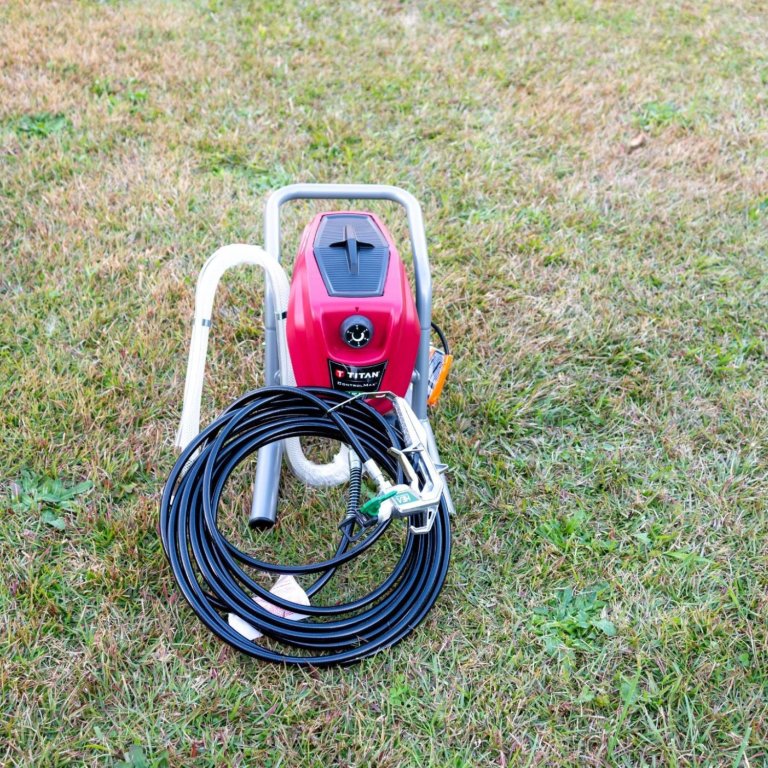
What We Like
- Efficient airless technology decreases possible overspray by 55 percent
- Frame increases portability
- Simple assembly with minimal intricate parts
- Airflow control knob with levels 1 through 5
- Good results for a great price
What We Don’t Like
- Lack of swivel connectors makes mobility difficult
- Short power cord; extension cord necessary
- Almost too low to the ground for 5-gallon paint buckets
Product Specs
- Type: Airless
- Fluid volume: Direct suction from paint pail, up to 5 gallons
- Range: 30-foot airless hose (can be extended to 80 feet), 2-foot power cord
Our Ratings
| Ease of Use | 4.7/5 | Coverage | 5/5 | Cleanliness | 4.5/5 | Noise | 5/5 | Value | 4.7/5 |
This high-efficiency airless spray paint gun features a softer spray pressure (1,500 psi max) and improved tip design that reduces overspray by up to 55 percent while keeping pace with conventional airless paint sprayers. Powered by a 0.6-horsepower motor, it sprays unthinned paint directly from a 1- or 5-gallon pail at rates up to 0.33 gallons per minute and over 300 gallons per year. It boasts a durable metal spray gun and a 30-foot airless hose that can be upgraded to 80 feet for maximum reach.
Although priced about $250 lower than some comparable paint sprayers, the Titan ControlMax performed similarly. It easily laid down a smooth, even coat of latex paint without runs, leaks, or clogs. Although we would have appreciated a few upgrades to the design, such as including swivel hardware on the airless hose at the gun and pump attachments, it’s hard to beat this one for the combination of price and results.
Get the Titan paint sprayer at Amazon, Lowe’s, Ace Hardware, The Home Depot, or Walmart.
Jump to Our Top Picks
How We Tested the Best Paint Sprayers
| Testing Stats | |
| Products tested | 9 |
| Time spent testing | 40 hours |
| Tests performed | 6 |
| Price range | $50 to $775 |
We evaluated nine paint sprayers from top brands, focusing on a mix of HVLP and airless models at various price points to reflect the needs of most DIYers. In addition to cost, we considered design, capacity, adjustability, ease of setup, and cleanup, as well as how well each sprayer handled different coatings. Because most homeowners won’t own multiple sprayers, our goal was to assess versatility across both thick exterior paints and thinner stains. Each model was scored on setup time, ease of use, control, coverage, finish quality, overspray, and cleanup, with performance weighted most heavily.
For testing, we used an old wooden privacy fence with a rough, uneven surface, including visible grain, dried pine knots, and knot holes to challenge coverage. Following the manufacturer’s instructions, we applied water-based paint first, then cleaned each unit and applied an oil-based stain to the new sections. We also completed a cabinet-specific test with one sprayer, refinishing bathroom cabinet doors to evaluate fine-finish performance. HVLP sprayers required multiple coats for full coverage but offered better control and less overspray, while airless models provided faster, single-coat coverage with more overspray. Each sprayer’s final score reflected its ability to balance speed, precision, and overall finish quality.
Our Testing Scores
| Product | Ease of Use | Coverage | Cleanliness | Noise | Value |
| Wagner Control Max Sprayer | 5/5 | 5/5 | 4/5 | 5/5 | 4.7/5 |
| HomeRight Quick Finish Paint Sprayer | 4.7/5 | 4/5 | 4.5/5 | 4/5 | 4.7/5 |
| Wagner FLEXiO 5000 Stationary Paint Sprayer | 5/5 | 4.5/5 | 4.5/5 | 4/5 | 5/5 |
| Fuji Semi-Pro 2 Gravity Paint Sprayer System | 4.7/5 | 5/5 | 4.5/5 | 5/5 | 4/5 |
| Graco Magnum ProX19 Cart Airless Paint Sprayer | 4.7/5 | 5/5 | 4.8/5 | 5/5 | 4.7/5 |
| Graco Ultra Cordless Airless Handheld Paint Sprayer | 4.7/5 | 5/5 | 5/5 | 4/5 | 4.3/5 |
| Titan Control Max 1700 Paint Sprayer | 4.7/5 | 5/5 | 4.5/5 | 5/5 | 4.7/5 |
What to Consider When Choosing a Paint Sprayer
The right paint sprayer can turn a weekend-long slog into a surprisingly satisfying afternoon, but only if you pick the one that actually fits your project. The wrong choice means fighting with overspray, clogs, or a finish that looks worse than if you’d just grabbed a roller.
As we found during testing, factors like coating type, sprayer design, and adjustability all play a major role in performance, so it’s worth understanding the basics before making a purchase.
Project Type and Paint Compatibility
Start by thinking about what you plan to spray most often. Large exterior surfaces like fences, siding, and decks benefit from high-output sprayers that can handle thick, unthinned paints quickly. Smaller or more detailed projects, such as cabinets, furniture, or trim, require better control and a finer finish.
Paint type matters just as much as project size. Latex paints are thicker and often need more power (or thinning for some sprayers), while stains and sealers are thinner and easier to atomize. During testing, we found that not all sprayers handled both equally well, so choosing a model that matches your most common coating will lead to better results and fewer mid-project headaches.
Types of Paint Sprayers (Speed vs. Finish)
The two most common types are HVLP (high-volume, low-pressure) and airless sprayers.
Think of it this way: HVLP is the scalpel, airless is the sledgehammer, and both have their place.
HVLP models prioritize precision and a smooth finish, making them ideal for cabinets, doors, and furniture. They produce less overspray but typically require more passes to achieve full coverage.
Airless sprayers, on the other hand, are built for speed. They can spray unthinned paint and cover large areas quickly, which makes them the obvious pick for exterior walls and fencing. In our tests, airless models delivered faster results with fewer coats, but they also created more overspray and required more careful masking.
Sprayer Tips, Patterns, and Output
A sprayer’s tip size directly affects how much paint it can deliver and how wide the spray fan will be. Smaller tip sizes are better for stains and fine finishes, while larger tips handle thicker paints and broader coverage. Some tips are labeled with a three-digit code, where the first number indicates fan width, and the last two represent the opening size.
Adjustable spray patterns, such as horizontal, vertical, and round, add versatility. These allow you to match the spray to the surface without constantly repositioning the tool. One feature worth prioritizing on airless sprayers: reversible tips. Twist, clear the clog, and keep going, with no disassembly required. In testing, this small detail saved a surprising amount of time.
Ease of Use and Cleanup
Setup and cleanup can make or break the overall experience with a paint sprayer. Models with fewer parts and intuitive controls are easier for beginners to manage, while more advanced units may require a learning curve. Features like adjustable pressure or flow controls can help fine-tune performance without constant trial and error.
Cleanup is just as important as setup. Paint sprayers need to be thoroughly cleaned after each use to prevent clogs and long-term damage. In testing, models with simple disassembly and smooth internal components were noticeably easier to rinse out, saving time and helping maintain performance over repeated use sparing you the frustration of a clogged sprayer the next time you pull it out of storage.
Power, Capacity, and Portability
Power determines how well a sprayer can handle thicker coatings and larger projects. Higher-powered models can maintain consistent pressure, which leads to more even coverage, especially on rough surfaces. However, they are often heavier and less portable.
Capacity also plays a role in convenience. Larger paint cups or direct-from-can designs reduce the need for frequent refills, which is helpful for bigger jobs. For portability, handheld sprayers are easier to maneuver in tight spaces, while wheeled or base-mounted units offer more power and reach but take up more room. If you’re a weekend DIYer tackling occasional furniture refinishes, a compact handheld will serve you well. If you’re painting an entire exterior, it’s worth the extra bulk of a more powerful unit.
Tips for Using Paint Sprayers
Getting good results with a paint sprayer is as much about technique as it is about equipment. A few simple habits (like testing your settings before you start and keeping a consistent distance from the surface) can mean the difference between a smooth, professional finish and a streaky, uneven mess. Whether you’re a first-timer or picking up a new model, these tips will help you get up to speed faster.
Prep work matters more with sprayers than with most other painting tools. Before you load up with paint, always do a test spray on some spare cardboard to check your fan pattern and flow rate. And don’t skip the taping, because overspray travels much farther than you think, and masking off surrounding surfaces will save you a lot of cleanup time.
- Keep a consistent distance. Hold the sprayer 10–12 inches from the surface and maintain that distance throughout each pass for even coverage.
- Thin your paint if needed. Thicker paints like latex may need to be thinned slightly for HVLP sprayers. Check your sprayer’s manual for the recommended viscosity.
- Always keep the sprayer moving. Pausing mid-stroke with the trigger held will cause drips and pooling. Start your motion before you pull the trigger and release it before you stop.
FAQs
Still wondering how to use a paint sprayer or deciding if buying a new paint sprayer is worth it? Read on to learn more from these frequently asked questions.
No, for most paint sprayers. Airless paint sprayers use a pump to pressurize the paint, causing it to ionize at the spray tip. HVLP paint sprayers use airflow to ionize the paint, but they are powered by an onboard turbine. Neither of these types uses an air compressor. A pneumatic paint sprayer requires a portable air compressor.
Yes. Paint sprayers use up to 33 percent more paint than rollers or brushes. For additional information on the difference between these two tools, see our guide on spraying vs. rolling paint.
Yes. The right paint sprayer for walls is an interior paint sprayer. It can get the job done faster, but it may require more preparation. All furnishings should be covered, and the floor should be protected from overspray, splatter, and ionized paint particles that become a dusty film. Protect yourself, too, by wearing goggles, a respirator, and protective clothing such as coveralls.
The paint sprayers in this guide cost between $50 and $775. How much you spend on one depends on what you’re using it for, as well as how long and how often you’ll be using it. Generally speaking, less expensive sprayers are better for smaller jobs, whereas more expensive ones have additional features that make them great for big projects.
Both types have their advantages, but airless paint sprayers tend to work faster and don’t require you to thin the paint. However, they tend to produce more overspray.
How many coats of paint you need to apply with a sprayer depends on the project surface, the paint, and the sprayer. You may be able to get away with a single coat on projects that just need touching up and don’t require a primer, though others could need three or more coats.
Painting and staining relatively large surfaces is faster and easier with a paint sprayer than with a brush and roller. Paint sprayers apply product easily, speeding up drying time and creating a nice, even finish.
Yes—paint sprayers can be easy to use, but they require a bit of practice. Take time getting comfortable with your sprayer to learn how to apply an even coverage without excess overspray. Depending on the model, you may also need to experiment with thinning the paint or stain you’re applying. To make the learning process easier, look for a sprayer with features that make it easier to use, such as adjustable spray patterns and variable flow control.
Meet the Testers
Paul Rankin is a Florida-based product tester and home improvement writer who evaluates tools hands-on, delivering straightforward, detail-focused reviews to help DIYers choose the right paint sprayer.
Mark Wolfe is a writer with an extensive background in the green industry, and an avid DIYer who lives in a 50-year old home. When he isn’t writing, he spends his time upgrading, repairing, and replacing anything and everything in his home, yard, and garden. He tests and writes reviews about hand tools, lawn-care and home-repair products, and outdoor-living goods.