We may earn revenue from the products available on this page and participate in affiliate programs. Learn More ›
Whether your roof has sprung a leak or you want to take preventive action to ensure it never does, a roof sealant will help. A leaky roof can cause major problems, so when it comes to roof-sealing products, “decent” simply isn’t good enough. With that in mind, I tested several roof sealants to find the best one.
Bearing the simple name of “Waterproof Sealant,” this formulation from Liquid Rubber beat out the competitors for a number of reasons. During testing, it was relatively easy to apply, did a good job of covering the surface of my roof, and held up well against the elements. Learn more about how the Liquid Rubber Waterproof Sealant works and why you might want to consider using it.
Liquid Rubber Waterproof Sealant: At a Glance
Rating: 4.7/5
Specs
- Type: Water-based polymer
- Quantity: 1 quart, 1 gallon, 5 gallons
- Application: Brush, roller, or sprayer
Photo: Amazon
| What We Like | What We Don’t Like |
|---|---|
| Slightly thicker than other sealants | Consistency might be too thick for some sprayers |
| Sprinkling some shingle grit on top helps it blend in well | Cooler temperatures might affect drying time |
| Adheres well to a variety of roofing materials |
Get the Liquid Rubber Waterproof Sealant (5 gallons) at:
What is Liquid Rubber Waterproof Sealant?
Liquid Rubber Waterproof Sealant is a water-based polymer product formulated to seal various surfaces—particularly roofs. By doing so, it prevents water from penetrating and leaking through those surfaces. It’s offered in container sizes of 1 quart, 1 gallon, and 5 gallons, and users can apply it to various surfaces, such as asphalt, wood, rubber, and metal roofing materials. Its consistency is sticky and tar-like, and it adheres to a wide variety of surfaces and prevents moisture penetration.
DIYers and pros can use this sealant to repair leaking roofs and protect other surfaces that might become exposed to water, to name a few uses. While this sealant isn’t necessarily a permanent fix in most instances (it’s not how asphalt shingles should be repaired, for instance), it does last up to 10 years. This makes it a useful and affordable alternative to hiring a roofer to pull up shingles and repair a section of a roof.
Application
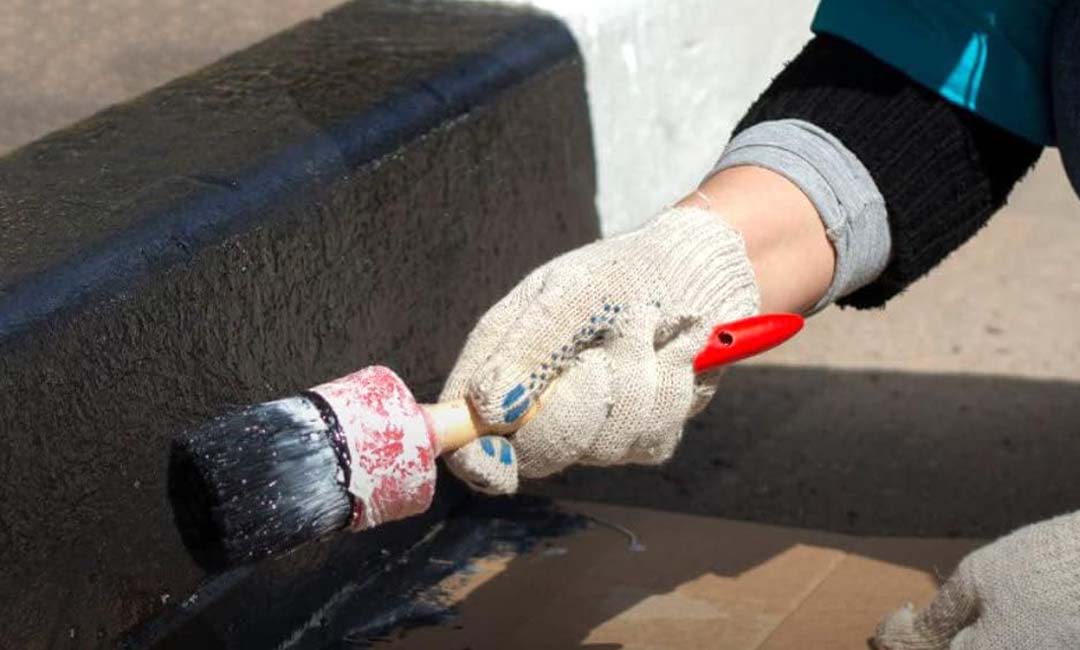
Liquid Rubber lists three different methods for applying this sealant: with a roller, a brush, or a sprayer. The product goes on like paint, using the same methods as for painting a surface. Unlike paint, this sealant does not require a layer of primer.
I found that applying the Liquid Rubber Waterproof Sealant was straightforward, at least while using the brush and roller. I tested the 1-gallon container, which was easy to lug around. At the same time, it was large enough that I could stick part of the roller into it—or even pour some sealant onto the roof’s surface and spread it out into a thinner layer using a roller. Thanks to its thick consistency, it was also effective when applied to cracks and small gaps. In short, applying Liquid Rubber was a breeze. After applying, a bit of shingle grit sprinkled on top will help the repaired area blend in, especially if it’s on an asphalt surface.
My concern and only real complaint about this product is that it’s a bit thicker than most of the other products. While that is an advantage when filling cracks and gaps, it does seem as if it would quickly clog a DIY-grade sprayer. Some users have thinned it with water, but this can weaken the product’s ability to adhere.
It’s also important to note that it was around 40 degrees Fahrenheit when I applied the roof sealant, so it didn’t dry as quickly as the manufacturer suggested it would. With that being the case, based on my testing, I can’t say how long it would take to dry in more mild temperatures.
Performance
I applied the Liquid Rubber sealant (as well as other roof-sealant products) directly to plywood and left it exposed to the elements for 2 weeks. During that time, my area received several rain storms and the first snow of the season, so the sealant was exposed to generally damp conditions. After that 2-week period, I cut the board open to check on how well the Liquid Rubber sealant protected the wood against the elements.
I wasn’t surprised that the sealant worked (they all did, to be honest), but what impressed me was how flawlessly it appeared to perform. The wood was completely dry aside from the underside, which likely soaked up moisture from the air.
It’s also worth noting that this sealant adhered very well to the plywood. It was impossible to peel off, which I believe is part of the reason it’s so effective at blocking moisture and protecting the surface from the elements. However, it’s not rated for deflecting UV rays, so it’s not ideal for direct sun exposure.
Is Liquid Rubber Waterproof Sealant worth the money?
Generally speaking, roof sealant and repair products are fairly expensive. Offered at almost $70 a gallon (it’s less expensive per gallon in larger quantities), this waterproof sealant from Liquid Rubber is no exception. Is it worth it?
I think so. The ease of application is one standout quality, as it goes on relatively smoothly yet fills cracks and gaps easily. Also, it adheres strongly to the material while completely blocking out water, and it’s rated to last up to 10 years. Potentially, one could repair a small leak for around $70 with a gallon bucket of Liquid Rubber, saving hundreds of dollars in roofing repairs or thousands of dollars in damages.
It’s also worth noting that once the sealant is applied, users don’t have to worry about it because it remains flexible and durable enough to last for several years.
Should I buy Liquid Rubber Waterproof Sealant?
If you’re in the market for a roof sealant, I would strongly suggest Liquid Rubber Waterproof Sealant. It’s easy to apply, works well at blocking out water, and can last for up to 10 years. It’s also thicker than many of the other roof sealants I tested, so it fills cracks and gaps, and it adheres very strongly to the subsurface.
However, this might not be a great choice for someone who plans to cover a large area with the help of a sprayer. This formulation is fairly thick, and it seems to me as if it would clog a DIY sprayer. It can be thinned with water, but that might impede its ability to adhere and remain flexible.
Also, for folks who want to completely blend in their repair with the surrounding surface—or those who’d like to add a bit of color to their roof—Liquid Rubber makes another product known as Color Sealant, which also performed well during testing.
For all other users in the market for a good waterproof sealant, this is a great choice. It has strong adhesion, it’s easy to apply, and it blocks out water well. And it can even blend in a bit with a little bit of shingle grit applied on top. Ultimately, it’s a high-quality product that does as it claims to do, and it can help repair a roof for less money than it would cost to hire a professional.
Where to Buy Liquid Rubber Waterproof Sealant
Get the Liquid Rubber Waterproof Sealant (5 gallons) at:
Meet the Tester
Tom Scalisi is a full-time DIY and construction writer for many of the largest websites in the industry, including BobVila.com, This Old House, Family Handyman, and Forbes. He’s installed, replaced, and repaired roofs over his years in the construction trades, so he knows what to look for in a roof-repair product.