We may earn revenue from the products available on this page and participate in affiliate programs. Learn More ›
DIYers taking on their first tiling project often find themselves wondering whether to use grout or caulk. While most know to use grout to fill the gaps between flat tile on walls and floors, its use in other spots may not seem so obvious. What about that gap between tub and tile? Which one do you use to seal the corners where two tiled walls meet? While both products serve similar functions, caulk and grout have very specific uses that are not interchangeable. Choose the wrong one, and you may find yourself having to redo part of your project a few months down the line. Understanding the pros and cons of caulk vs. grout is key to completing a successful and watertight tiling project.
What is grout?
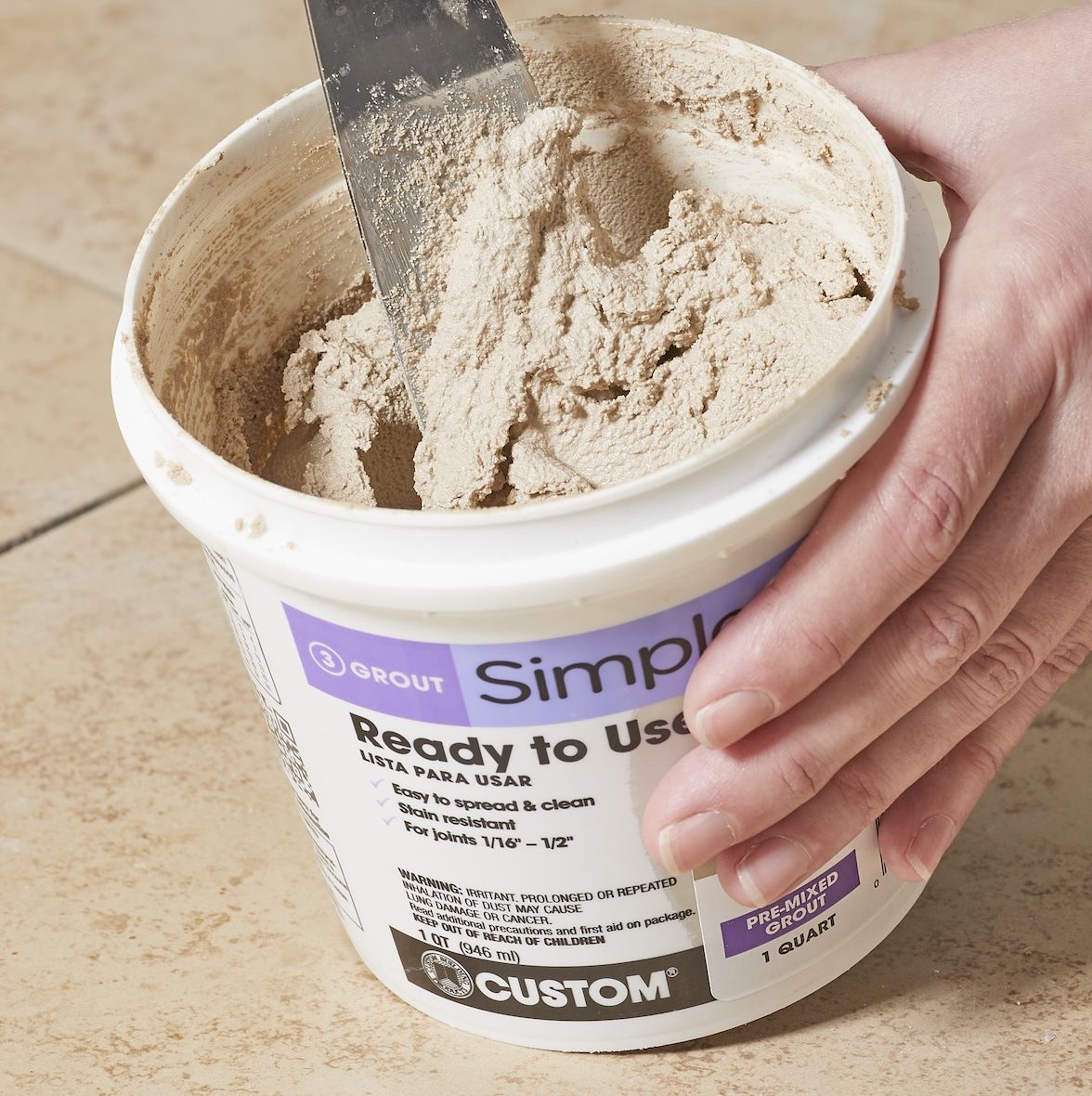
Grout is a masonry product that’s sold by the bag as a dry powder that you mix with water, or in ready-to-use form in plastic tubs. Once applied, it becomes rock-hard after it cures. There are three types of grout: sanded, unsanded, and epoxy.
- Sanded grout is used in joints between tiles that are more than ⅛-inch wide. The sand in the grout gives it a stronger structure that lets it bridge those wider gaps.
- Unsanded grout is used for narrow grout lines that are less than ⅛- inch wide. It has a smoother finish than sanded grout, and can fill joints as narrow as 1/16 inch. Unlike sanded grout, unsanded grout won’t scratch softer materials, such as glass, marble, and natural stone.
- Epoxy grout is specially designed to resist water and is thus ideal for showers, pools, and other wet areas. Because it is nonporous, it is resistant to mold and mildew with no sealing necessary. It’s also easy to clean and more hygienic for food prep areas. On the downside, epoxy grout sets very quickly, making it harder to apply, and it’s significantly more expensive than traditional grout.
What is caulk?
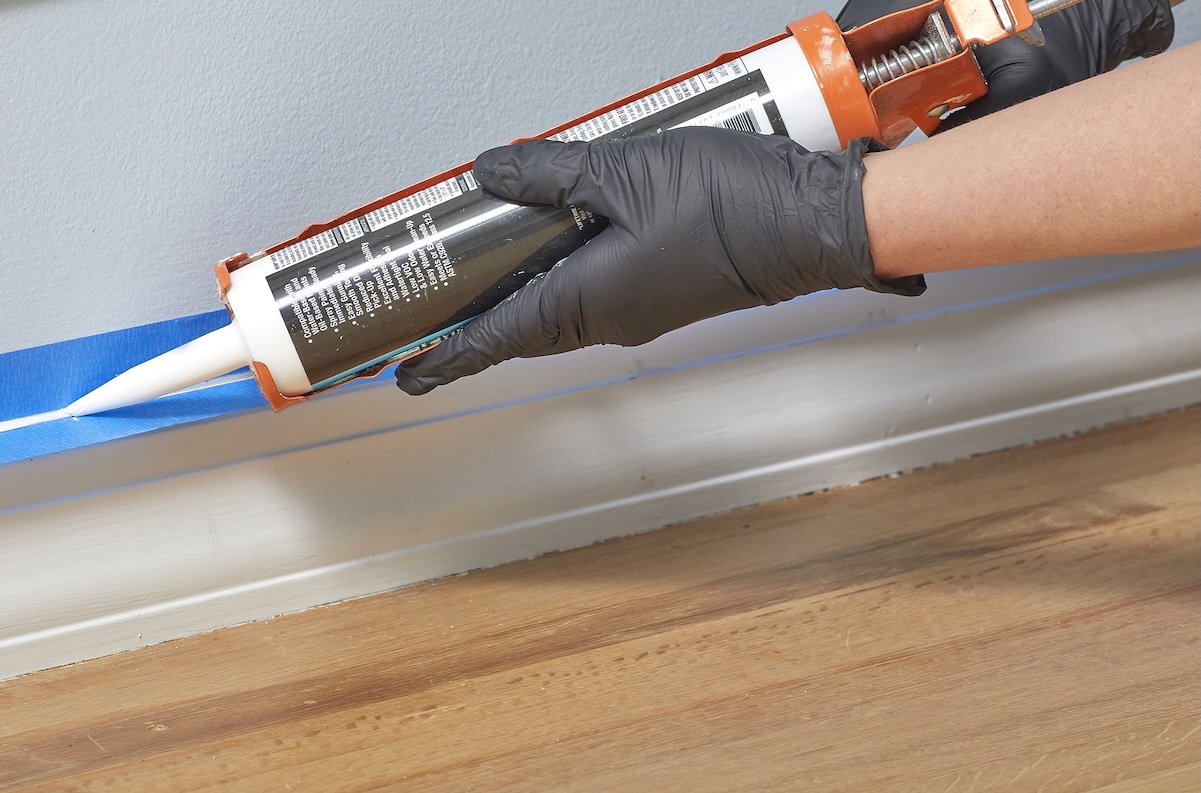
Caulk is a flexible, semiliquid product made from latex, silicone, or acrylic. Unlike grout, caulk retains a measure of flexibility after it cures, allowing it to stretch slightly if any movement, such as the house settling, occurs.
There are two main types of caulk: silicone and acrylic/latex.
- Silicone caulk is flexible and waterproof, making it the ideal choice for high-moisture rooms such as kitchens and bathrooms.
- Acrylic/latex caulk works well for caulking around trim and molding, since it’s paintable and easy to apply.
Differences Between Grout and Caulk
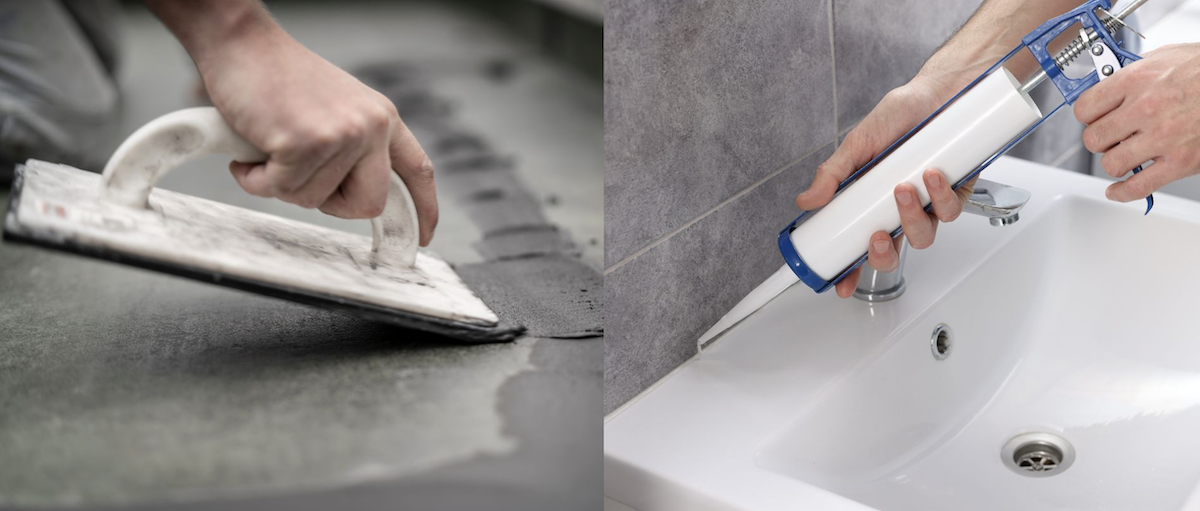
While caulk and grout serve a similar purpose, they do so in very different ways. Grout is rigid while caulk is soft and pliable. And whereas grout is used to fill the gaps between tiles, caulk is used as a seal between different types of materials. They also different in durability, maintenance, and how easy they are to clean.
| Grout | Caulk | |
| Packaging | Tubs and bags | Tubes |
| Mode of application | Rubber float | Caulk gun |
| Material | Cement- or epoxy-based | Latex, silicone, or acrylic |
| Uses | Tiles | Tile, bathroom fixtures, windows, doors, baseboards |
Uses
Grout
The purpose of grout is to fill the spaces between tiles after the tiles have been glued in place on a floor or wall. Grout prevents the tiles from shifting and protects the tile’s edges from chipping. It’s important to note that grout is used on a flat plane. Because it’s rigid, grout is not a good choice for “changes of plane”—in other words, where two tiled shower walls meet, or where a shower wall meets the floor.
Caulk
Unlike grout, caulk is a versatile material with many uses throughout the home.
- Tubs and sinks: Caulk provides a waterproof seal where tile abuts sinks, bathtubs, walls, or other materials. Caulk will adhere to different types of surfaces and is flexible enough to maintain a watertight seal when the house settles.
- Tile: Grout is generally the best choice for filling joints between tiles in showers or elsewhere. But at changes of plane—for instance, along vertical and horizontal corners— waterproof silicone caulk comes in mighty handy. Grout in these seams would be more prone to crack due to settling.
- Other areas: Caulk can seal seams in many spots: You can caulk along baseboards and crown molding, on windows and doors to stop leaks and drafts—basically, anywhere two construction materials meet, even on outdoor concrete. This makes caulk the more versatile of the two products.
Durability and Maintenance
Grout
When grout cures, it forms a solid masonry surface that won’t contract or pull away. Although movement can crack rigid grout lines, the grout itself won’t shrink.
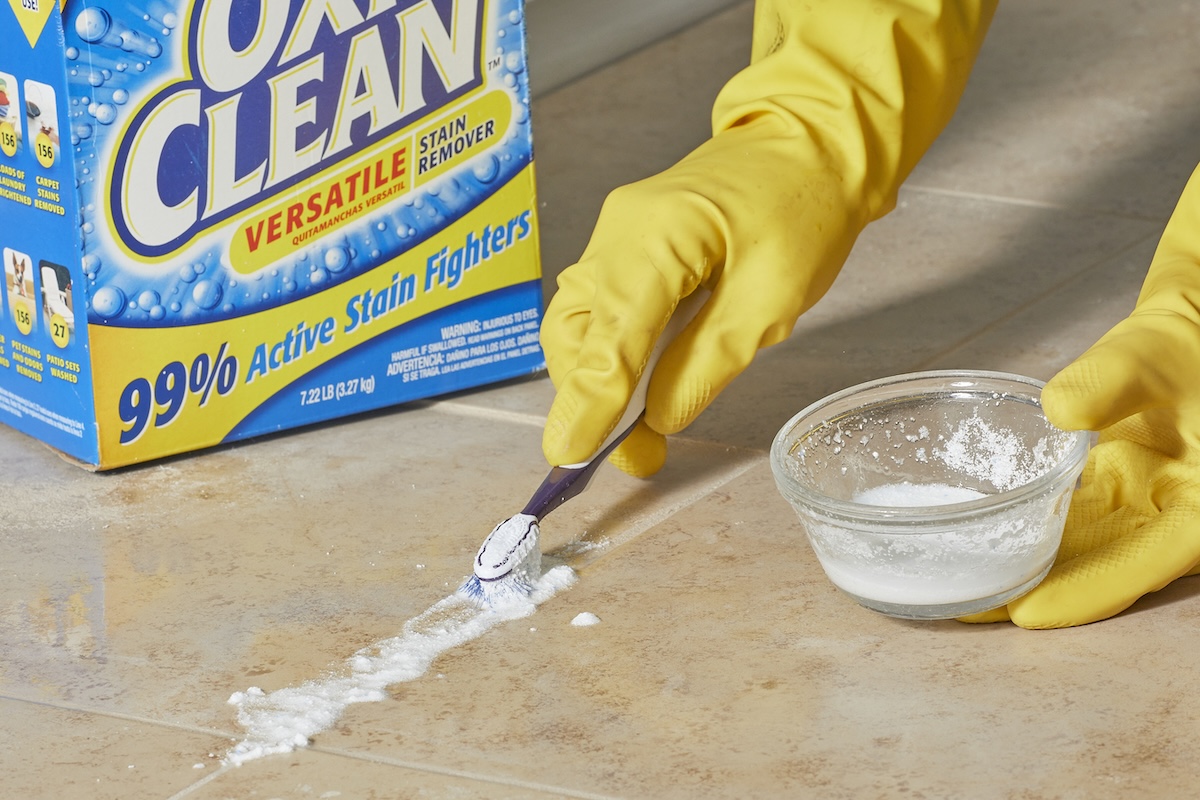
While structurally stronger than caulk, grout is also porous, which makes it more likely to develop mildew and stains. Sealing grout can make it less susceptible to mold and mildew. Weekly use of a quality grout cleaner will also help grout stay stain-free.
Caulk
Caulk is known for shrinking over time and pulling away, which is why it must be removed and replaced about once every 3 to 5 years. Because it is soft, caulk can also be damaged by cleaning tools and heavy scrubbing.
Caulk does, however, resist mold and stains better than grout. You can wipe it clean with a damp rag, and it will look as good as new.
Application
Grout
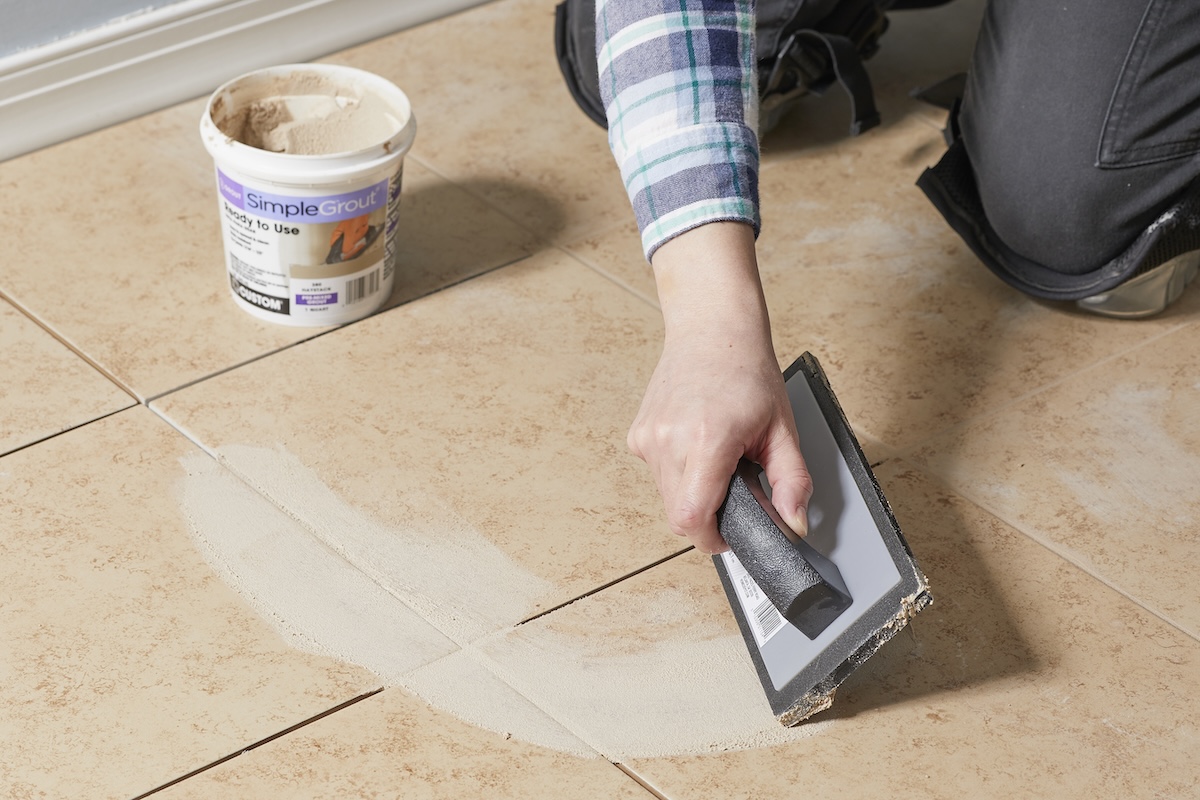
Grout is sold as a powder to be mixed with water just before applying, or it comes premixed in a tub. Grout is spread over a newly tiled surface and worked into the joints with a rubber float held at a 45-degree angle. This process leaves excess grout smeared over the tile face, which needs to be wiped off with a hard sponge before it dries.
Caulk
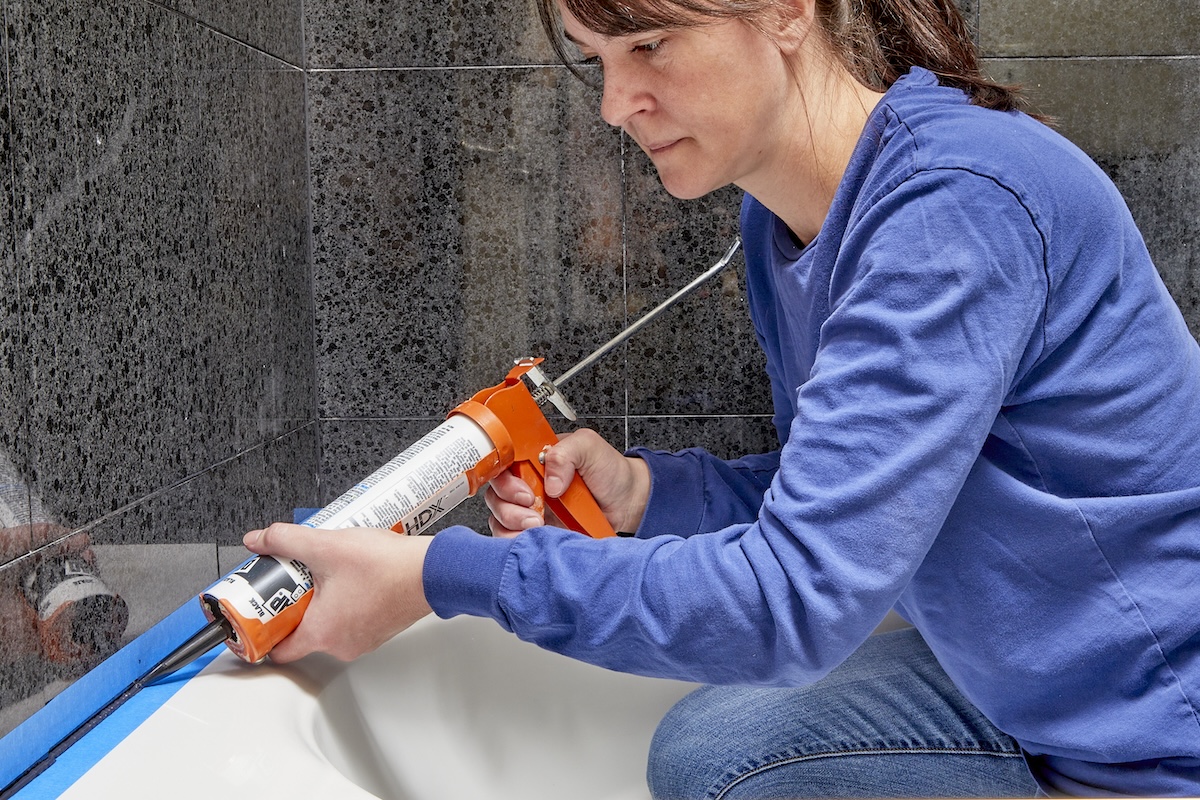
Caulk comes in cartridges that fit into a caulk gun. You apply caulk with a caulk gun by squeezing out a bead over the seam you want to fill and then smoothing it with your finger. Caulk goes on neatly, but it requires a steady hand, experience, and skill to run a smooth, professional-looking bead of caulk.
Replacement
When either product fails (grout by cracking or crumbling, caulk by pulling away), it must be replaced.
Caulk
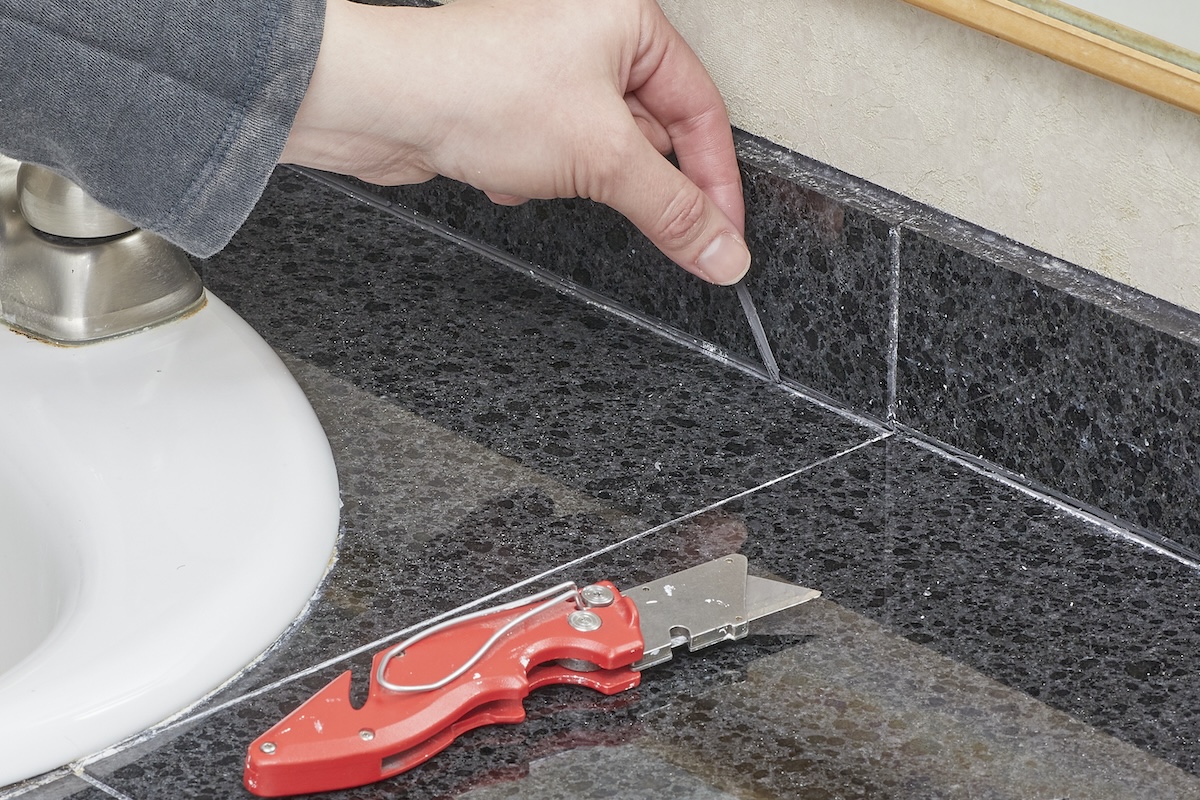
Replacing caulk is a relatively simple process of scraping and pulling the old bead of caulk out of the seam and then running a new bead.
Grout
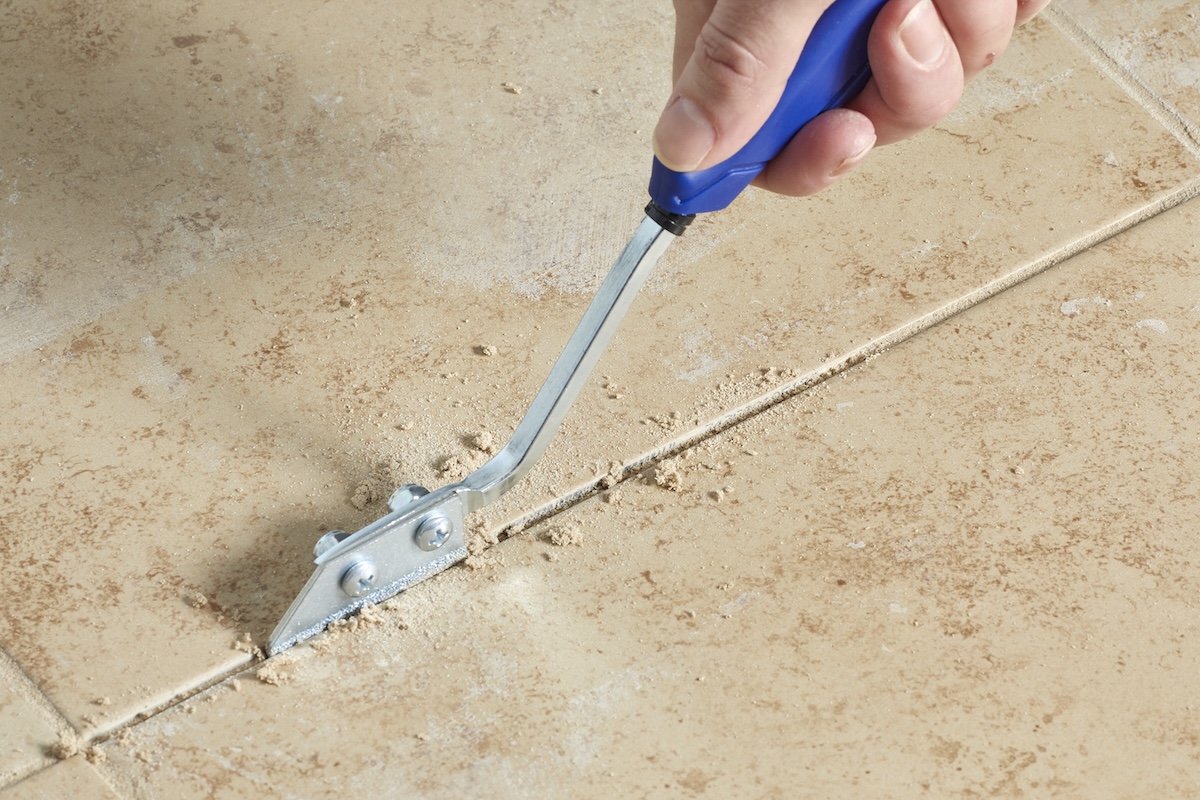
Replacing a grout line requires the use of a grout saw or a rotary tool to grind away the grout before you can mix new grout and regrout the joint.
Choosing Between Grout and Caulk
Whether you go with grout or caulk depends on the application. Remember, the two are not interchangeable. Only grout should be used to fill joints between tiles, except for at change of plane angles, as noted above. Caulk is suitable for use virtually everywhere else you need to seal a seam between two materials.
FAQs
Q. Can you use caulk instead of grout?
Don’t use caulk as grout. Caulk lacks the rigidity and structural stability to hold an expanse of tiles firmly in place. As well, over time, caulk would shrink away from the tile, affecting the longevity of the installation.
Q. Why don’t contractors seal grout?
Saving time is one reason contractors don’t seal grout: Grout generally needs to cure for a day or two before sealing, applying the sealant takes time, and then the sealant needs time to cure. Also, contractors who use less porous grouts, or stain- or water-resistant grouts, may say that sealing is unnecessary.
Q. Can you fill grout holes with caulk?
As a short-term solution, you can use caulk to fill small holes and gaps in grout. You can even purchase caulk in a range of colors to match, or at least get close to, the color of your grout. But over time, the caulk will start to peel or shrink, and moisture may get in behind the tile. Regrouting is the only long-term solution for failing grout.
Q. Is it better to caulk or grout a shower?
In the shower, use grout between tiles along a single plane, but use caulk wherever planes meet—for instance, at horizontal or vertical corners—or wherever tile meets any other surface or fixture, such as the shower pan, tub, or ceiling.