We may earn revenue from the products available on this page and participate in affiliate programs. Learn More ›
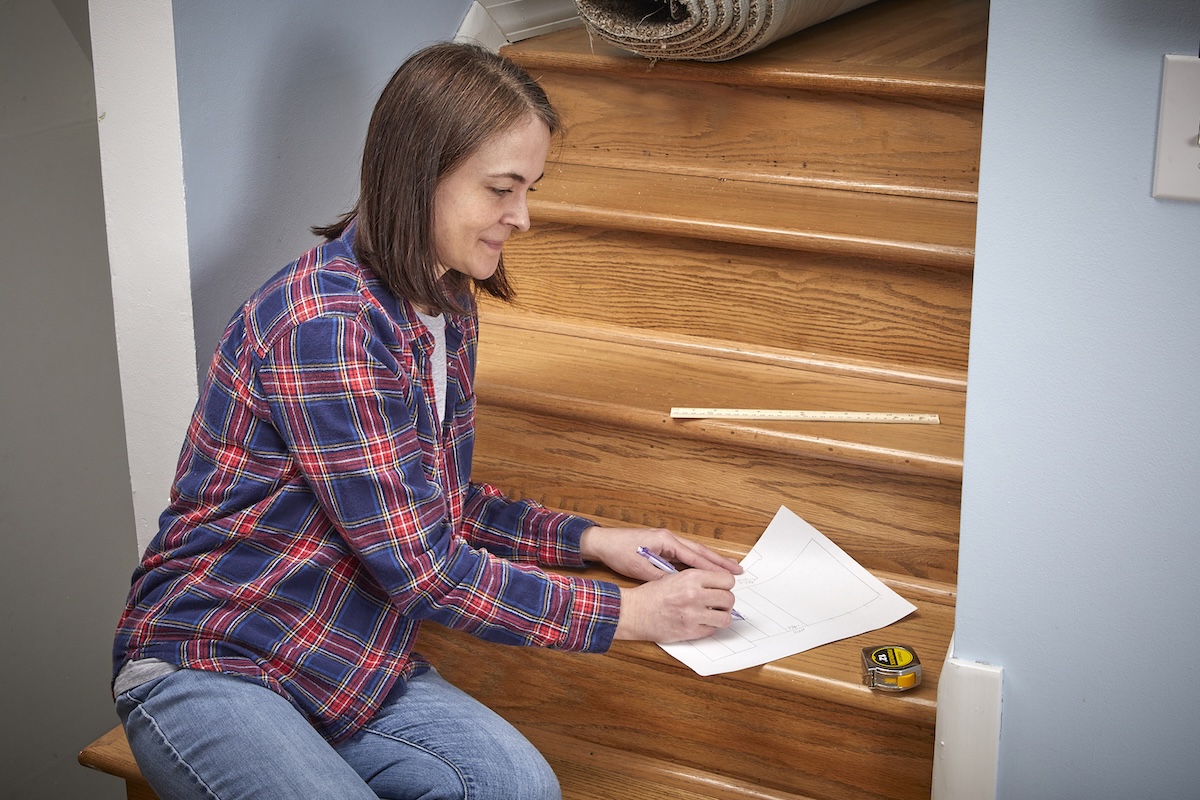
Adding carpets to stairs can be an aesthetic decision that can change up a plain wooden staircase. Before you start looking at carpeting swatches, it’s vital to measure the stairs to know exactly how much carpet is needed to cover them. Measuring carpet can be a tricky process: carpet on stairs is usually installed in separate pieces rather than one large piece. This requires precision to get the best edges and trim for the final look.
How to measure stairs for carpet depends on the floor plan, the staircase’s size, the type of stairs, and if a homeowner wants full carpeted stairs or just a runner. Here are the tools, materials, and step-by-step instructions you will need for measuring carpet to install on your staircase.
Project Overview
Time required: One hour or less
Difficulty: Intermediate
Estimated cost: Less than $10
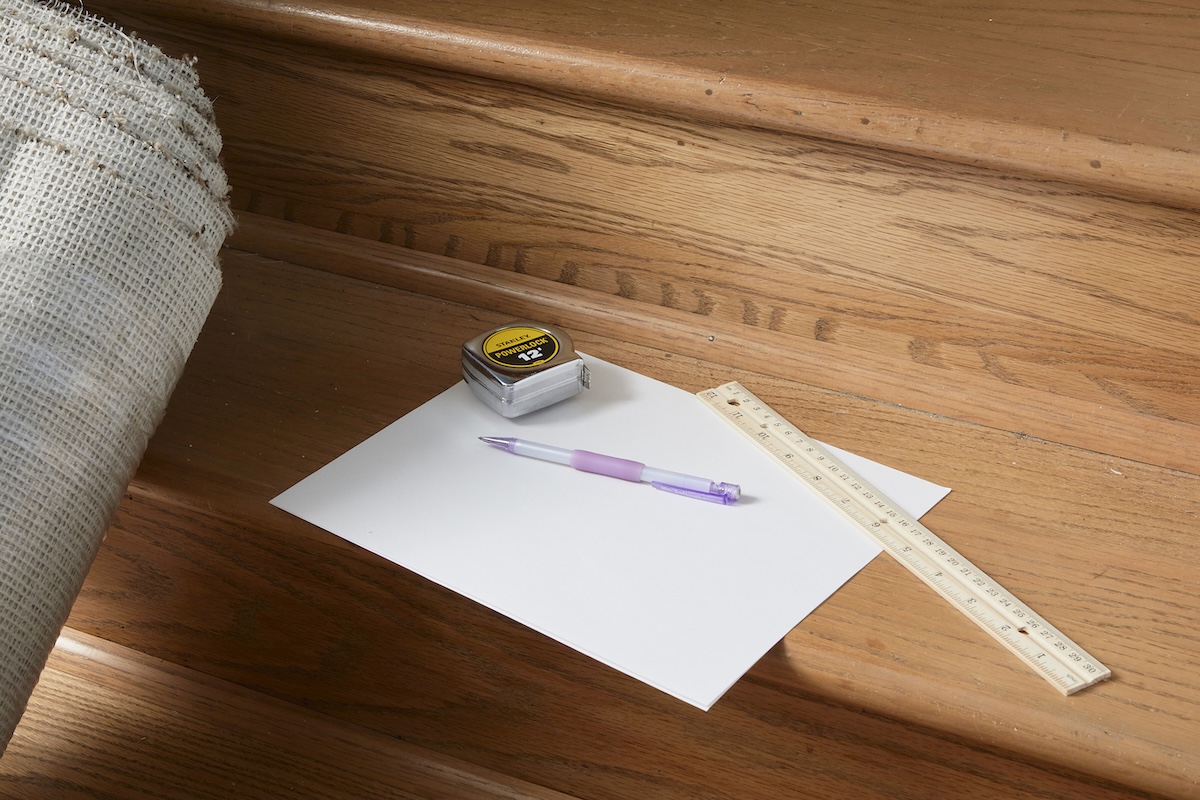
Tools & Materials
Bobvila.com may earn a commission from purchases made through these links.
Before You Begin
Measuring carpet that will go on a staircase involves some calculations, including measuring square feet of the landing, hallways, and each stair. Double-check all measurements before placing a carpet order to ensure you’ll have the proper amount of carpeting for the project. If you’re hiring a professional for the job, they will be able to measure the stairs for you.
Since carpet for stairs is sold in square feet and square yards, homeowners will need to learn how to measure in square feet. To calculate square feet, divide the number of inches by 12. If a square yard measurement is required, divide the number of square feet by three. Additionally, if the original carpet was recently removed, clear all nails, tack pads, glue, and other debris from the staircase before measuring.
Tips for Measuring Stairs for Carpet
- Carpet pieces are sold by the square foot or the square yard. Ensure you convert the measurements correctly when doing the math.
- Some stairs may not be the same size. It may be beneficial to measure each stair individually if the staircase is shaped irregularly.
- It’s advised to buy a bit of extra carpet in case of mistakes or if additional pieces are needed towards the project’s end.
Safety Considerations
- Be aware of their surroundings, including watching for pets and small children, so they don’t trip on the stairs while measuring.
- Be aware of any stray nails or sharp debris if measuring a renovated staircase.
6 Steps to Getting Accurate Stair Measurements for Carpet
Step 1: Draw the floor plan of your stair landing, staircase, and any adjoining hallways.
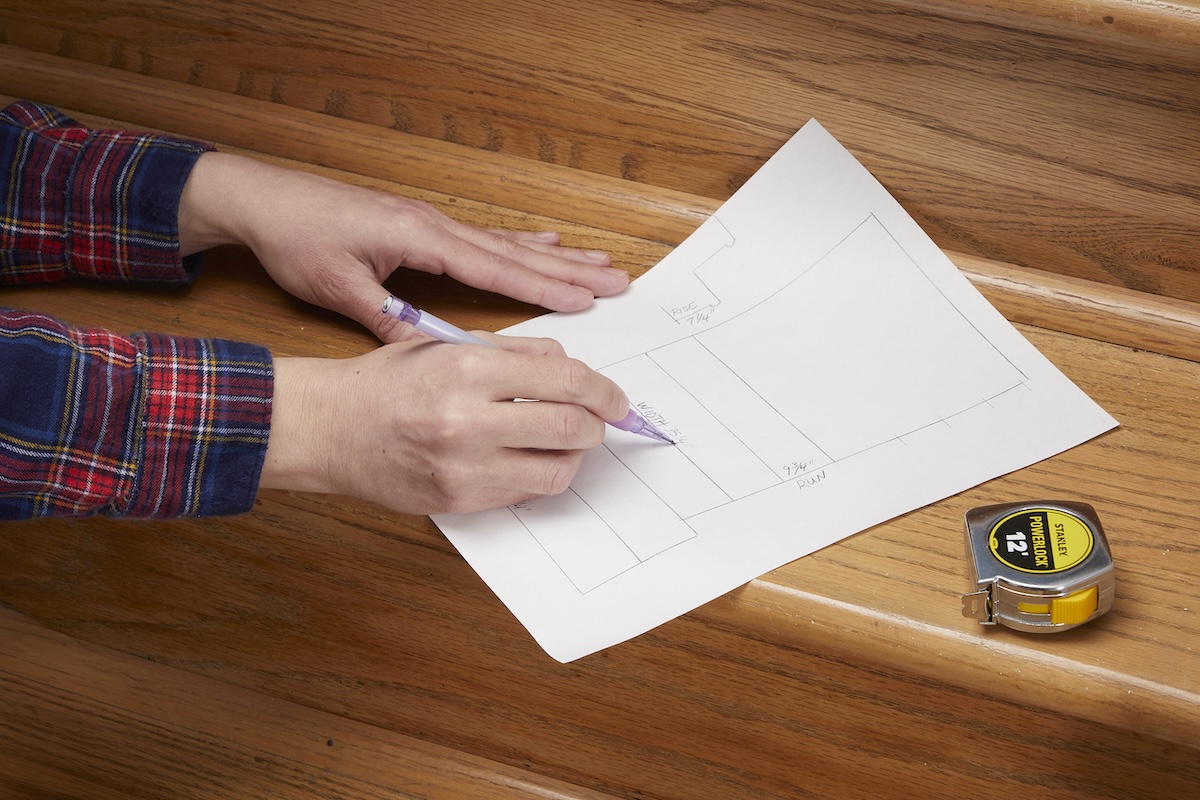
Start with a floor plan that lays out the entirety of the measurements needed for the staircase, including the landings and hallways. Using a piece of paper, pencil, and ruler, draw out the floor plan of these areas using your best judgment scale. Add any doorways and alcoves on the plan. Keep the floor plan handy when measuring.
Step 2: Measure the stair landing.
The staircase carpet will flow from the landing to the rest of the stairs, making this starting measurement a crucial step. Stand on the staircase’s top step and measure the landing area’s width and length using a measuring tape. Note this measurement on the floor plan. Next, multiply the measurements to calculate the number of square feet needed for the landing. Remember to convert to square feet by dividing this number by 12.
Step 3: Measure the rise and run.
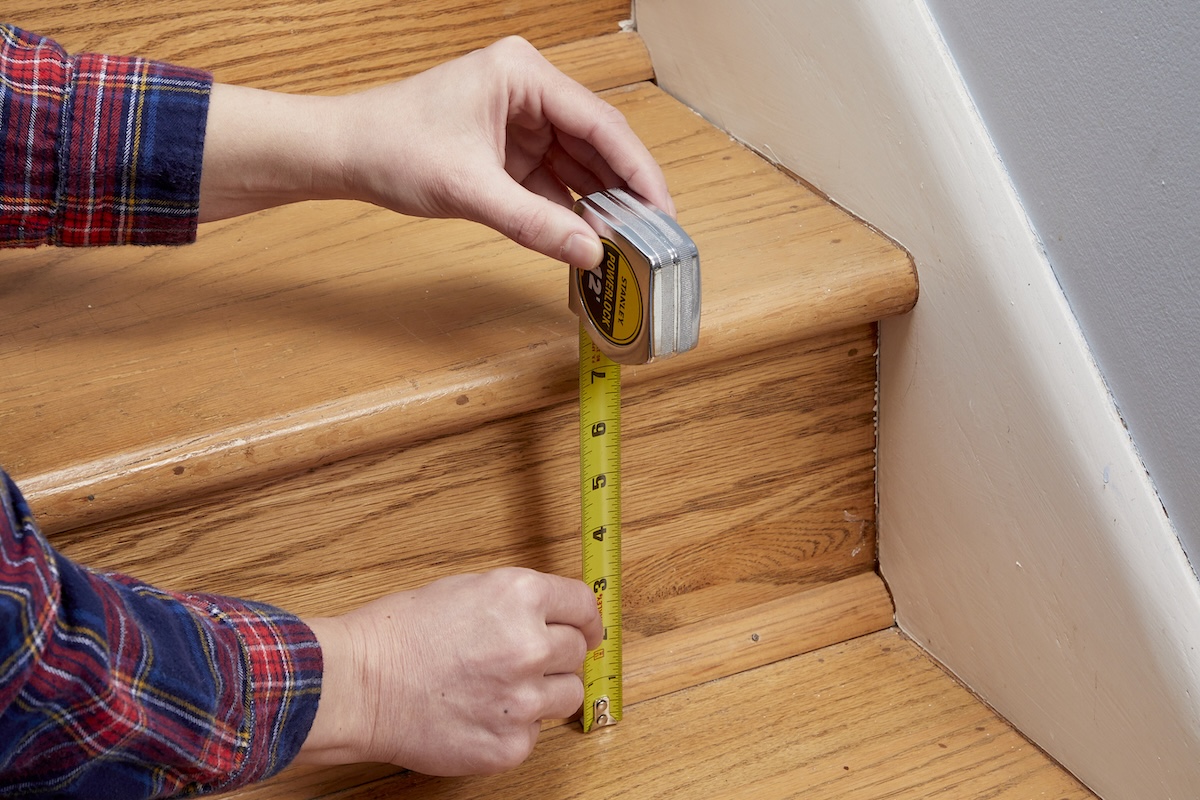
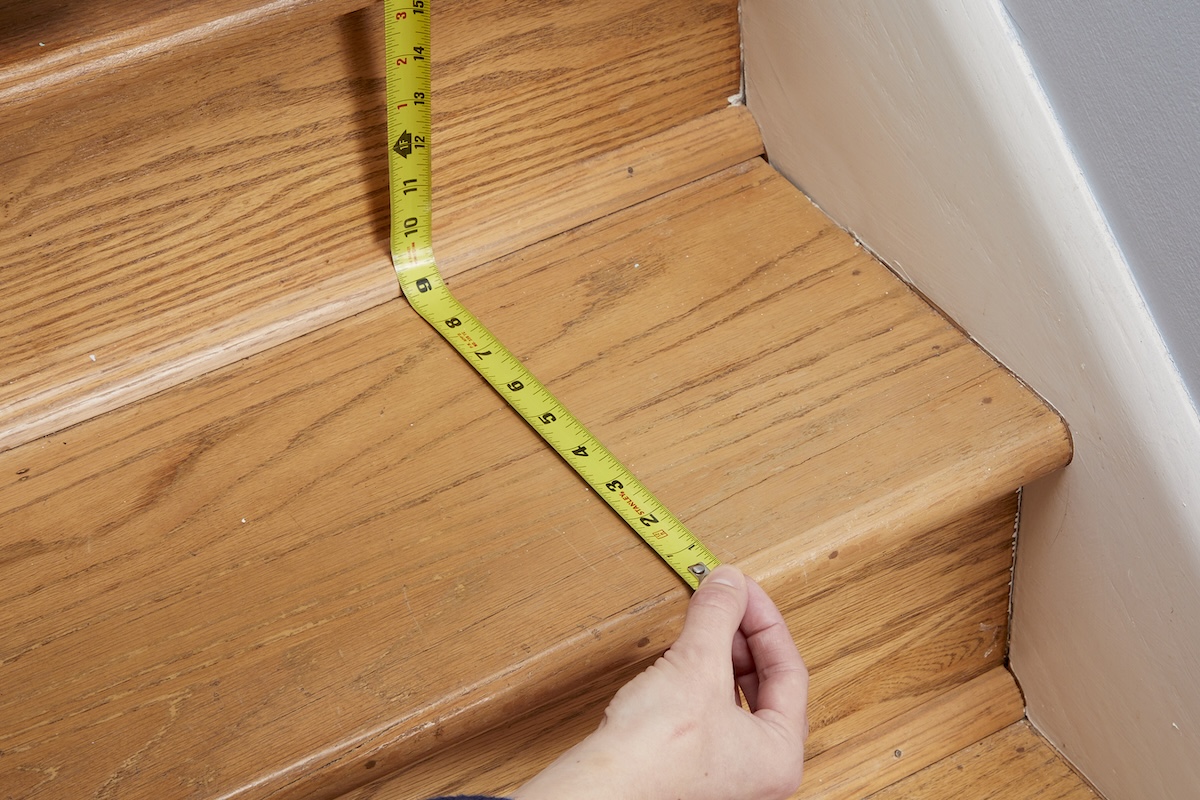
The rise of a stair is the height, and the run of the stair is the depth. The width of the stair is the measurement from the edge to the wall. For a straight staircase, measure the rise and run in inches (with an extra inch or two for the nose) of one stair and multiply that number by the total number of stairs. Divide this number by 12 to get the measurement in feet. Measure the width of one stair to the nearest foot. Multiply this number by the rise and run feet measurement to obtain the area in square feet.
This measurement can also be used when painting a staircase. How to measure stairs for a carpet runner is similar to the above solution. Remove at least 4 inches from each side of the stair width in the above calculations.
Step 4: Measure the hallway.
Using a measuring tape, measure all walls of the hallway that lead to the staircase. Ensure to measure the depth and width of all doorways as well as any dropbacks or alcoves. Make a note of where the stairs join the hallway on the floor to ensure the carpet’s pile will be in the correct direction when it’s installed. Note all these measurements on the floor plan.
Step 5: Use your measurements to calculate the total amount of carpet.
Using the floor plan and all its measurements, enter these values into an online carpet calculator tool to determine the amount of carpet needed for the staircase. Additionally, you can add the calculations from the landings, stairs, and hallway to determine the total carpet needed.
Remember to add about 10 percent of carpet to the final number to account for any carpet waste or mistakes in the carpet installation process. If you have a bullnose stair (a bottom stair that’s wider than the others and usually has a rounded edge), you’ll need to order extra carpet. It’s better to have too much carpet than not enough to finish the job.
Need carpet installation?
Leave it to the pros. Get free, no-commitment project estimates from carpet installation experts near you.
Step 6: Decide whether you will install the carpet yourself or hire a professional.
Once all the measurements have been calculated, determine if the carpet will be a DIY project or if you’ll outsource the job to a professional.
If a staircase is irregular, winding, or has a complex layout (or if you don’t have the time or skills to complete the project), it’s a good idea to hire a professional. A carpet installer will double-check measurements and order an appropriate amount of material before placing the carpet.
Measuring stairs for carpet is a simple process once you understand the basic calculations and measuring techniques. After you’ve calculated your final measurements for your staircase, you’ll be one step closer to installing carpet on the staircase.