We may earn revenue from the products available on this page and participate in affiliate programs. Learn More ›
Whether you want to build a rustic bench, install molding, or plumb a new sink, odds are that you’ll need to cut some material to size, and there’s a saw out there that can help you do just that. The following 12 types of saws can help you complete a host of DIY projects and cut a variety of material, from wood to metal. Once you understand each type of saw and what each is designed to do, you will be ready to tackle any project you have in mind.
1. Handsaw
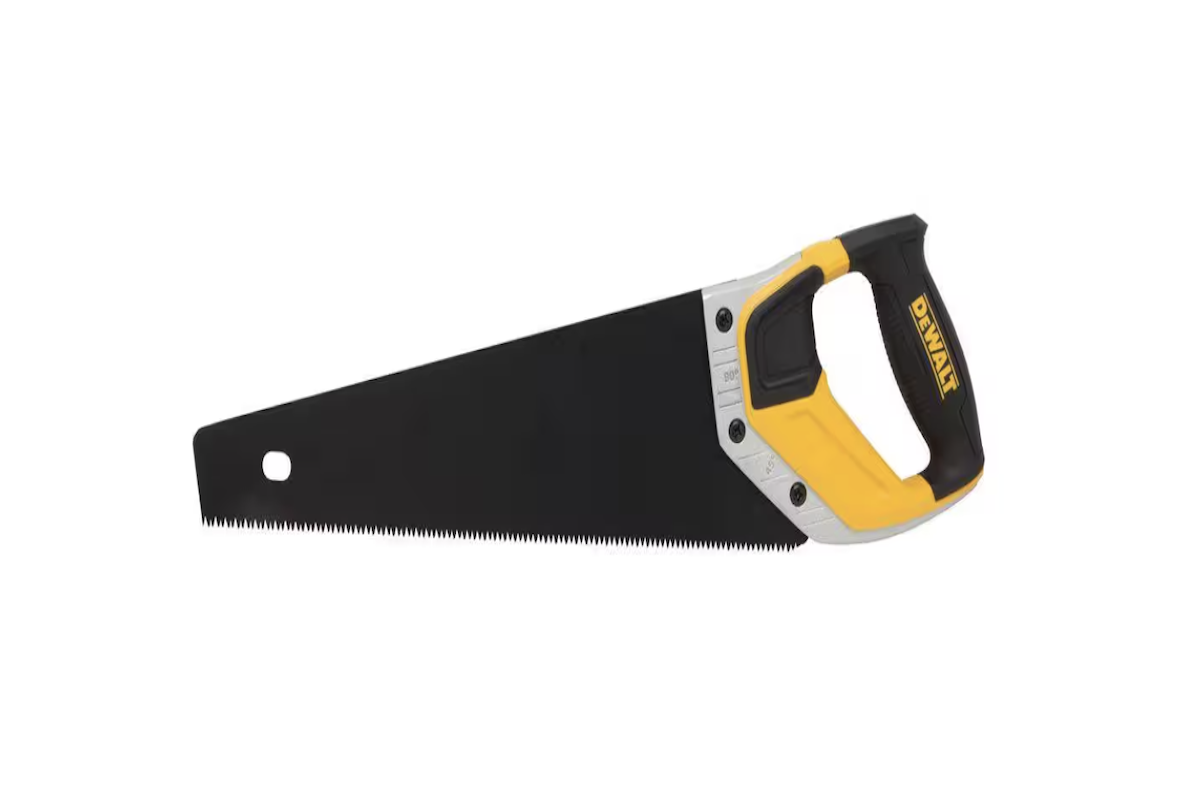
No woodworker’s shop is complete without a traditional handsaw, with its large blade and sturdy handle. Though the handsaw is 100 percent muscle-powered, it steps in when a power saw just won’t do, such as when you need to cut through a post that is too thick for a circular saw blade. Choose the type of traditional handsaw you need based on the cut you intend to make and the number of teeth per inch needed to make it. Teeth per inch, often shortened to TPI, refers to the number of teeth contained within one inch of a blade, and determines the cut speed and finish.
- If you need to rip wood (or cut wood lengthwise with its grain), choose a rip saw with large, angled teeth and an average of 5 TPI.
- Cutting across the grain of the wood takes a crosscut handsaw, which has between 10 and 12 TPI and shorter teeth than a rip saw.
- Looking for a do-it-all compromise? The dual-cut (or “hybrid”) handsaw features an average of 6 to 8 TPI and can both rip wood and cut across the grain.
Best For: Cutting wood by hand.
Our Recommendation: DeWalt 15-inch hand saw at The Home Depot for $26.97. With its hardened-steel, triple-ground teeth that cut faster than cross-ground teeth, the DeWalt 15-inch hand saw is our top choice. The cushioned grip and blade coating also make it easier to use than other saws.
2. Hacksaw
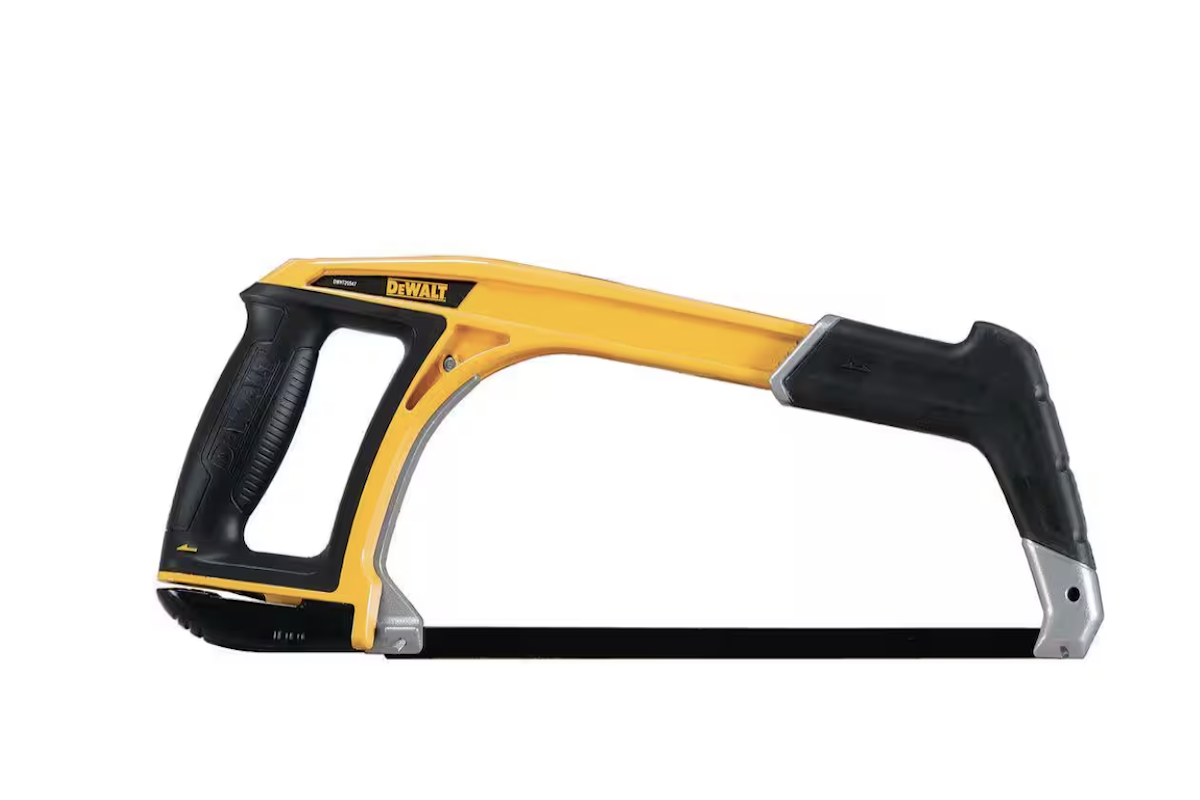
With thin, interchangeable blades ranging from 14 to 32 TPI, the C-shaped hacksaw is most often used for cutting metal pipe. Its range of TPI options, though, makes it useful for cutting sheet metal, PVC, and conduit as well—simply swap out the 10- to 12-inch blades, which are held in place by screw nuts on each end. A hacksaw also comes with a tension nut that allows you to stretch the blade taut for easier sawing. Depending on the thickness of material (metal or otherwise) that you’re cutting, you may also change out the hacksaw’s tooth pattern:
- Small teeth on the raker set hacksaw blade are arranged in sets of three for easy cutting of standard metal pipes.
- A regular set hacksaw blade features teeth positioned next to one another without spaces, but every other tooth angles a different direction, either forward or backward. It’s intended for cutting soft metal and other materials, such as PVC.
- On a wavy set blade, the teeth are positioned next to one another, but the tooth pattern features a slight wave from one side to the other. Choose this type of blade when cutting thin metal, such as ducting.
Best For: Cutting metal and plastic.
Our Recommendation: DeWalt 12-inch Hacksaw at The Home Depot for $30.97. Designed to handle cutting a variety of metal and plastic, the DeWalt 12-inch hacksaw has a heavy-duty steel frame and a rubber grip that makes using it more comfortable. It’s also easy to change out the blade as needed.
3. Coping Saw
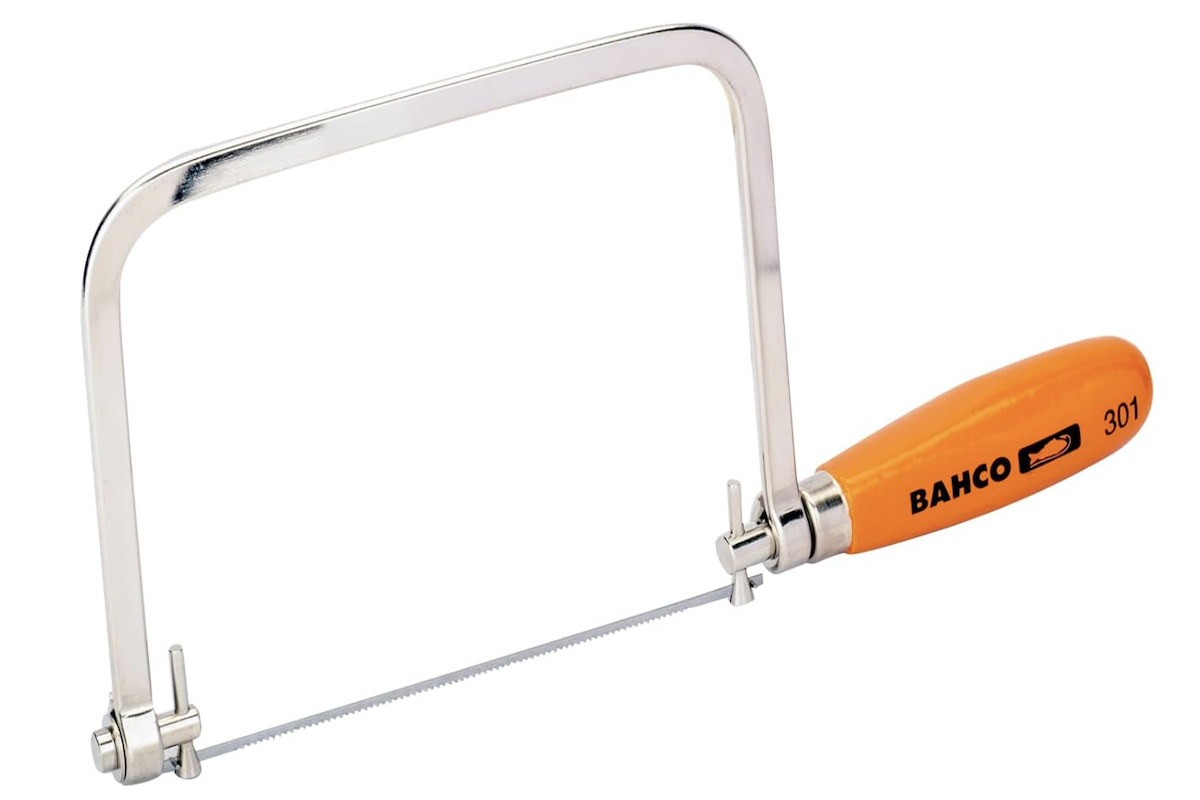
The U-shaped coping saw has only one purpose: coping or “back-beveled” cuts for trim installation around inside corners. While it resembles and functions like a hacksaw, the coping saw’s frame is lighter in weight and the blade is shorter—typically 6-¾ inches long and anywhere from 10 to 32 TPI. The tiny blades make it possible to back-cut curves and create precise joints when installing crown molding and other types of trim.
Best For: Creating professional-looking inside corner joints when installing trim.
Our Recommendation: Bahco 6.5-inch Coping Saw at Amazon for $24.94. Its beechwood handle makes the Bahco coping saw comfortable to handle, and it easily cuts both hardwood and softwood with a blade that firmly stays in place.
4. Jigsaw
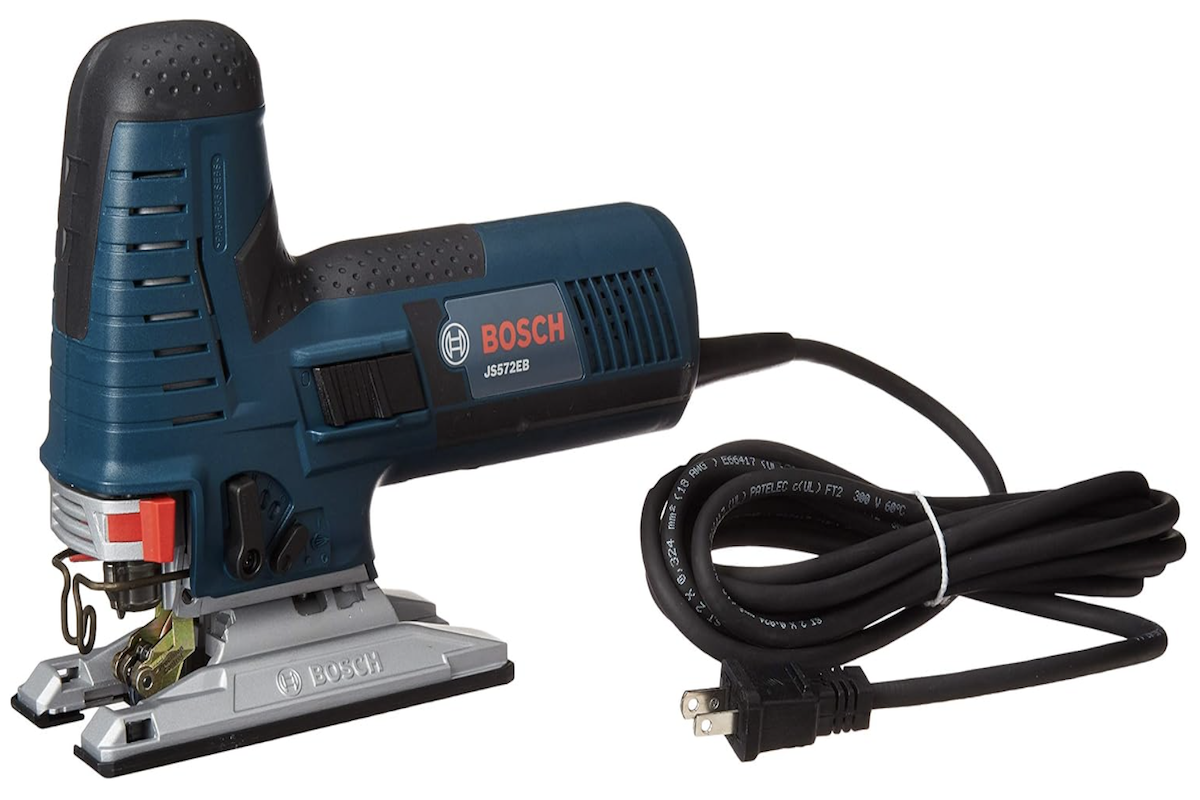
A versatile saw for DIYers, you can use a jigsaw to cut straight lines, but its real claim to fame is that it can cut curves. Considered one of the safer power saws, the jigsaw features a large flat base called a “shoe,” which rests flat on the surface of the material you’re cutting and surrounds the blade and offers some protection. Many jigsaws come with an adjustable shoe that tilts, allowing you to cut on an angle when needed.
These types of saws can cut nearly any type of wood using blades with a TPI between 8 and 10. The teeth on a standard jigsaw blade point upward, so the saw cuts on the blade’s upstroke. Reverse blades, which cut on the downstroke, are available for cutting materials with a finished surface, such as a laminate countertop. While blades come in a variety of lengths, width depends on the curve: Choose a jigsaw blade that is ¼-inch wide to cut tight curves and one that is ⅜-inch wide blades to cut standard curves.
Best For: Cutting curves in wood.
Our Recommendation: Bosch 7.2 amp JS572EBK Jigsaw Kit Amazon for $308.30. The Bosch jigsaw comes with three blades that are ready to cut a variety of materials, and its blower is a standout at clearing sawdust during a cut.
5. Circular Saw
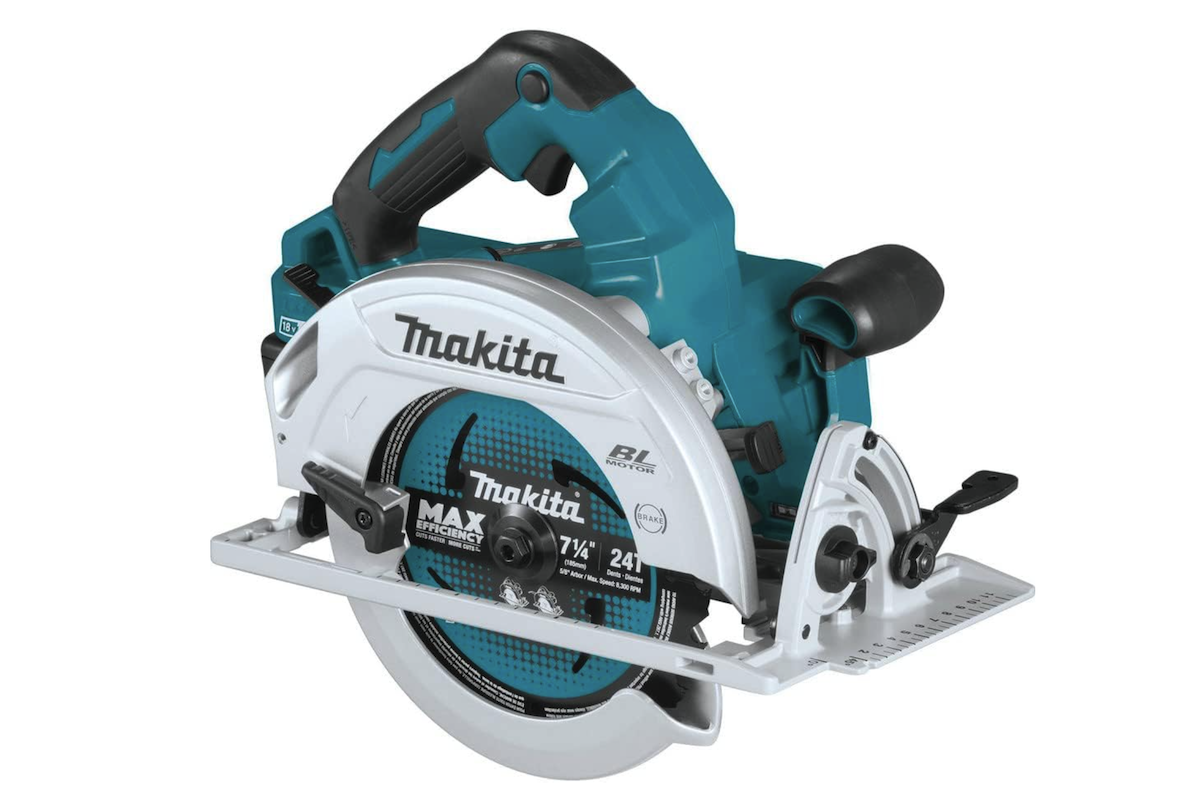
Designed to cut straight lines in dimensional lumber, plywood, rigid foam board, and even concrete, the circular saw is one of the most popular saws for framing and can stand in for a table saw on the jobsite. It features an encased circular blade and a wide base that fits flat against the material you’re cutting and, on most models, adjustable so you can vary the depth of the cut.
Circular saw blades are labeled for the type of material they’re designed to cut: Wood blades cut plywood or lumber, masonry blades cut joints in a concrete sidewalk, and so on.
Circular saws come in many sizes, determined by the diameter of the blade they use. While the most common blade diameter for circular saws is 7¼ inches (suitable for most construction tasks), you can find saws with blades as small as 4 inches for light woodworking projects or as large as 12 inches for cutting heavy timbers.
Best For: Cutting framing materials, including wall studs, joists, rafters, and sheathing.
Our Recommendation: Makita XSH06PT 18V circular saw at Amazon for $365.30. With a magnesium foot plate and blade guard, the Makita circular saw offers simple blade adjustments and bright guide lights to increase safety during use.
6. Miter Saw
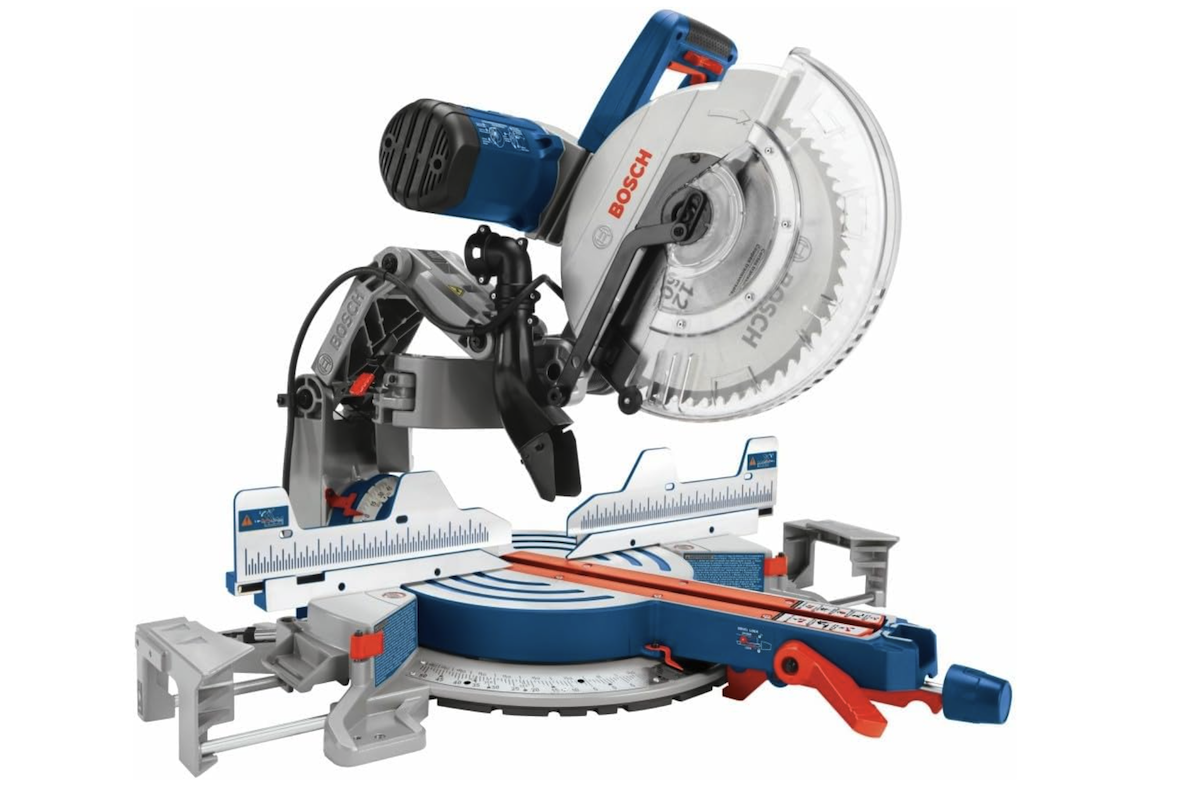
You can use a miter saw to make precision crosscuts when framing, installing molding, or even cutting siding strips. Today’s miter saws make angled cuts based on the same principle as their manual miter box siblings, although they can perform even more complex cuts. A miter saw’s heavy steel base can be mounted on a workshop table for stability, and a steel guide along its back edge, or fence, aligns the material to be cut. The actual saw blade is housed in a large disk on an adjustable arm that can be raised and lowered as well as swiveled from side to side to cut on virtually any angle.
While all miter saws make angled cuts, a compound miter saw can tilt on its axis to make slanted cuts and angled cuts. On a sliding miter saw, the arm can be pulled forward when the saw is operating, making it possible to cut wider boards or strips of siding. Some high-end miter saws feature laser guides for extra-precise cuts. Miter saws are available in 10-inch and 12-inch sizes and range in price from around $100 to more than $600, depending on quality. The larger 12-inch size is usually reserved for commercial use.
Best For: Framing and finish carpentry when you need to make simple or complex angle cuts.
Our Recommendation: Bosch 12-inch Miter Saw at Amazon for $649. With a powerful motor, the Bosch 12-inch miter saw has a zero-clearance arm and terrific dust-collection system.
7. Chainsaw
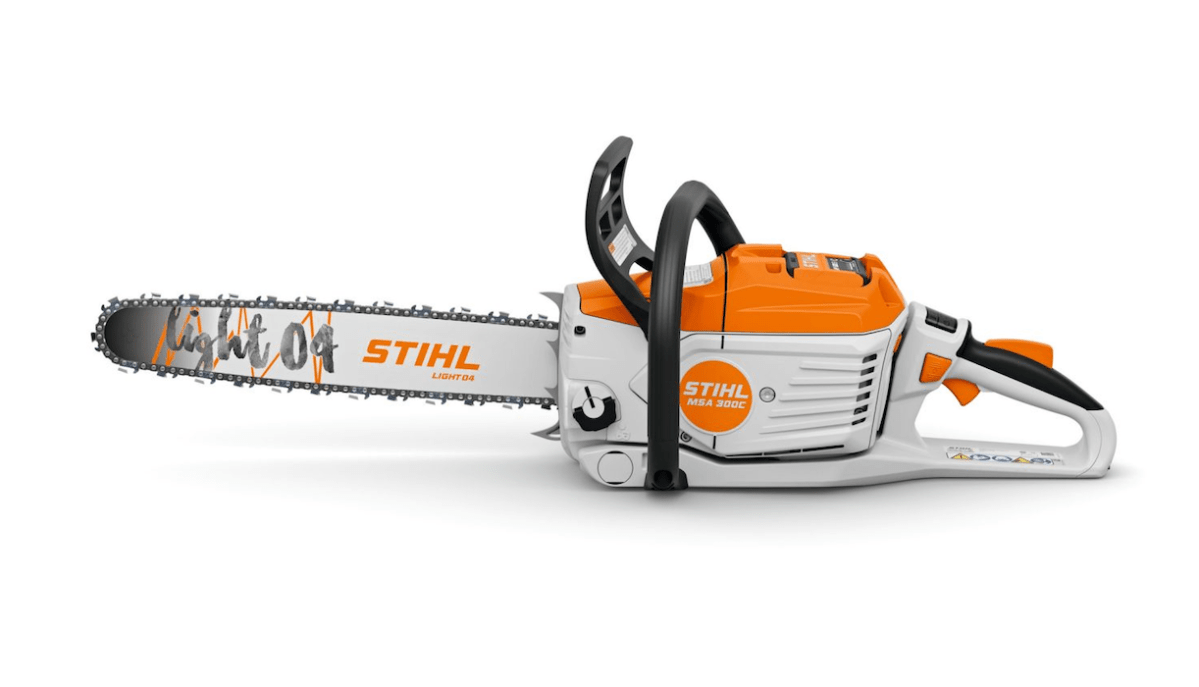
The chainsaw is designed to cut tree limbs or fell entire trees with its dozens of sharp teeth that rotate around the guide bar. Guide bars range from 14 inches long (for light cutting and pruning) up to 36 inches long (for use by lumberjacks) and can be interchangeable on some models of chainsaws. For most DIYers, a chainsaw with an 18- to 20-inch guide bar is sufficient. Keep in mind that a 16-inch chainsaw bar will fell a tree that’s 32-inch in diameter by sawing systematically around the entire trunk of the tree. While some smaller, corded chainsaws work for trimming and pruning near the house, most chainsaws are fuel-operated and can be taken into remote areas for harvesting firewood. Prices start under $100 for lightweight electric chainsaws and run into the thousands for commercial-grade chainsaws.
Safety Note: Chainsaws are among the most powerful saws around, but they’re also dangerous tools because the tip of the guide bar can kick back during operation. Before using a chainsaw, read the owner’s manual carefully and familiarize yourself with the saw’s safety features and safe operating techniques.
Best For: Cutting firewood and trimming trees.
Our Recommendation: Stihl 16-inch Chainsaw at Stihl for $859.99. The 16-inch Stihl chainsaw is lightweight with excellent torque and cutting power for demanding jobs, and its battery lasts for hours.
8. Track Saw
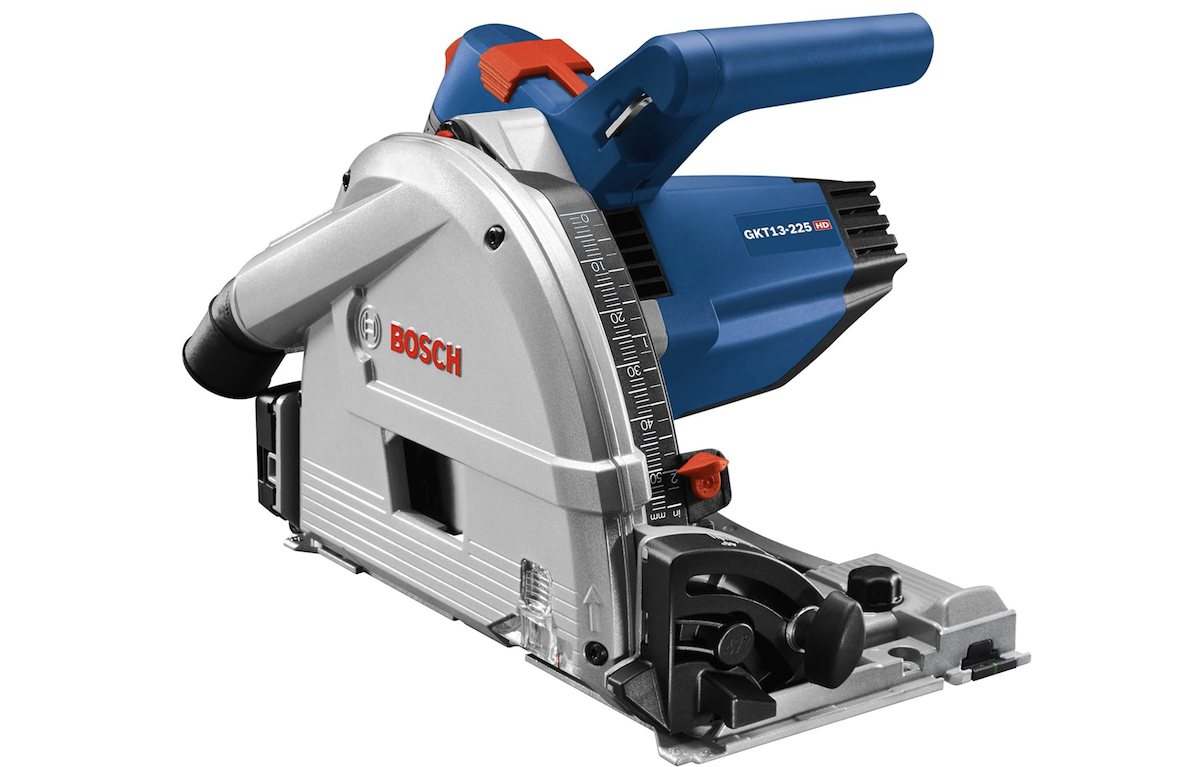
An ideal saw for breaking down sheet goods, a track saw can rip long lengths of material accurately along a track that is set up to keep the saw aligned. While the track provides the groove guides for an accurate cut, clamps help keep the tracks in place for safety, especially when cutting dense materials. Track length depends on the tool brand, and can extend more than 5 feet long and additional guide pieces can be placed together for even longer cut length. Some DIYers, however, find it easier to work with just one track and adjust the placement by lining up the cut line for longer cuts than the track allows. Square cuts are common, but track saws can also bevel cut.
Best For: Breaking down sheet goods into long lengths.
Our Recommendation: Bosch 6 1/2-inch Track Saw at Amazon for $669. The Bosch track saw is a powerful 13-amp saw with a bevel range of -1 to 47 degrees and comes with two 63-inch-long tracks.
9. Table Saw
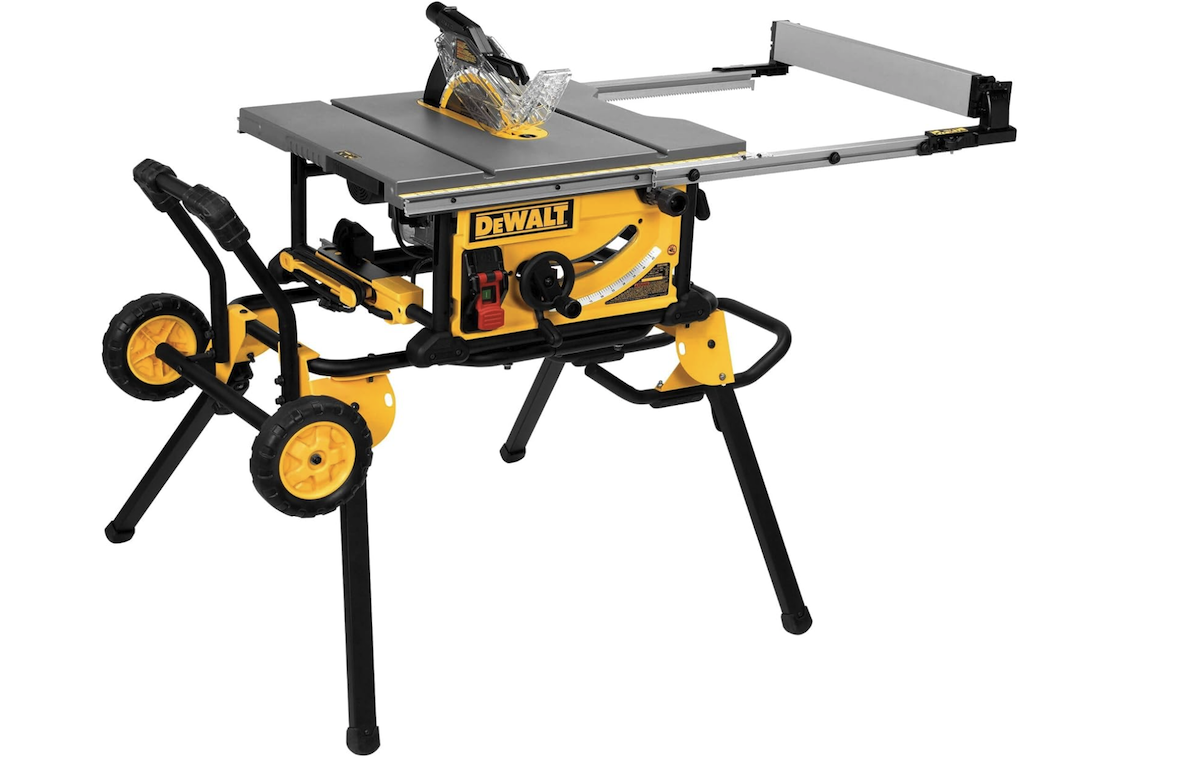
A portable table saw is a workhorse of many bigger DIY home projects. Table saws can also crosscut and bevel, making it a useful tool for a variety of projects, from trimwork to woodworking. A versatile saw, the cutting depth and fence can be adjusted to meet the cuts required of the job. With a blade change, a table saw can handle nearly every kind of construction material.
While basic tool safety is important with every saw on this list, it’s essential to not wear anything dangling—like bracelets, necklaces, and hoodie cords—during table saw use. You don’t want anything to get caught up in the spinning blade. Often heavy, most table saws include integrated wheels so the saw is easier to move and set up where it’s needed.
Best For: Rip cuts along the length of a board.
Our Recommendation: DeWalt 10-inch Table Saw With Foldable Rolling Stand at Amazon for $699. This tool’s space-saving foldable design is a bonus feature to a powerful saw that has sturdy flared legs and a rip capacity of 32.5 inches.
10. Concrete Saw
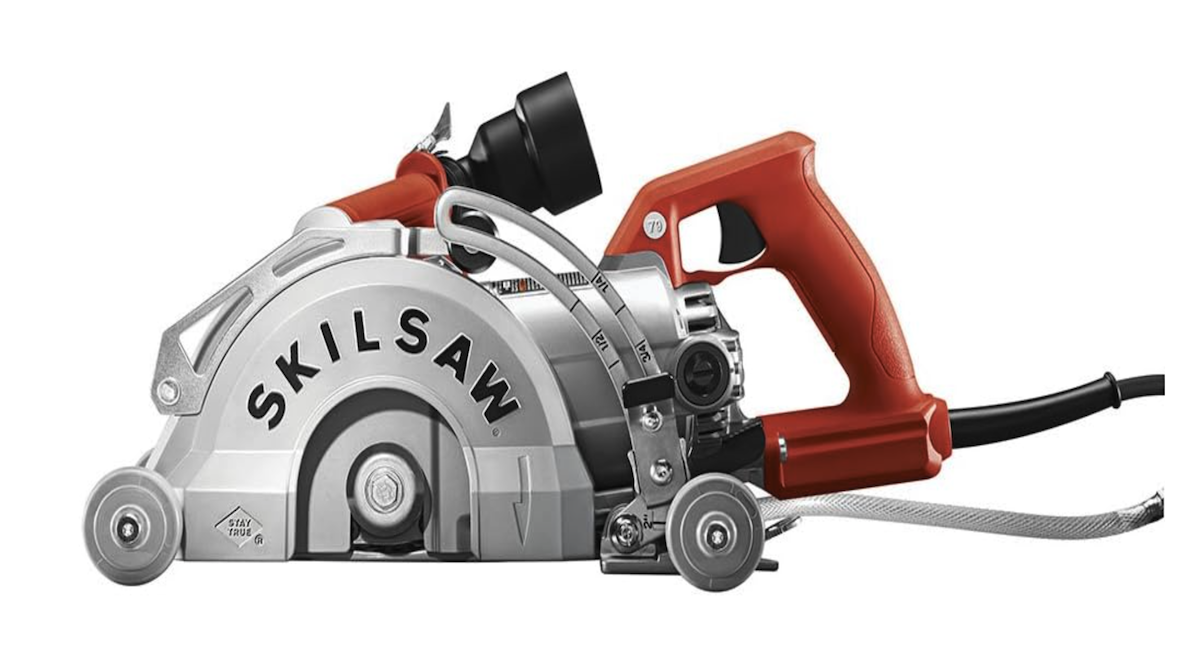
If you need to cut through concrete, brick, pavers, or stone, consider a concrete saw with the right saw blade to handle the material. Often a worm-drive motor can handle the demands of concrete, and some saws come with the ability to connect to a water source that helps with both cooling the blade during the cut and controlling the amount of concrete dust flying in the air. Since tough materials require a great deal of power to slice through, many reliable concrete saws are corded to provide consistent and unwavering energy. Still, you can find concrete saws that are powered by gas or batteries.
Best For: Cutting concrete, pavers, brick, or stone.
Our Recommendation: Skilsaw SPT79-00 Worm Drive Saw at Amazon for $356.28. The corded worm-drive saw from Skilsaw includes guide wheels to help move the tool along concrete cuts, and it has a handy wet/dry dust management system.
11. Back Saw
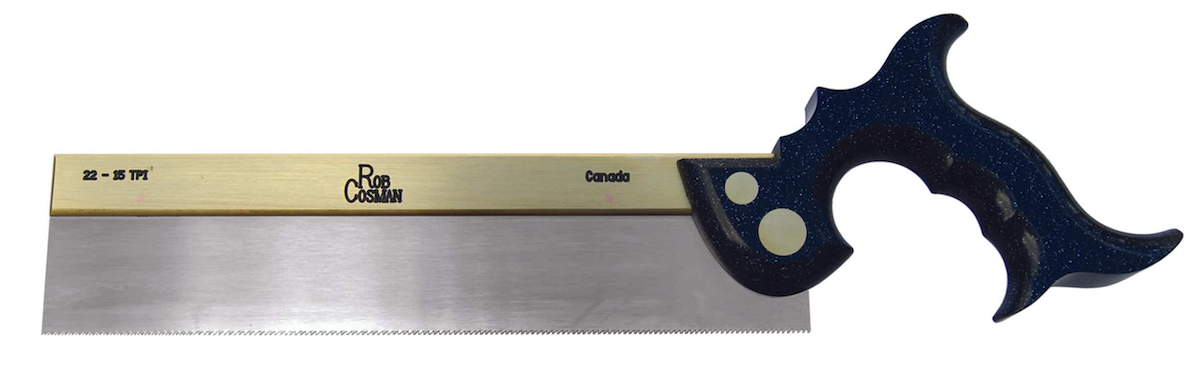
While it looks like a regular hand saw, a back saw is actually a detailed reliable woodworking saw that’s hundreds of years old. With a rigid spine that prevents the blade from flexing and gives the saw its name, the back saw maintains a straight, smooth cut that’s controlled through material. While all back saws share the same general design, there are versions based on the saw’s size, saw-tooth spacing, weight, and the angle of the saw teeth. They can be used for joinery, dovetails, tenons, and shoulder joints.
Best For: Cutting detailed joinery like dovetails and tenons.
Our Recommendation: Rob Cosman Dovetail Back Saw at Woodcraft for $274.95. With a brass back, pistol grip, and carved finger recess, the Rob Cosman back saw delivers straight tracking with minimal kerf (material removed by the saw).
12. Reciprocating Saw
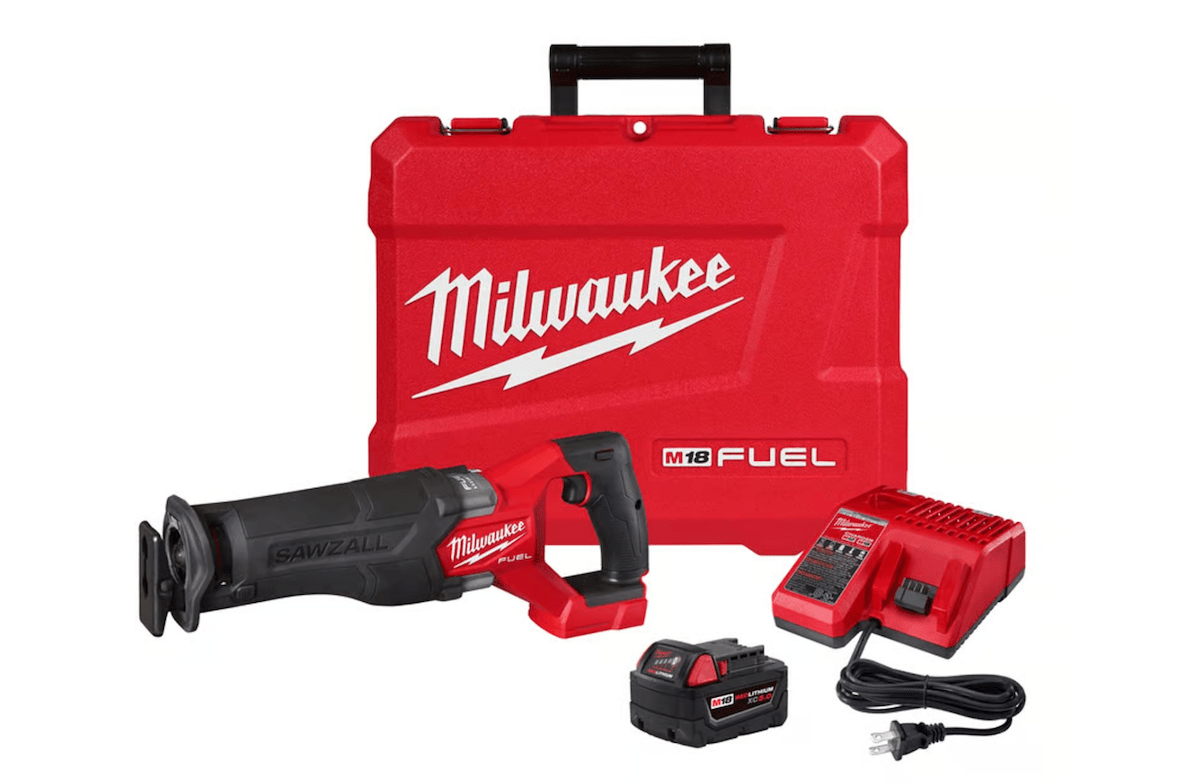
If there’s demo on your DIY list, a reciprocating saw might be the right tool for you. Often also called a recip saw or by the brand name, Sawzall, the reciprocating saw includes a long blade that moves quickly back and forth through material, much like a super-fast handsaw. However, they are heavier than handsaws and can kick back forcefully if the blade makes contact with a nail or something else that binds the blade during a cut. It’s essential to wear safety glasses and other personal protection equipment while using it. With the right blade, a recip saw can cut through metal, PVC, and wood easily. But they aren’t made for precision cuts or plunge cuts.
Best For: Demo work like cutting through plastic pipe or wood studs.
Our Recommendation: Milwaukee M18 Reciprocating Saw at Ace Hardware for $379. The cordless 7.4-pound Milwaukee M18 reciprocating saw offers 3,000 strokes per minute and low vibration. The kit comes with a dual charger and two batteries.
Prices included here are accurate as of publication on January 20, 2026.