We may earn revenue from the products available on this page and participate in affiliate programs. Learn More ›
It doesn’t take extensive work to create a healthier home. Incorporating just a few quick tasks into your monthly home maintenance routine can help improve the air and water in your home, reduce germs and other contaminants, monitor for potential hazards, and make indoor spaces overall healthier and safer.
“The key isn’t to deep-clean the entire house in 30 minutes,” says Lexi Brown, cleaning expert and product manager at True Fresh. Instead, develop a monthly health-and-safety inspection to look for moisture, dust, ventilation issues, and potential hazards before they become bigger problems. “A little bit of preventive attention each month makes routine cleaning easier and helps keep your home cleaner, drier, and safer.”
Here are the top tasks that experts recommend focusing on in order to make your home healthier overall.
Examine HVAC filters.
Check filters for your heating, ventilation, and air conditioning units; range hood; bathroom fans; and any other filters that are easy to reach, as indoor air quality depends on proper ventilation and filtration, says Brown. Always follow the manufacturer’s instructions for cleaning or replacing any filters.
John McKeon, MD, principal at the iAIR Institute, and the CEO of Allergy Standards Ltd, an international standards and certification body, suggests pulling your HVAC and air purifier filters out and holding them up to a light. “If you can’t see through it, a change is overdue,” he explains. “A clogged filter stops trapping dust mite allergens, pet dander, and pollen, and can start pushing what it’s already caught back into the room.”
Check for leaks and moisture.
Another important step, which only takes a few minutes, is to walk around your house and look under sinks, around toilets, behind appliances, and near windows for drips, dampness, or condensation. “Even small amounts of moisture can grow into mold problems over time,” warns Brown.
Wipe down germ hotspots.
Next, quickly wipe down high-touch zones, such as light switches, doorknobs, appliance controls, faucet handles, and remote controls. These areas easily pick up bacteria from being handled throughout the day. “Use a damp microfiber cloth, not a dry duster, since dry dusting can send particles back into the air and into the breathing zone instead of removing them,” McKeon suggests. Soap and water will remove most germs during routine cleaning, but when someone in the household is sick, disinfect instead, adds Brown.
Measure your home’s humidity level.
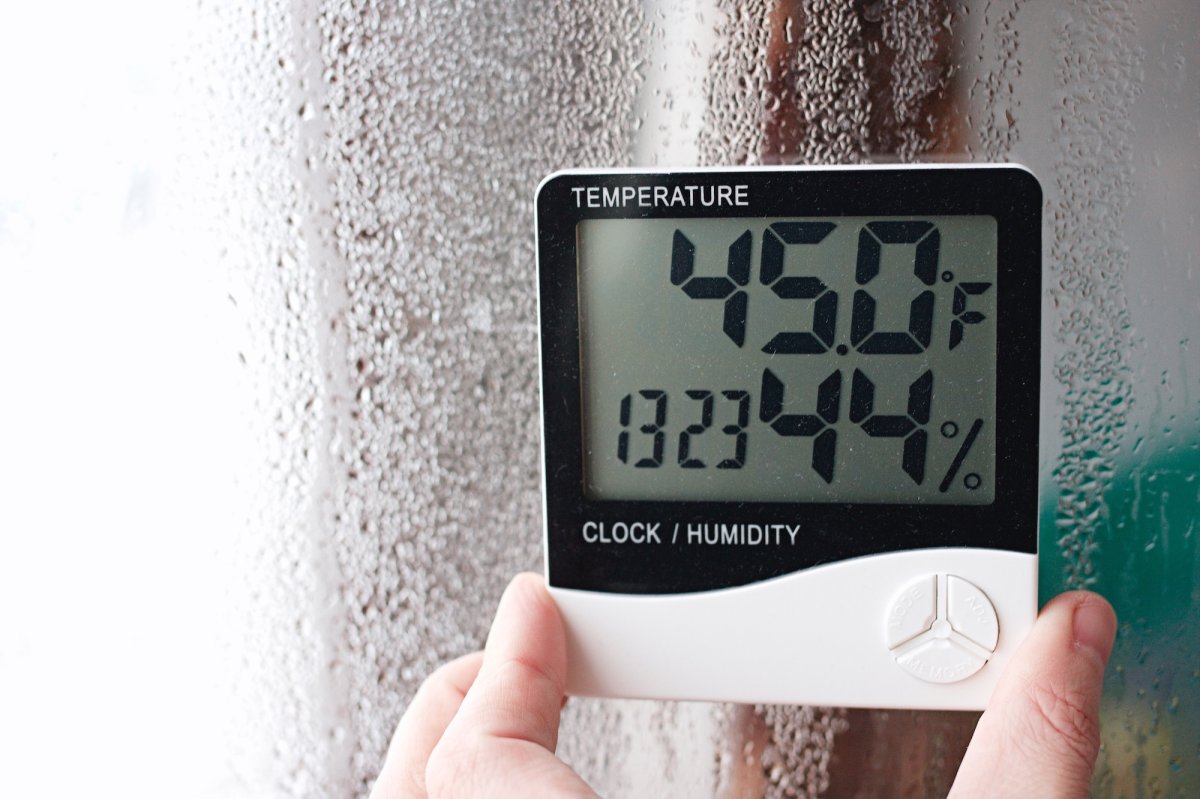
You’ll also want to check the indoor humidity. “If you have an old house, consider springing for an inexpensive hygrometer (a device that measures humidity) to ensure the air isn’t too moist–ideally 30 to 50 percent,” says Brown. Too much humidity encourages mold, dust mites, and other biological contaminants to grow.
Rotate and wash allergen traps.
McKeon points out that items like pillow protectors, pet beds, bathmats, and throw blankets act as reservoirs for dust mite allergen and pet dander, yet most people go months without washing them. “Wash what you can in water at least 130 degrees Fahrenheit, which is the temperature that actually kills dust mites, not just refreshes the fabric,” he explains.
via Shutterstock
Clean high-dust areas.
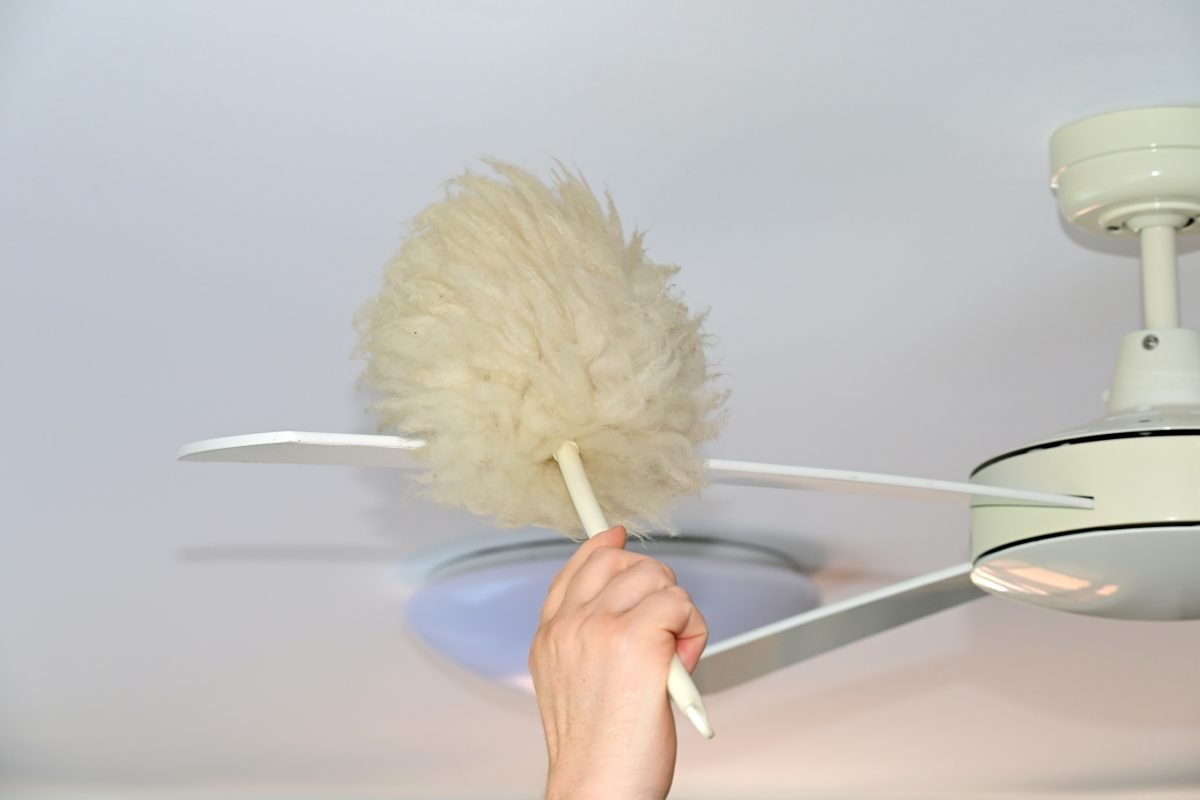
Certain spots throughout the house often get missed during regular cleaning, which results in dirt and dust build-up. Vacuum under beds and other furniture, and dust or wipe down ceiling fan blades, vents, baseboards, and other dusty places you tend to overlook. “Dust can harbor pollen, mold spores, pet dander, and dust mites, so it should be removed regularly to cut down on the amount of particulates in the air inside your home,” explains Brown.
Ventilate your home for a few minutes.
It’s also a good idea to open a few windows, even for a brief time, to exchange stale indoor air for fresh air from outside, says McKeon. “This helps clear the carbon dioxide and volatile organic compounds that build up when a home stays closed up.” On days when air pollution is high, such as from pollen or wildfire smoke, keep the windows shut and run an air purifier instead.
Test smoke and carbon monoxide detectors.
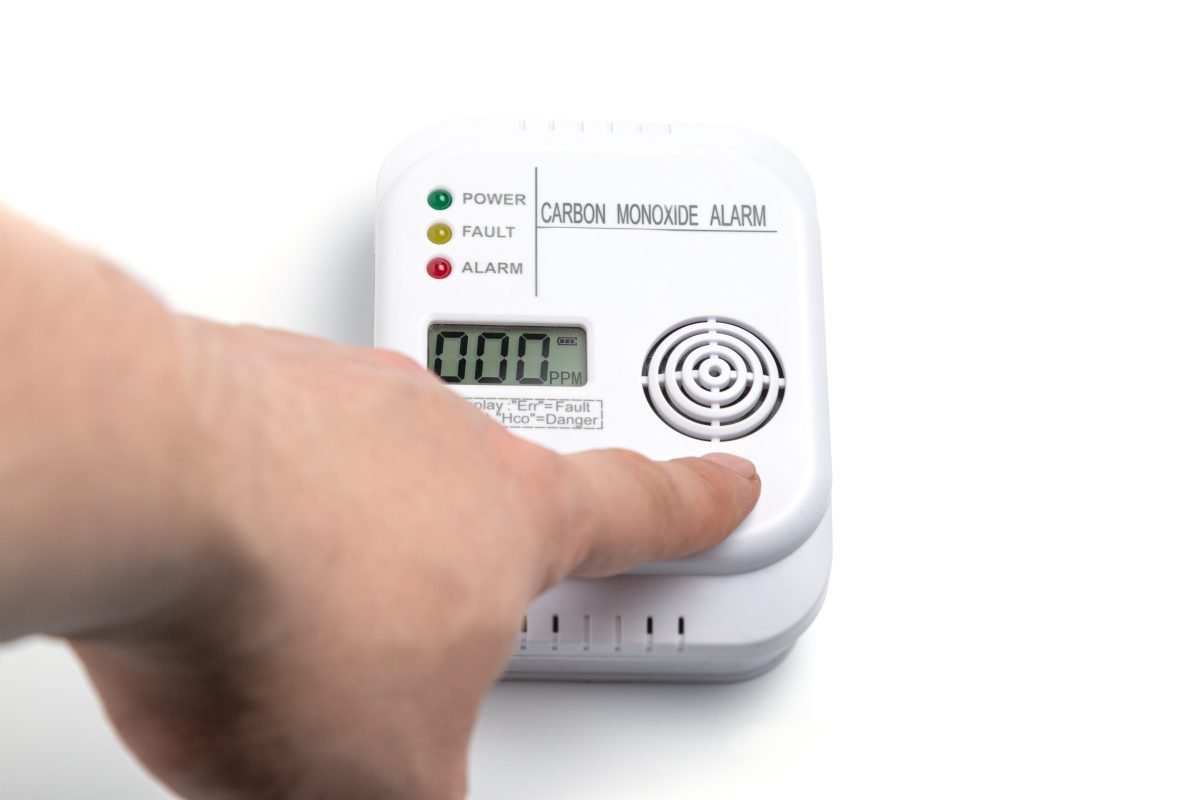
Finally, don’t forget to test smoke and carbon-monoxide detectors throughout your home on a monthly basis, which takes just a few minutes. Follow the manufacturer’s instructions and make sure there isn’t anything covering or blocking these critical safety devices.