We may earn revenue from the products available on this page and participate in affiliate programs. Learn More ›
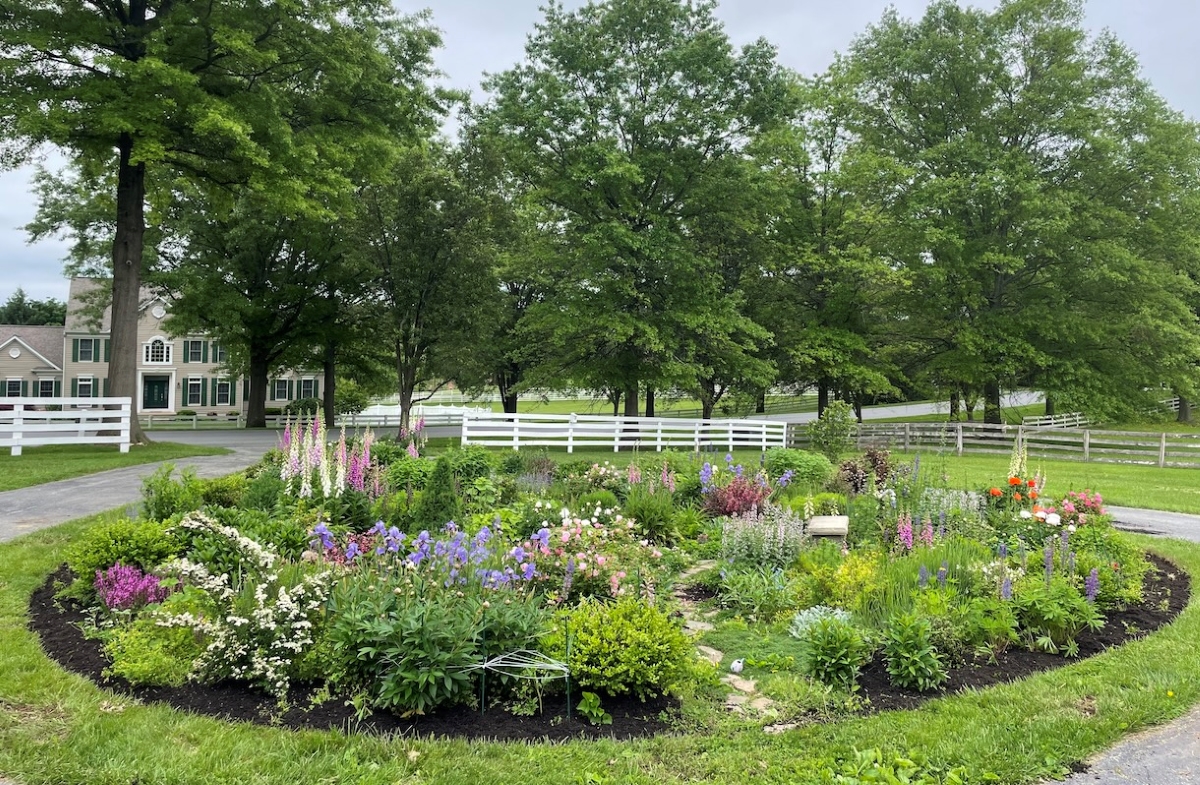
When Caroline Maurer and her family moved into their 1900 farmhouse in Mount Airy, Maryland, the landscape was nothing but grass. She dug it up and planted an English cottage garden that quickly went viral on Instagram and Facebook after a single season of growing. “I wanted a space that feels layered, abundant, and a little bit magical, like it’s always been there,” says Maurer.
Since 2023, Caroline’s Figment Cottage Garden Design has sold her full sun cottage garden plan, along with guides, tools, and seeds, and has been consulting with homeowners throughout Maryland, Washington, D.C., and northern Virginia to plan their own cottage gardens. We asked her for some of her best cottage garden ideas, and tips for growing plants typical of English cottage gardens.
Elements of a Cottage Garden
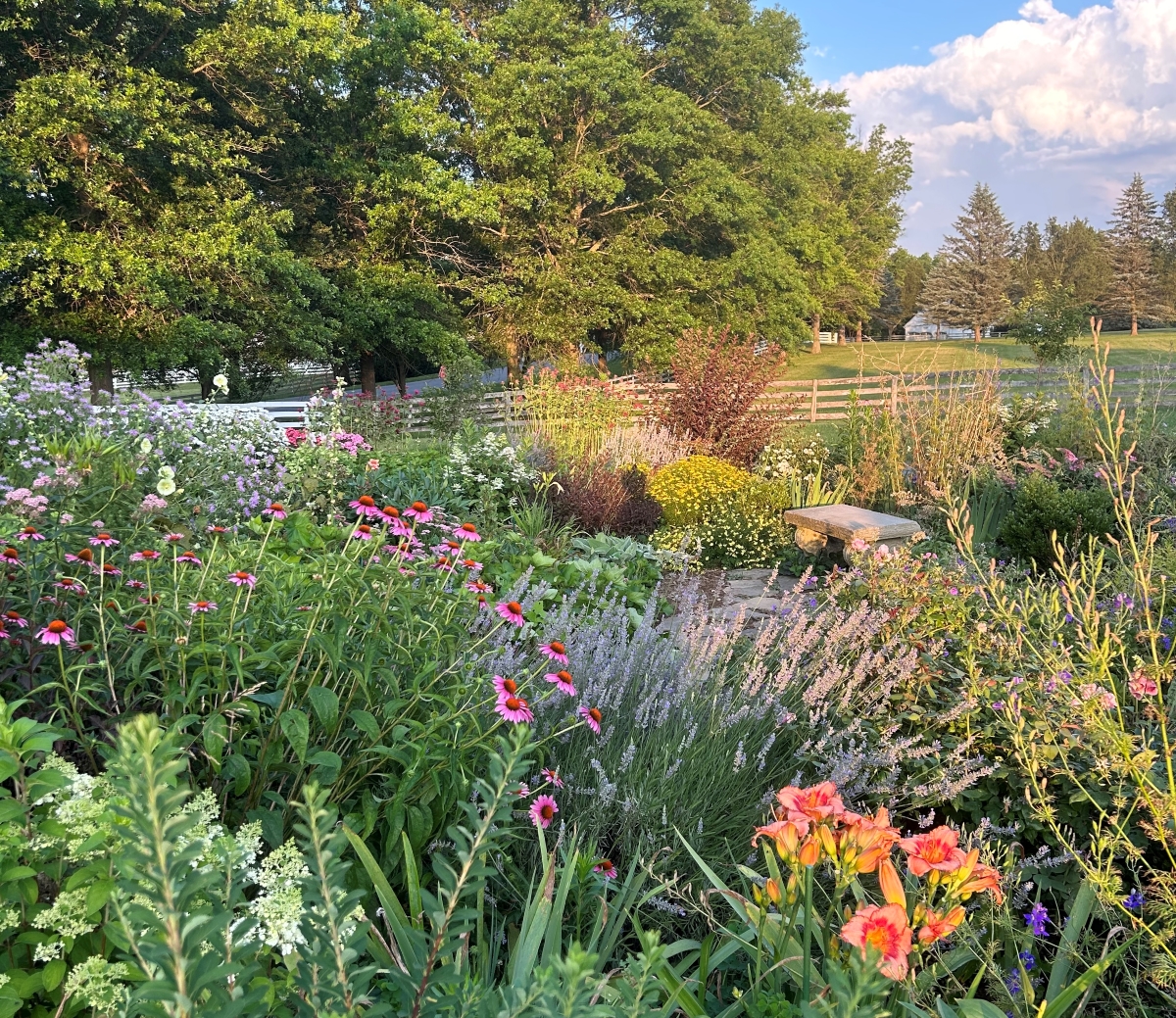
“Gardens should be for people and backyard ecosystems, and biodiverse, densely planted cottage gardens support an incredible amount of life,” says Maurer. There are no hard-and-fast rules for creating a cottage garden; these informal, asymmetrical spaces don’t have to follow a strict plan. But consider these elements or features of cottage gardens:
- They mimic nature with a mixture of color and plants overflowing carefully tended, casually designed beds.
- Most have a profusion of various sizes, colors, and shapes of plants that, together, make a visual panorama.
- Typically sweeping in nature, the gardens feature lush plantings, meandering pathways, inviting benches, and ornate iron gates.
- Many English cottage gardens like Maurer’s also have a potager, or kitchen garden. “It’s one of my favorite ways to make the everyday feel magical,” she says. When planting edibles in a cottage potager framework, they take on storybook charm. “It becomes edible art—just as beautiful to look at as it is delicious.”
- English garden flowers in contrasting colors, shapes, and heights should juxtapose neatly with trimmed hedges in a random pattern that balances traditional elegance with romantic whimsy to look like the garden came straight out of a Jane Austen novel. If this describes the kind of garden you want on your property, these are the annuals and perennials that you should start cultivating.
“To me, cottage gardens are the most classic, romantic, and timeless planting style.”
—Caroline Maurer, figment cottage gardens
11 Essential Cottage Garden Flowers
Cosmos (Cosmos bipinnatus)
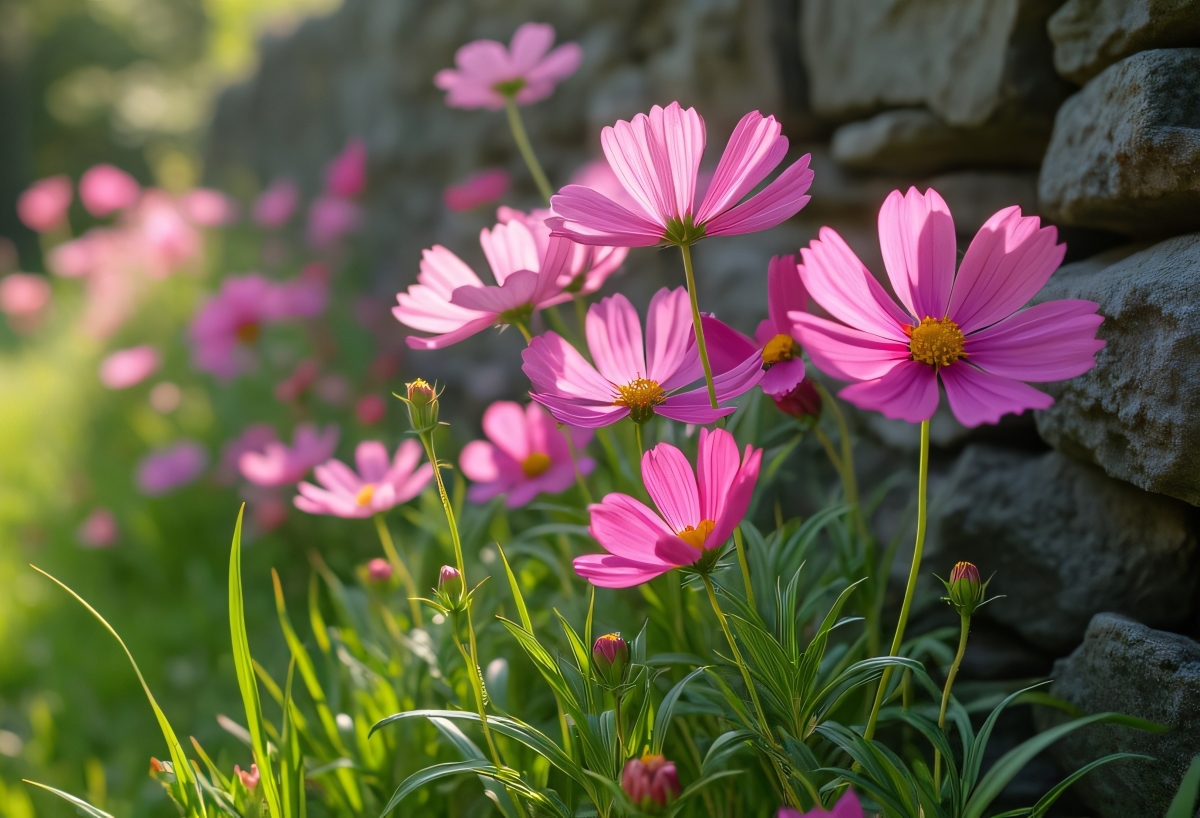
Few flowers impart that airy, dreamy cottage garden feel better than cosmos. With their 2- to 4-foot-high fern-like stems bending gently with the breeze, cosmos thrive in sunny spots with soil on the dry side. They grow easily from seed and often can reseed nearby the next season.
White, pink, and light purple daisy-shaped flowers bloom throughout spring and summer. Some varieties (C. sulphureus, or sulphur cosmos) feature blooms in yellow and orange. Because they are profuse bloomers, cosmos prove a good selection for both cottage and cutting gardens.
Daylilies (Hemerocallis)
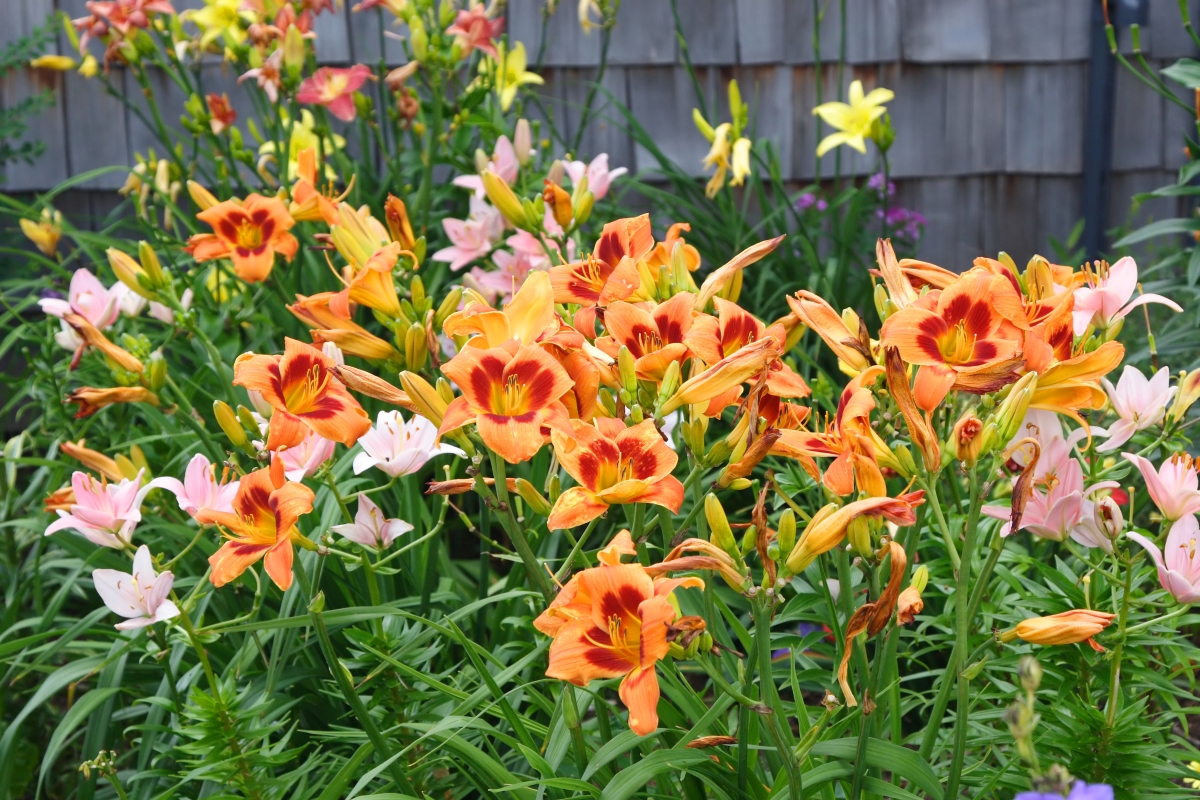
For spectacular blooms in colors ranging from brilliant yellow to the deepest burgundy, nothing beats the daylily. Their dazzling displays of flowers in a range of colors and styles such as single, double, spider, multiform, and ruffled, belie their toughness. Daylilies are so named for the fact that each flower lasts only a day. However, because they are profuse bloomers, they can grace a cottage garden with gorgeous flowers from late summer to early fall.
Grown in USDA Zones 3 through 9, daylilies can thrive in full sun to shade and in almost any soil type, although they prefer fertile, well-drained soil and little care. In addition, they are rarely subject to pests or disease. Use them along walkways or in small groupings to attract butterflies and hummingbirds.
Delphinium (Delphinium elatum)
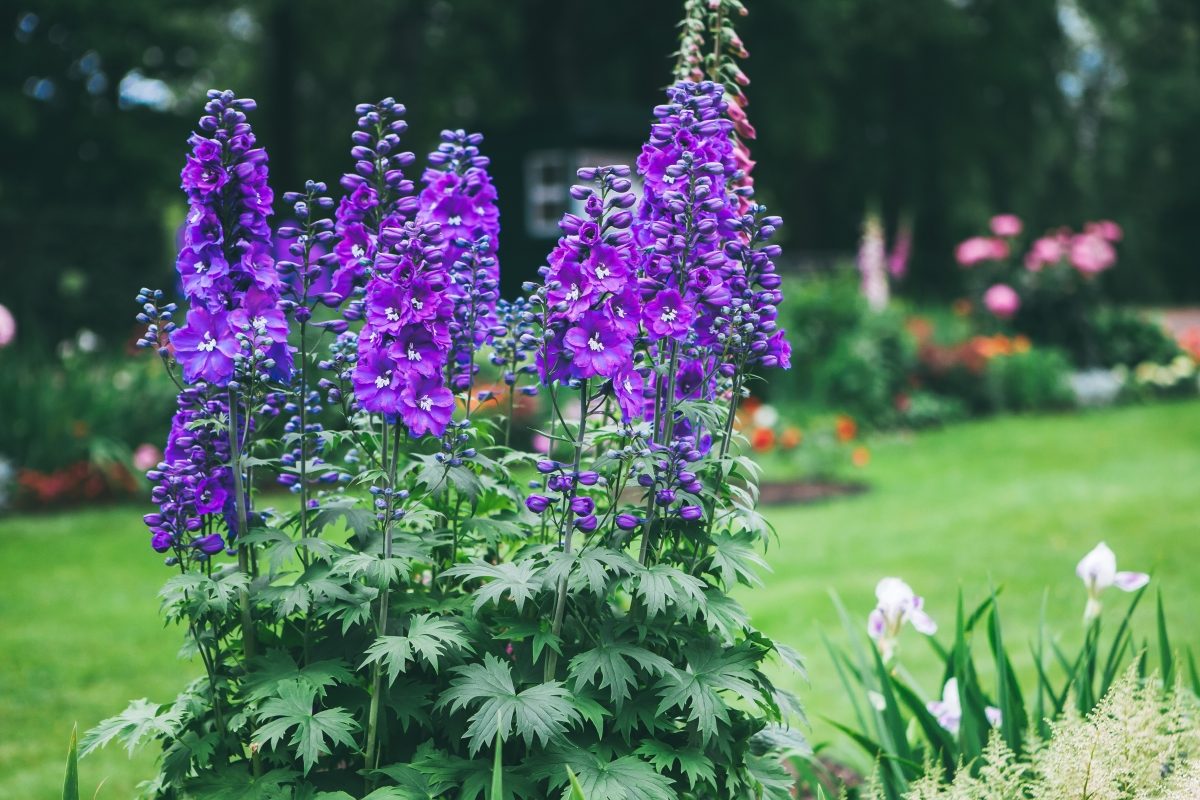
Prized for its showy spikes of blue, purple, and pink that can reach as high as 6 feet, the delphinium creates a great backdrop for other English garden flowers. Hardy in USDA Zones 3 to 7, the flower enjoys a mostly sunny spot, but “benefits from afternoon shade,” says Maurer. Delphinius need consistent moisture as well.
A perennial from the buttercup family, taller varieties of delphinium might require staking and will appreciate a location without wind. While it can be susceptible to powdery mildew and crown rot, with proper placement and watering, it generally stays healthy. “Larkspur is an easier annual you can toss into the garden,” says Maurer.
Foxglove (Digitalis)
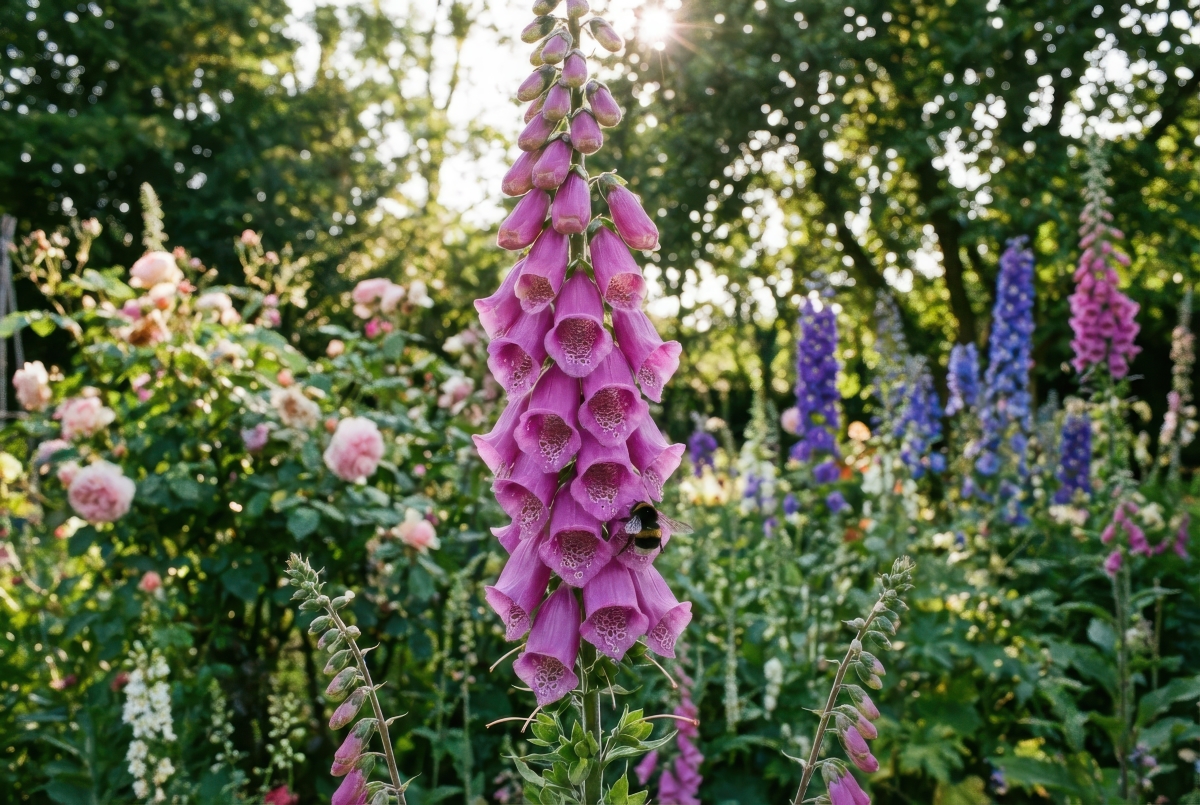
“I never garden without foxglove,” says Maurer. She cautions, however, that it “is highly toxic to pets and people, so take care if you have little ones or curious fur babies.” This self-seeding biennial European native can reach 3 to 4 feet tall (and some grow up to 6 feet with proper care), providing some height in a cottage garden. Its numerous tubular, bell-shaped flowers grow on pointed spikes that bloom in early summer in shades of white, pink, lavender, and purple. The plants grow in Zones 4 to 9, but usually require a bit of shade, especially during the hot afternoon.
Hollyhocks (Alcea rosea)
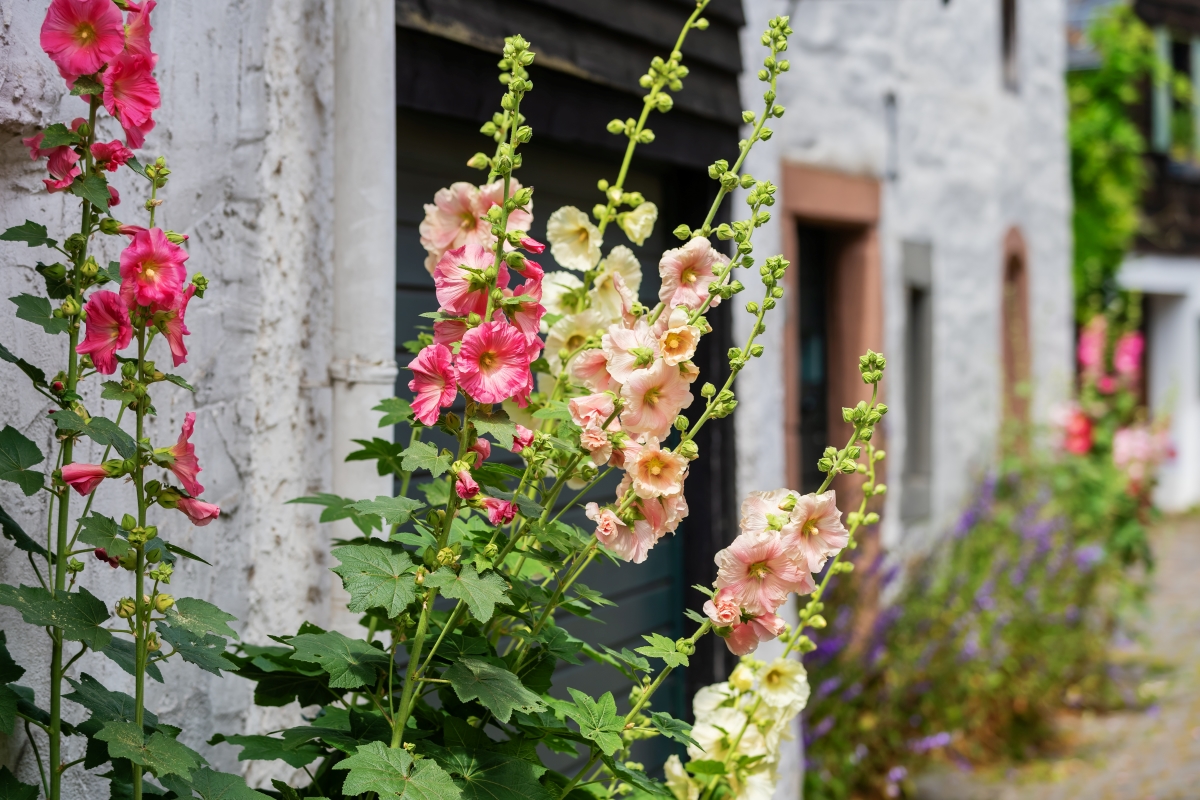
Maurer considers hollyhocks to be “the most magical cottage garden flower.” She says the biennials are easy to start from seed. “Start seeds each year so you always have blooms,” she says. Typically reaching up to 8 feet tall, hollyhocks can stand as backdrops to shorter flowers and shrubs or before a fence or wall. Stalks of light yellow and pink, as well as darker reds and deep purples, attract pollinators to their striking flowers.
Best grown in Zones 5 to 9, hollyhocks prefer full sun and well-draining soil. They bloom from late spring to midsummer, and even until frost and attract nearly every kind of pollinator. An old-fashioned favorite, the hollyhock had medicinal uses as herbal remedies in past eras. All parts are edible; the flowers are sometimes used in tea.
Hydrangea (Hydrangea paniculata or H. macrophylla)
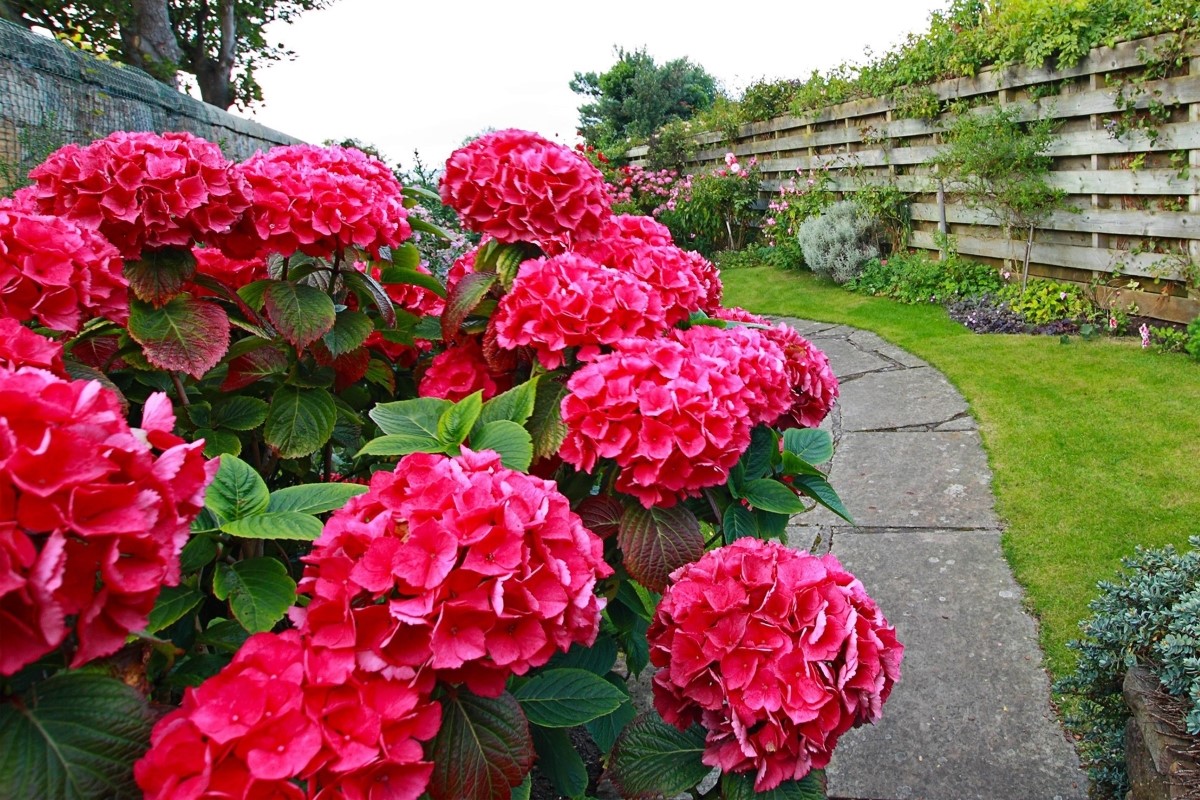
The hydrangea is a great choice for cottage gardens that feature some shady areas. Suitable for Zones 3 through 7, this fast-growing deciduous shrub produces giant balls of flowers from spring through summer and even into early fall. Growing up to 15 feet tall, hydrangeas prefer morning sun and shady afternoons, along with good drainage and plenty of organic material in the soil.
“Full-sun panicles are my favorite because they’re drought- and heat-tolerant,” says Maurer. Hydrangeas reward gardeners who give them good care with blooms of blue, white, purple, or pink, depending on the alkalinity of the soil. According to Maurer, “Bobo is a must-plant because it has white flowers spring to fall, which then fade to pink.” Pests are uncommon on hydrangeas unless the plants become stressed.
English Lavender (Lavandula angustifolia)
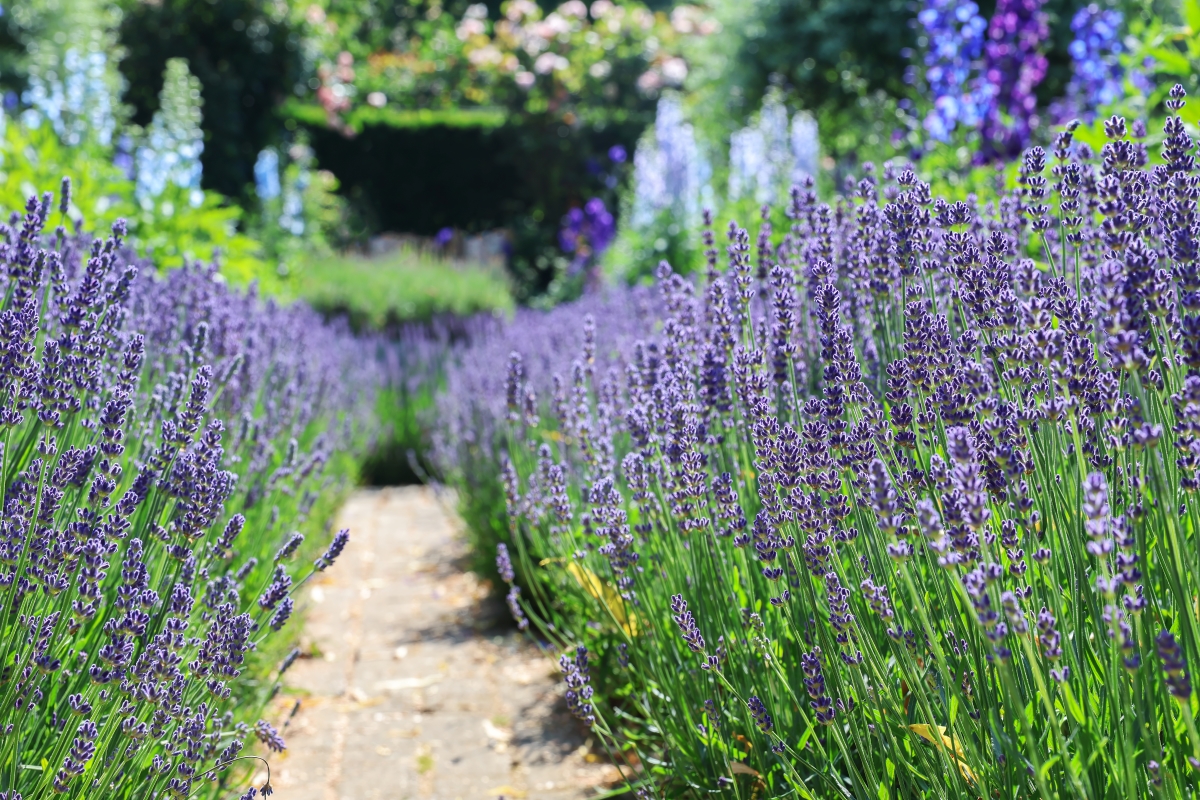
It doesn’t get much more “English cottage garden” than this old-fashioned and fragrant plant. Dozens of lavender species are available with features like robust fragrance, longer flower stalks, or darker purple blooms. Perennial lavenders can live for 5 to 15 years in USDA Zones 5 to 8. They can grow as annuals in colder climates. However, “lavender can be tricky if you have clay soil,” says Maurer. It is a perfect English garden plant for dry climates and well-draining soils.
Lavender flowers are frequently used to make potpourri, sachets, and essential oils, and the buds also are used in cooking or summer drinks. Lavender thrives in full sun and even sandy and gravelly soil. Reaching only about 2 feet tall, this small shrub balances taller English garden flowers. Maurer says to “prune it back to 2 inches above woody growth to maintain a tight shape” and avoid a leggy look.

Tips for Starting Your First Cottage Garden
There are no set rules on specific plants or structures to include in a cottage garden, though it’s nice to have a place to rest and enjoy the magic. Feel free to add native plants, edibles, and annuals to fill in between perennial spaces or bloom times.
Maurer wanted to do more than just replace an all-grass landscape when she started her Maryland cottage garden. “My goal was to create something that feels immersive and joyful, while also functioning as a thriving habitat.” She offers these helpful tips:
- Always start with function, flow, and foundational shrubs.
- “Build your perennials around that backbone,” says Maurer.
- Aim for anchors, rhythm, and year-round interest, “not just a fleeting moment of bloom.”
Peony (Paeonia sp.)
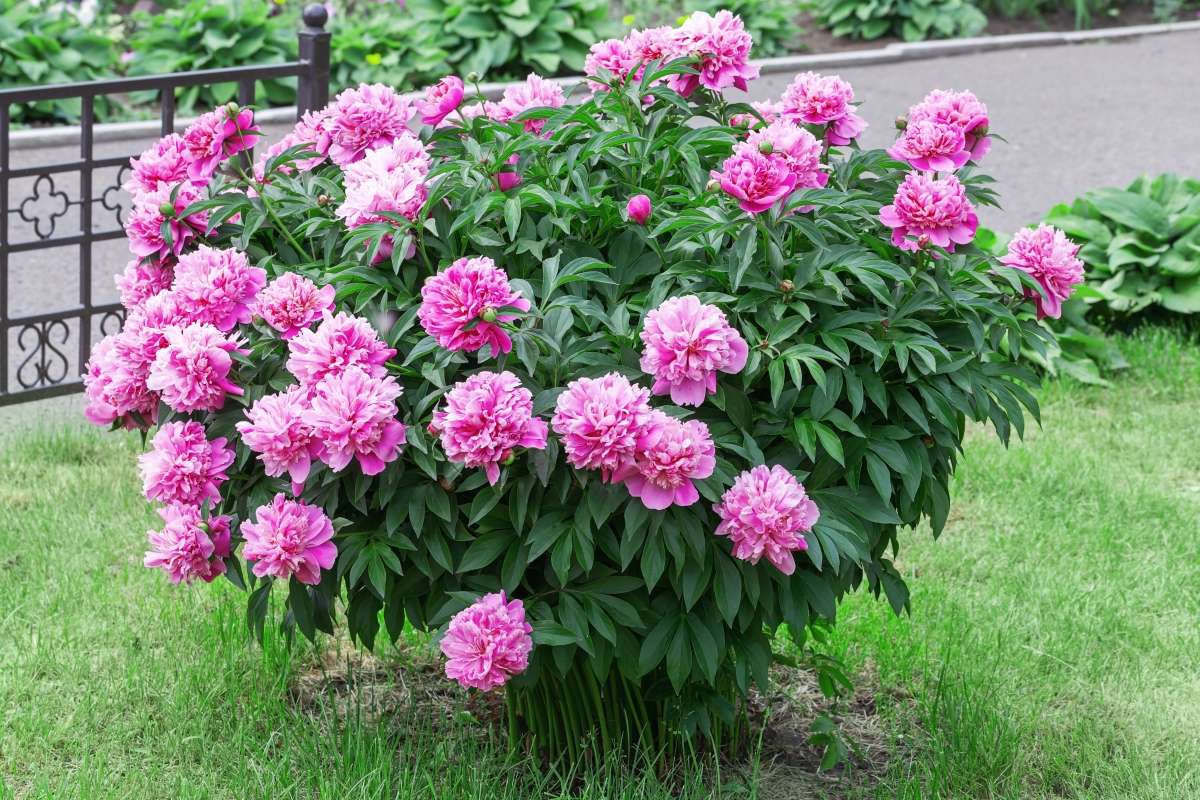
Traditionally, peonies come in three colors: white, pink, and red. “Always pair a deep garnet or coral with light pinks and purples to make your spring garden pop,” says Maurer. Karl Rosenfeld, Coral Charm, and Old Faithful are my favorites,” she adds. Best suited for USDA Zones 3 to 8, and grown in full sun and well-draining soil, peonies usually bloom in late May. Available with single or double blooms, these rotund beauties emit a strong fragrance.
After blooming, the glossy leaves on these midsize bushy plants provide a pleasing framework for the blooms of other flowers. The foliage dies off during the winter and will reemerge the following spring. Although you can divide peonies when they become large, they don’t like being moved. When planting, leave 3 to 4 feet between peonies for proper air circulation and don’t place them too close to trees that will rob them of nutrients. Give them rich soil, but don’t smother them in mulch.
Rose (Rosa sp.)
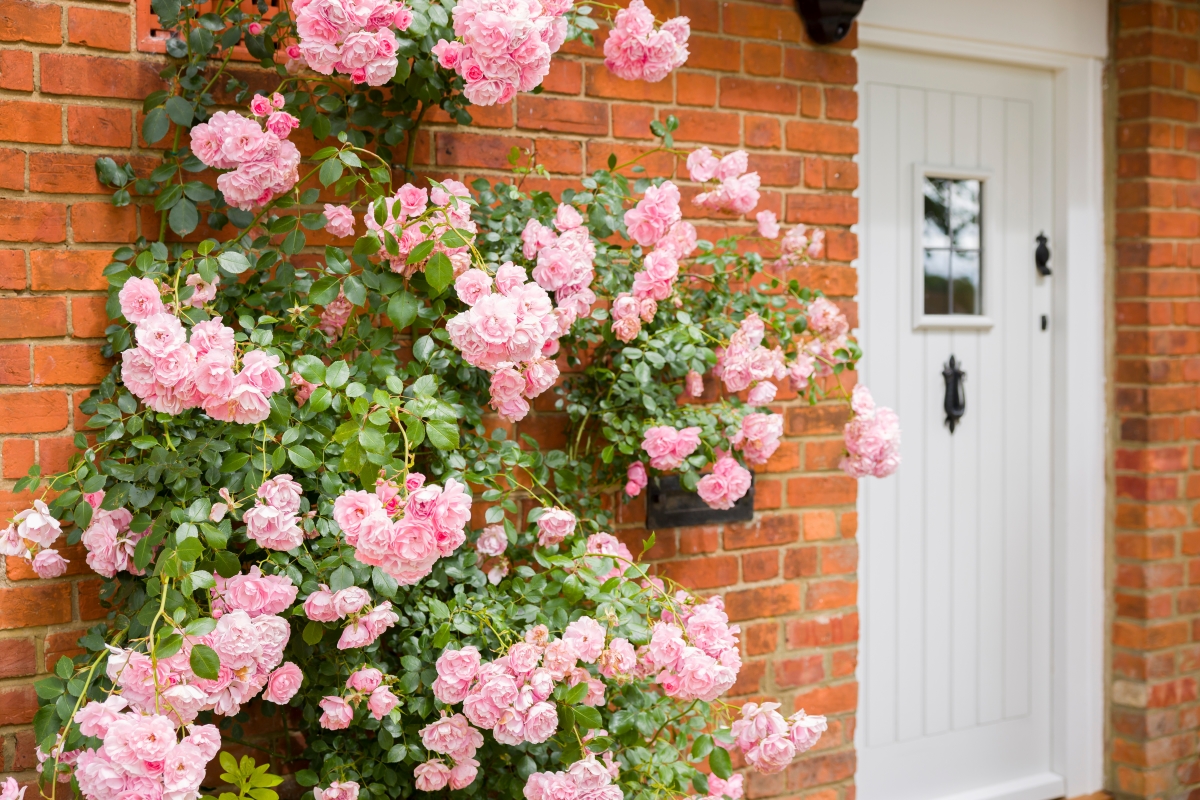
Roses are a staple of a cottage garden. Although some like vigorous rambling roses, Maurer prefers climbing roses. “Ramblers just give you one epic show, while climbers bloom spring to frost,” says Maurer. Both types can climb a pergola or hide an unsightly structure or wall in the garden. English rose ramblers produce an abundance of fragrant, small roses clustered in large sprays, which creates a cascade of color. Climbing roses usually repeat their blooms on larger, singularly held flowers.
Both types of roses can usually grow in USDA Zones 5 through 11, but hardiness depends on the specific variety. Most need at least 6 hours of sun per day, but can thrive on neglect and tolerate poor soil and partial shade. Prune roses to keep them looking their best, and to keep them from taking over a garden bed or structure.
Wisteria (Wisteria sp.)
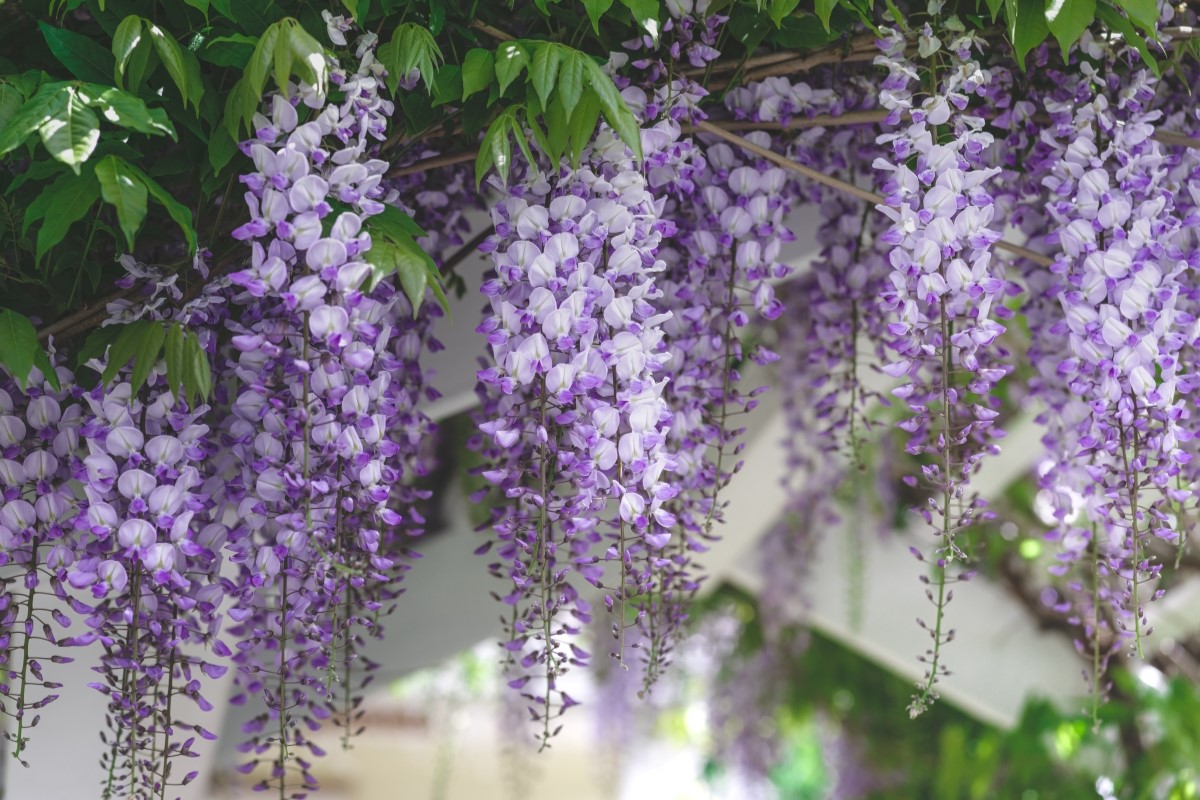
Drape trellises or other garden structures with wisteria, a vining plant that produces racemes (grape-like clusters) of purple flowers on mature plants. Racemes become longer as the plant matures. The plant can reach 30-plus feet long and can require pruning twice a year. Best grown in Zones 5 to 9 (depending on the variety), wisteria prefers slightly acidic, well-draining soil and full sun.
Originally from China, Japan, and Korea, wisteria symbolizes long life and wisdom. Prized for its delicate beauty, it is sometimes considered an invasive species, and its aggressive growth can cause structural damage unless pruned. All parts of the plant are toxic.
Violets (Viola sp.)
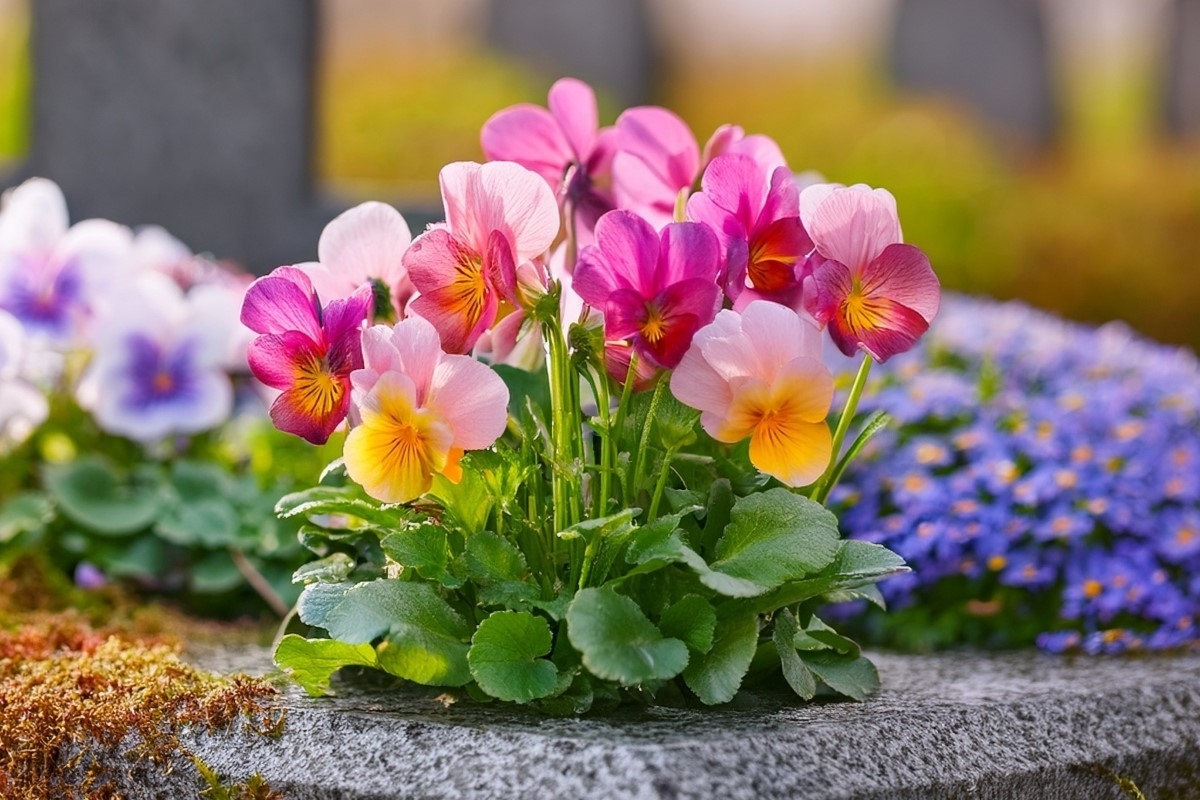
There are more than 400 species of violets, some of which date back to Greek gardens in 500 B.C., who considered them a symbol of love and fertility. Lightly fragrant, these small (3 to 9 inches) plants prefer partial shade and moist, rich soil, such as that found in a woodland. They can provide color in the shade of shrubs or taller flowers. Considered cool-season plants, violets can get leggy and struggle during the heat of summer, although they can bounce back to bloom again in the fall.
Although the leaves and flowers are edible, violets should be consumed in small quantities to prevent stomach ailments.