We may earn revenue from the products available on this page and participate in affiliate programs. Learn More ›
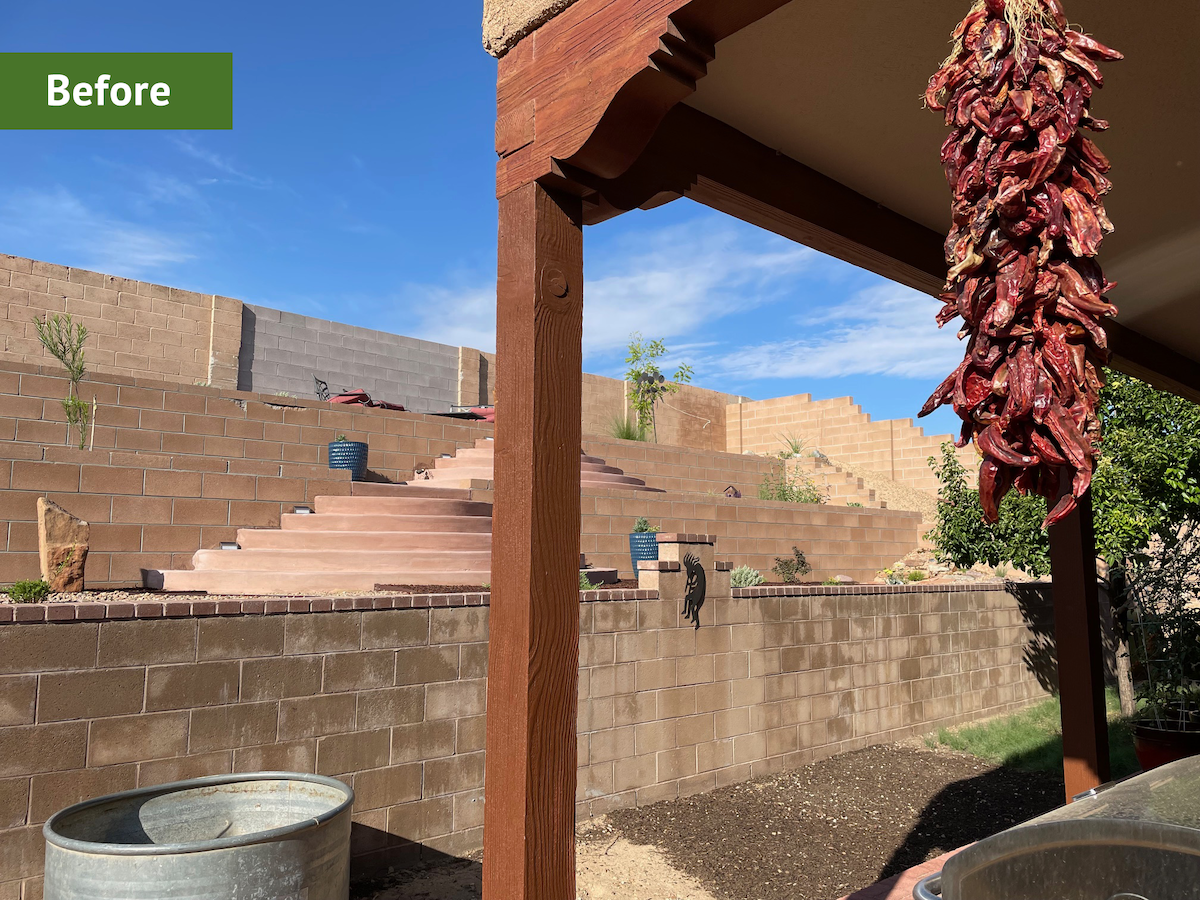
Some people move into a new home and spend their last home sale proceeds on new carpet or appliances. Then there are people like my husband and me, who liked the layout style of our late 1990s house but faced a literal uphill battle with its sloped backyard. We paid contractors to remove dirt and gravel to create terraced levels to the top, which is bordered by a concrete block fence.
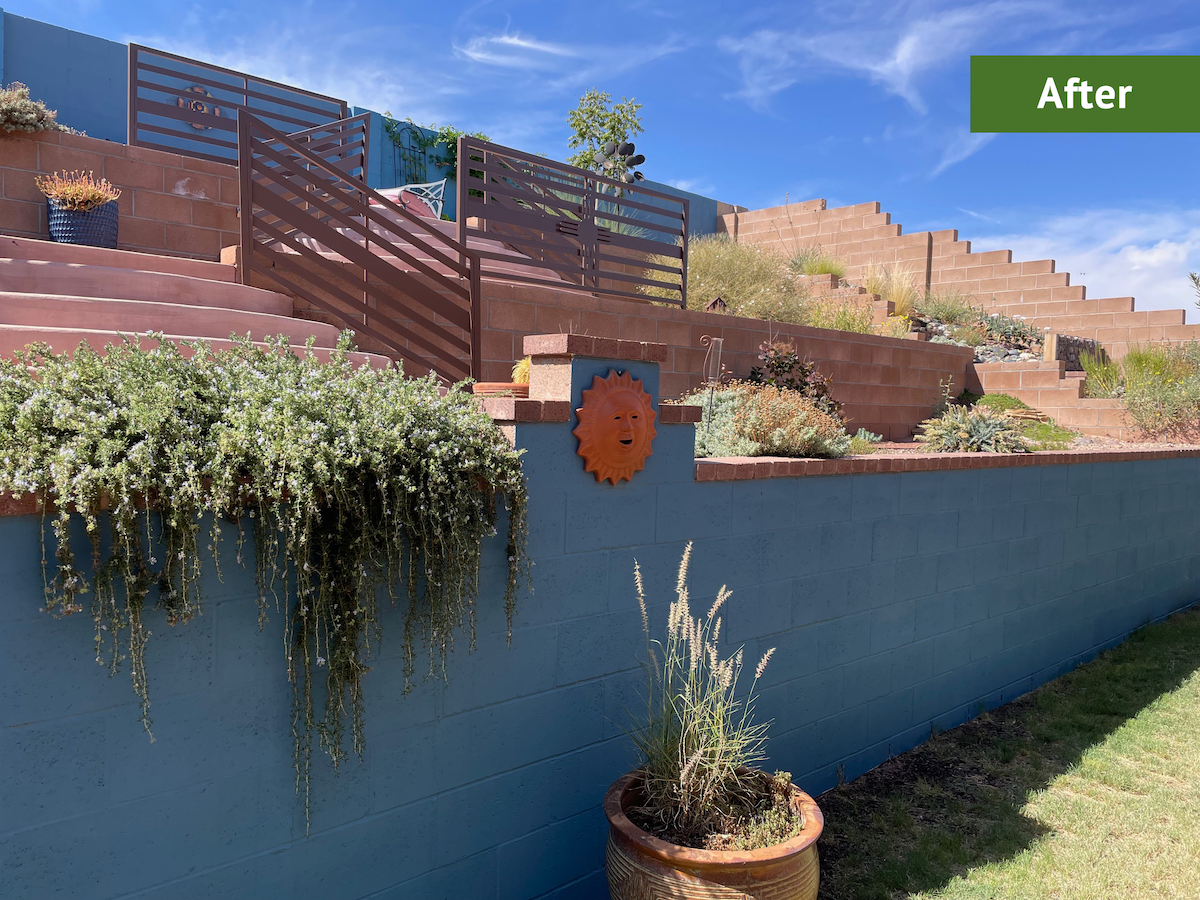
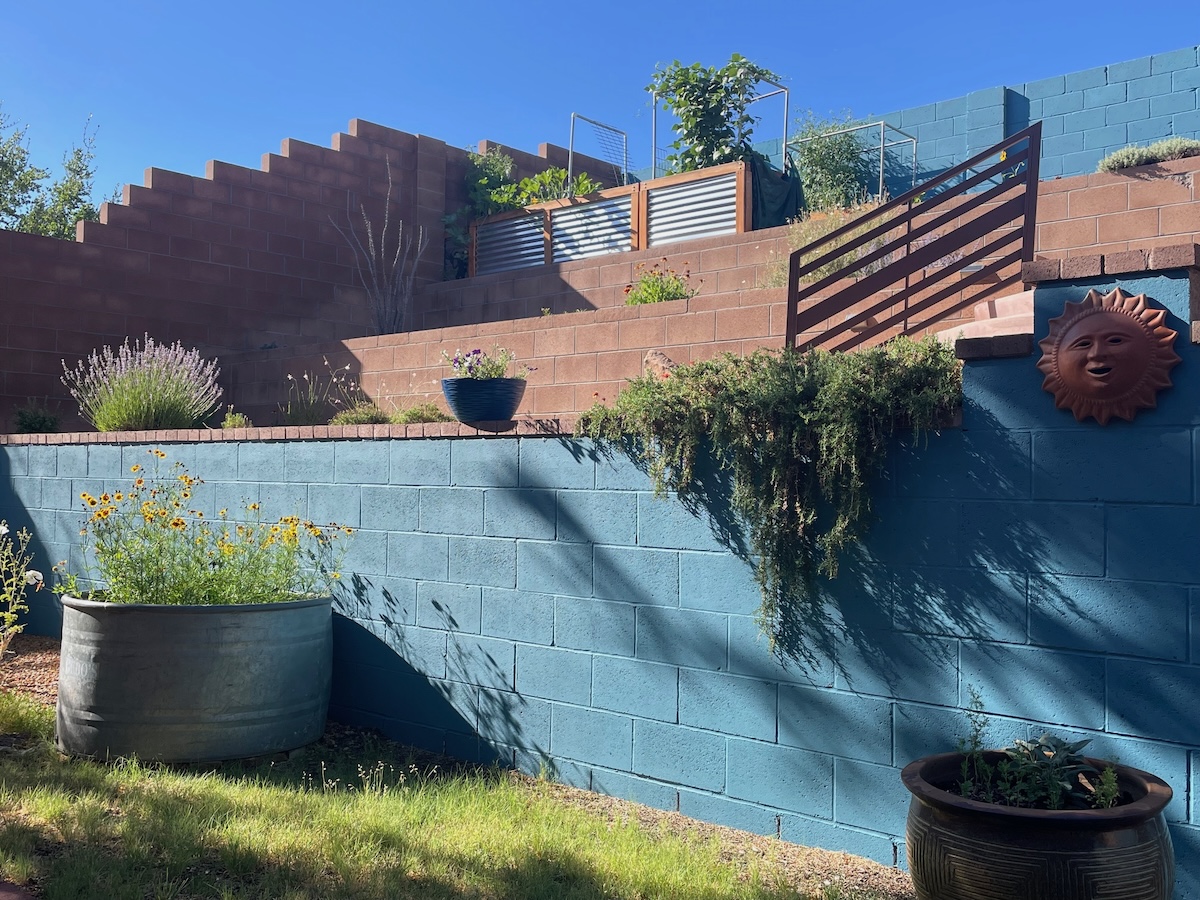
Since the new levels and access to a view cost us a lot, we saved money by completing many of the finishing tasks ourselves, including adding color to the upper fence and the original retaining wall along the bottom. Our beautiful blue painted fence is now my favorite focal point in the backyard.
Why We Painted Our Block Fences
With the steep backyard, the contractors needed to find the easiest way to gain access to the backyard so they could remove soil and pour concrete for footings and steps. They removed a section of the block fence along the back wall where they could have street access. Since it would have been difficult to match the 30-year-old color of the original block fence, we asked for standard gray concrete block, since we knew we could paint the entire wall.
Likewise, they had to close an existing opening in the bottom retaining wall that led to a scary DIYed set of steps. The bottom wall had two different colors of blocks: the light terra-cotta color matching our backyard fencing and new terrace retaining walls, and the existing blocks that I can only describe as muddy gray. By painting both block walls, we provided seamless continuity and a fresher look at the top and bottom of our new yard. In fact, the walls provided most of the color in the backyard until the new plantings had time to mature and bloom.
Why Add Blue in the Landscape?
I knew I wanted a blue wall since I noticed how well the color worked in gardens I’ve toured around the country. Adding blue to the garden works for several reasons:
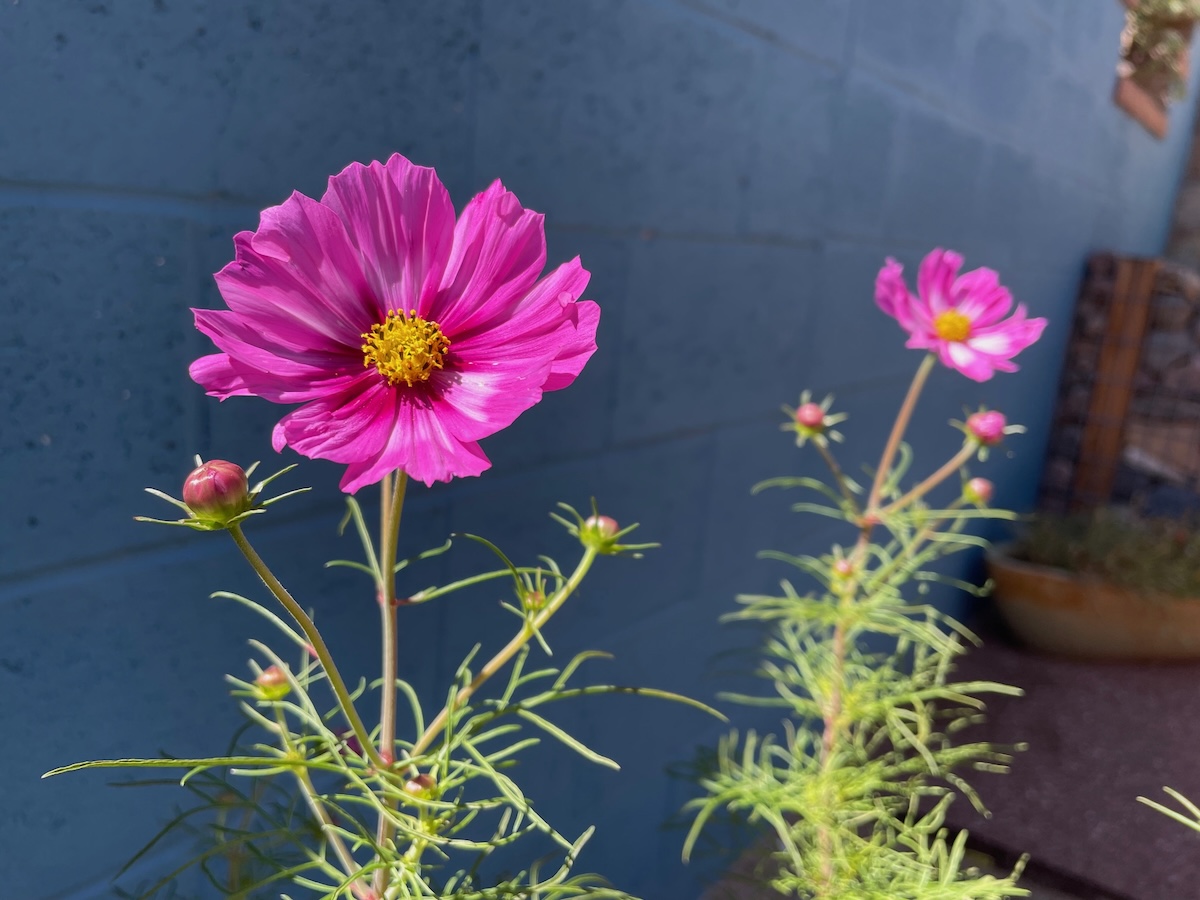
- Blue is complementary to the most common flower colors: yellow, orange, and even coral or pink. This makes for a stunning contrasting backdrop.
- There is little true blue in plants and flowers, so the color does not appear in natural landscaping.
- Blue is a calming color. From a feng shui standpoint, blue mirrors the color of water for a peaceful sense of continuity.
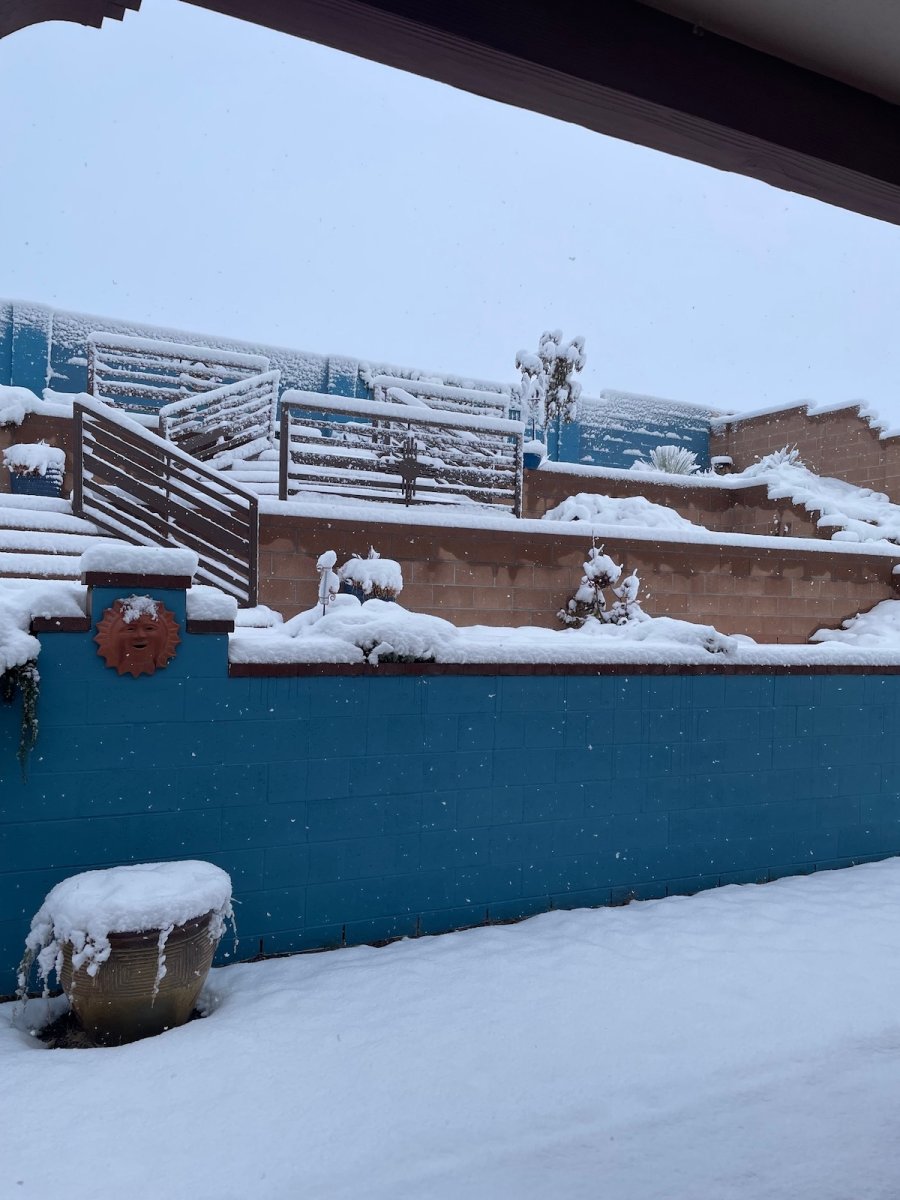
We had added blue in spurts before by setting out garden art or containers in shades of blue. Despite the contractor’s reaction when I told him my plan, I knew we would enjoy more than a small burst of the cool color in a hot desert environment, but I didn’t realize how gorgeous our blue walls would look when holding the occasional winter snow.
The Paint Color We Chose
I knew I wanted an earthy feel to the color, even though blues can be very bright. Our new retaining walls and side fence have coral or terra-cotta tones. We looked mostly at navies, medium blues, and gray-blues, and settled on Turkish Tile (SW 7610) from Sherwin-Williams. It’s between medium and dark blue and has a slight teal undertone that resembles deep hues in traditional Turkish ceramics.
I like how Turkish Tile changes slightly in bright sun without reflecting it, but also looks great at dusk. We tested it on the upper wall and knew it felt right as a backdrop to our new landscape.
Tips for Painting an Exterior Fence
This was an easy DIY project, with no need for ladders or special tools and materials beyond the right primer, good exterior paint, rollers, brushes, and drop cloths. As with any outdoor painting project, it helps to balance weather conditions with paint needs by working when it’s not too hot, cold, or windy. We completed most of the painting in late summer and early fall and offer these tips to anyone who wants to add a painted concrete fence to their landscape:
- Begin by cleaning the fence. Although you can use a concrete cleaner, we just brushed off dirt (especially from the lower portion, since the contractor removed soil from the top of the yard to create reasonable levels). We then wiped it with a wet rag.
- Cover the fence first with a coat of masonry primer/sealer (Sherwin-Williams LOXON). Since concrete blocks are porous, they need that special type of sealer.
- Paint can dry quickly outdoors, so work in small batches. We painted a section at a time.
- Lay a dropcloth to protect patios or other surfaces near the wall.
- When painting a wall bordered by soil, grass, or gravel, gently rake an inch or two of soil away from the wall before priming and rake it back in place after the final coat dries.
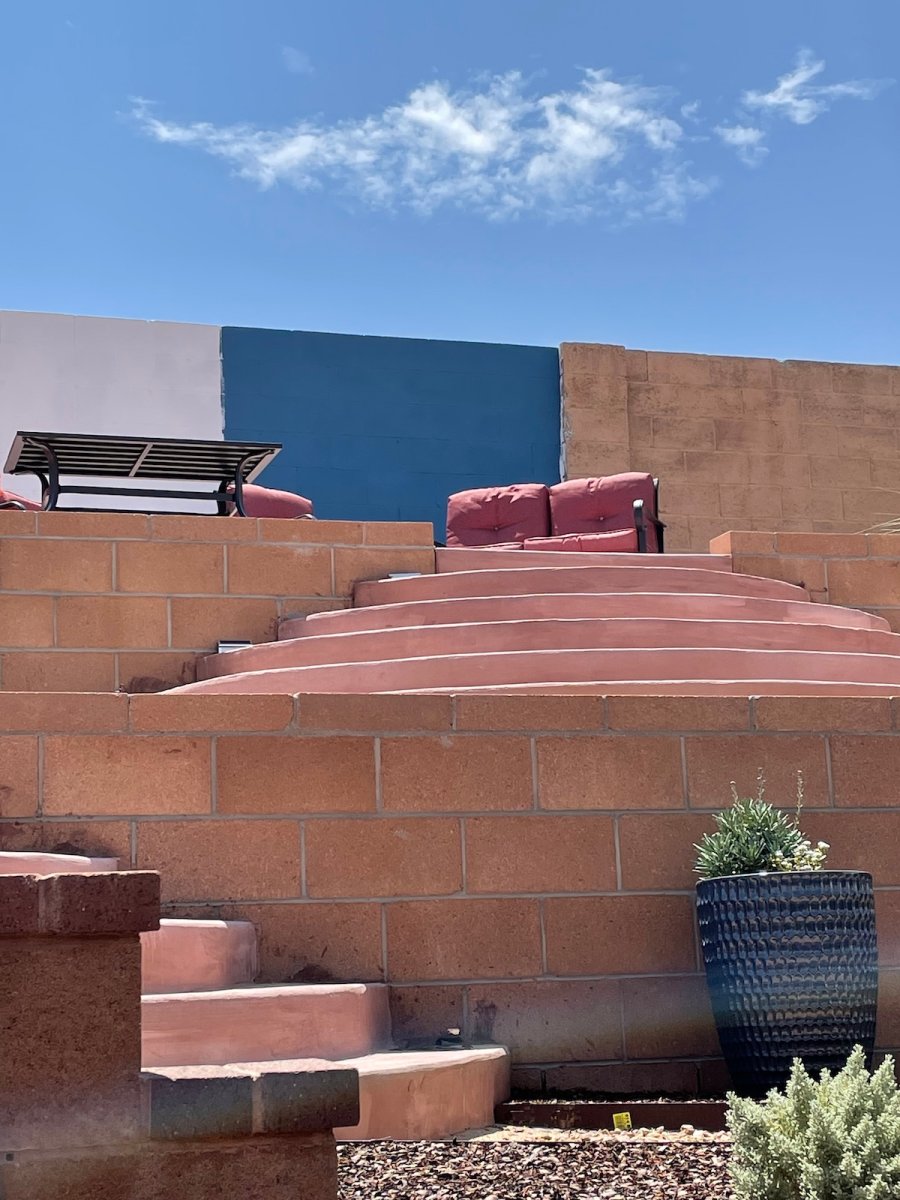
Although sources often say to paint two coats, we felt one coat did the job because of the excellent primer base. That saved money on the cost of our fence painting, since 1 gallon of exterior paint typically covers between 350 and 400 square feet, but less so for rough exterior surfaces like a stucco home or concrete blocks. We used just short of 4 gallons of Turkish Tile.