We may earn revenue from the products available on this page and participate in affiliate programs. Learn More ›
With the right plant selection and a bit of planning, you don’t have to choose between a gorgeous front yard and a productive kitchen garden. We asked gardening experts to identify their favorite perennial and biennial herbs that seamlessly blend ornamental appeal with culinary reward. The result is a list of six incredibly versatile, low-maintenance plants.
Whether you are looking to soften a stone pathway, build a fragrant border, or simply harvest fresh ingredients for dinner, we’ve got you covered with expert-backed care tips and practical design ideas to integrate these hardy, edible herbs for landscaping.
1. Rosemary (Salvia rosmarinus)
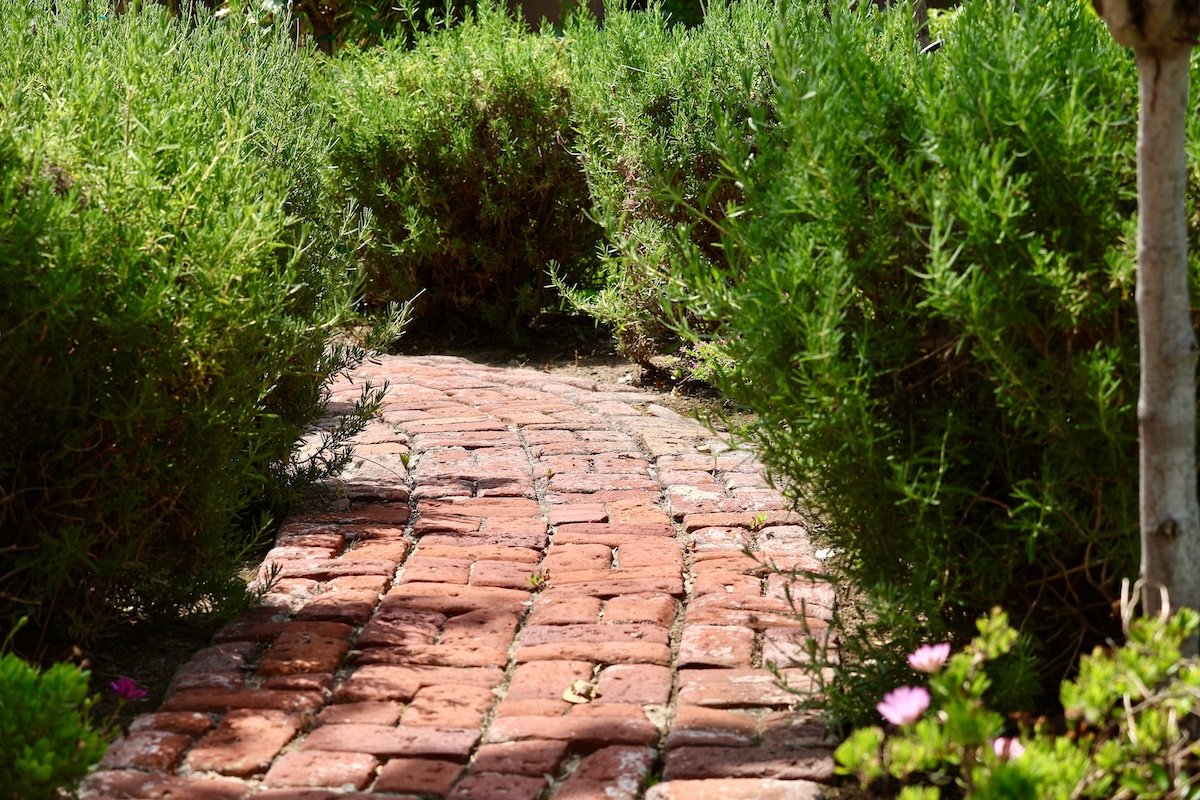
Rosemary is one of the best herbs for landscape structure because it is both a woody perennial and an evergreen shrub, says Jessica Mercer, Ph.D., senior horticulturist at Plant Addicts in Valley, Nebraska. “It has narrow, aromatic leaves, woody stems, and small blue-purple flowers, making it a useful ornamental plant near patios, walkways, kitchen gardens, and sunny foundation beds,” says Mercer. In temperate regions, rosemary plants can grow 4 to 6 feet tall, making them a perfect choice for a fragrant evergreen hedge or low privacy screen.
This herb thrives in warm areas, full sun, and sandy soil that drains quickly. “It adds a gorgeous shrubby-type appearance to any garden landscape,” says Corinne Beirne, kitchen garden coach and founder of TheNourishedGarden. “And depending on the variety, it will also hang over the sides, delighting gardeners with its pine-like fragrance.”
One of the best parts is that every rosemary sprig is dinner-ready; it is commonly used as a seasoning for poultry, lamb, stews, and soups. Beirne recommends clipping the softer stems to use, while leaving the woody stems alone.
Best For: Planting near patios and walkways, and in kitchen gardens
Hardiness Zones: 8 to 11
2. Sage (Salvia officinalis)
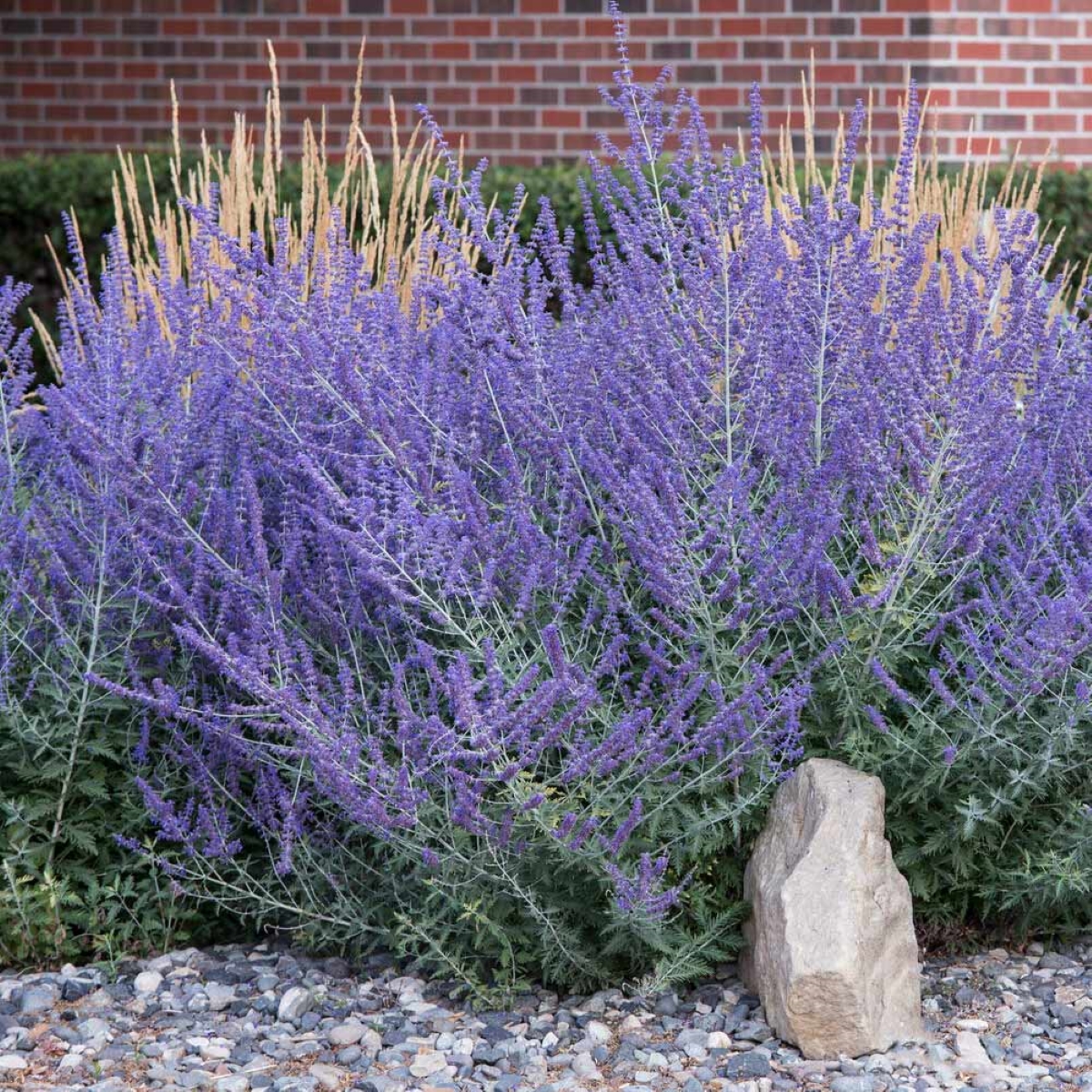
Sage is a hardy perennial with soft, silvery-green foliage that can serve as an ornamental plant first and a kitchen staple second, making it a great addition to any edible landscape. “The leaves can be gray-green, purple, or variegated and pair nicely with ornamental grasses, lavender, thyme, and other drought-tolerant perennials,” says Mercer. The leaves are commonly used fresh or dried in cooking.
Grow sage in full sun and well-draining soil, says Mercer. “Avoid overwatering once established; water only when the top 2 inches of soil are completely dry.” Also, give the plant a light trim in the spring to prevent woody, open growth.
Lightly prune the plant after it flowers to encourage more new growth, says Beirne. “Then it will continue coming back year after year with proper pruning and lots of sunlight.”
Best For: Pairing with ornamental grasses, lavender, thyme, and other drought-tolerant perennials
Hardiness Zones: 4 to 10
3. Oregano (Origanum vulgare)
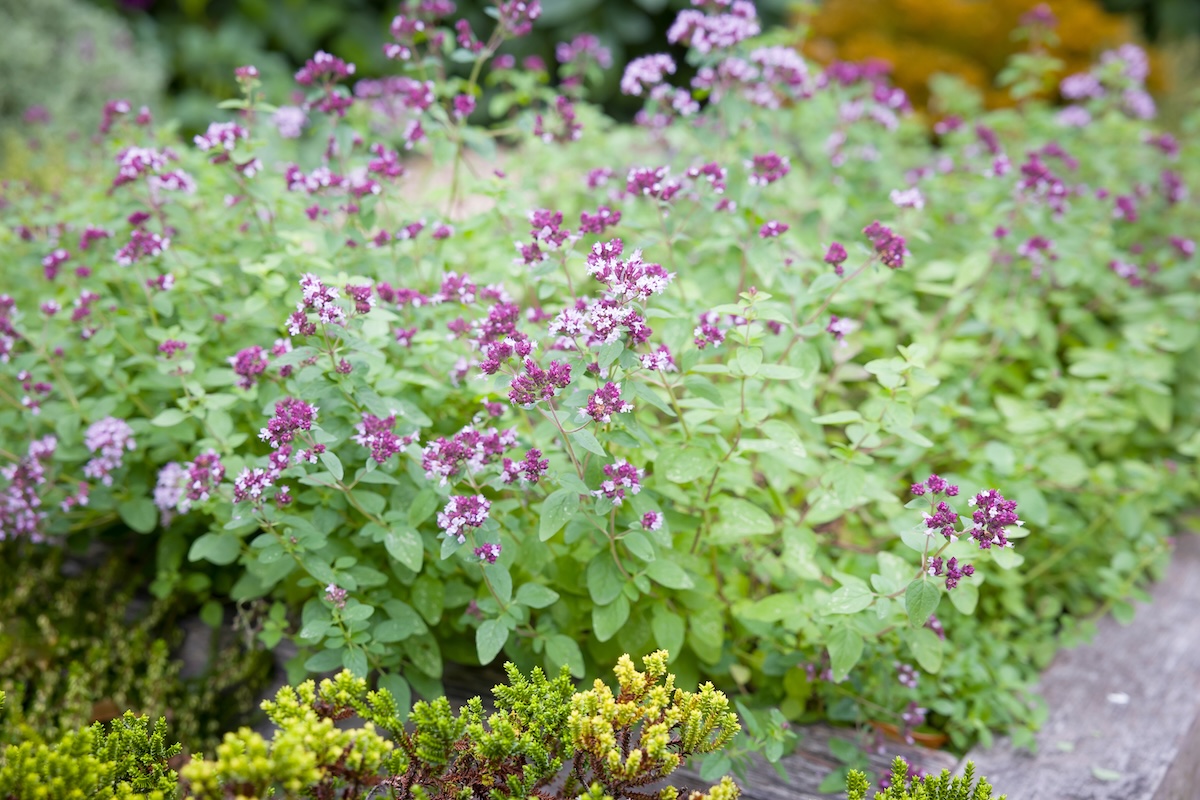
Oregano, a low-growing, woody, deciduous perennial, serves as an attractive edible ground cover for sunny, well-draining areas. “It has a loose, mounding, or spreading habit with aromatic leaves that can be harvested for cooking,” says Mercer. This plant also attracts pollinators like bees and butterflies to the yard.
Mercer thinks oregano works well near the front of a border, along a rock wall, or in a raised herb bed where it can soften hard edges. “Once established, oregano is fairly drought-tolerant and looks beautiful draping over the sides of kitchen garden beds,” adds Beirne.
Oregano doesn’t require too much attention and doesn’t like to be overwatered, says Beirne. Just be careful when pruning this herb. If you prune too much, the stems might grow back long, thin, and weak. But if you don’t prune them at all, they become woody. Throughout the growing season, harvest 2- to 3-inch stem tips as needed for your recipes.
Best For: Growing as a ground cover and attracting pollinators
Hardiness Zones: 4 to 10
4. Thyme (Thymus vulgaris)
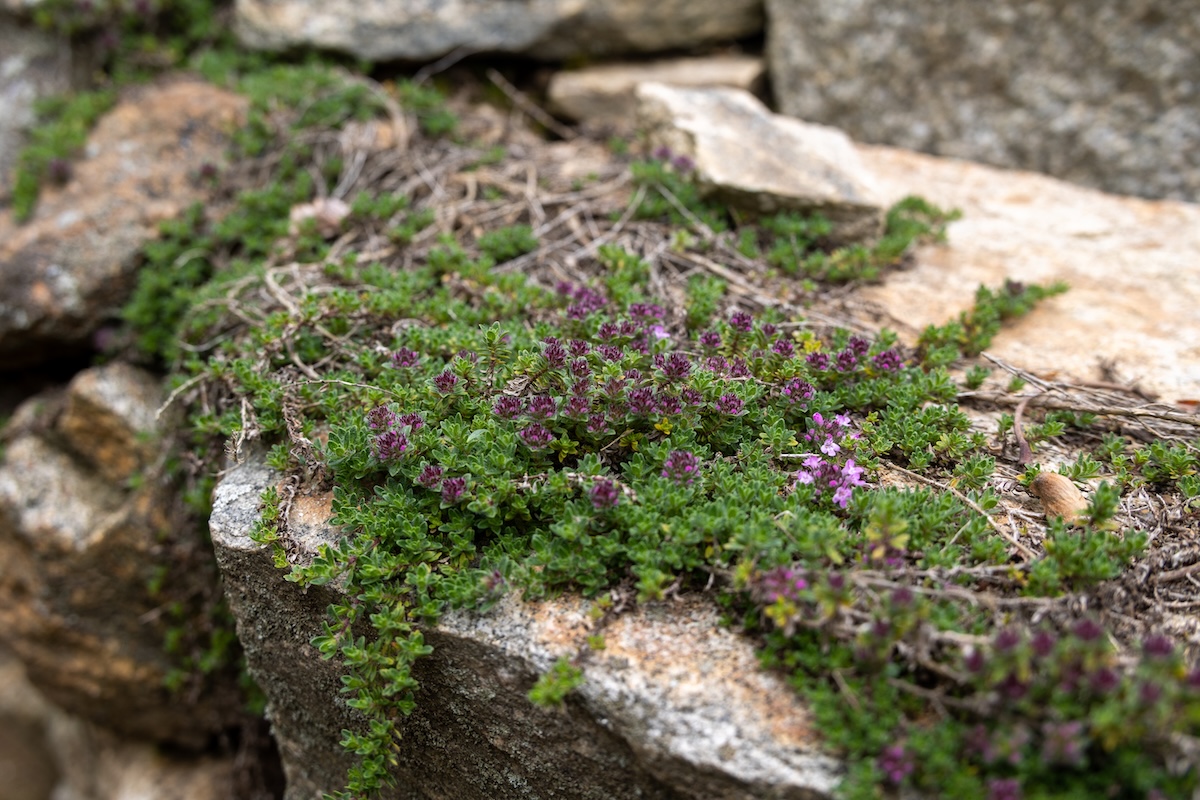
Widely used as a savory seasoning for soups, meats, and vegetables, thyme is a low-growing perennial with small leaves; thin, woody stems; and a pleasant clover-like flavor. Available in more than 50 varieties, thyme is one of the easiest herbs to grow outdoors in the landscape because it stays low and relishes hot, dry sites once established, says Mercer.
Mercer recommends planting thyme in full sun and in soil with excellent drainage. “Err on the side of less watering because too much water can damage the roots,” she warns.
As far as design is concerned, Mercer says that creeping thyme can edge a path and fill gaps between stepping stones, whereas upright culinary thyme fits well in herb gardens and small borders. “Woolly thyme is my favorite variety for ground cover because of its soft texture and color,” says Mercer.
Best For: Growing between stepping stones or as borders
Hardiness Zones: 5 to 9
5. Lavender (Lavandula angustifolia)
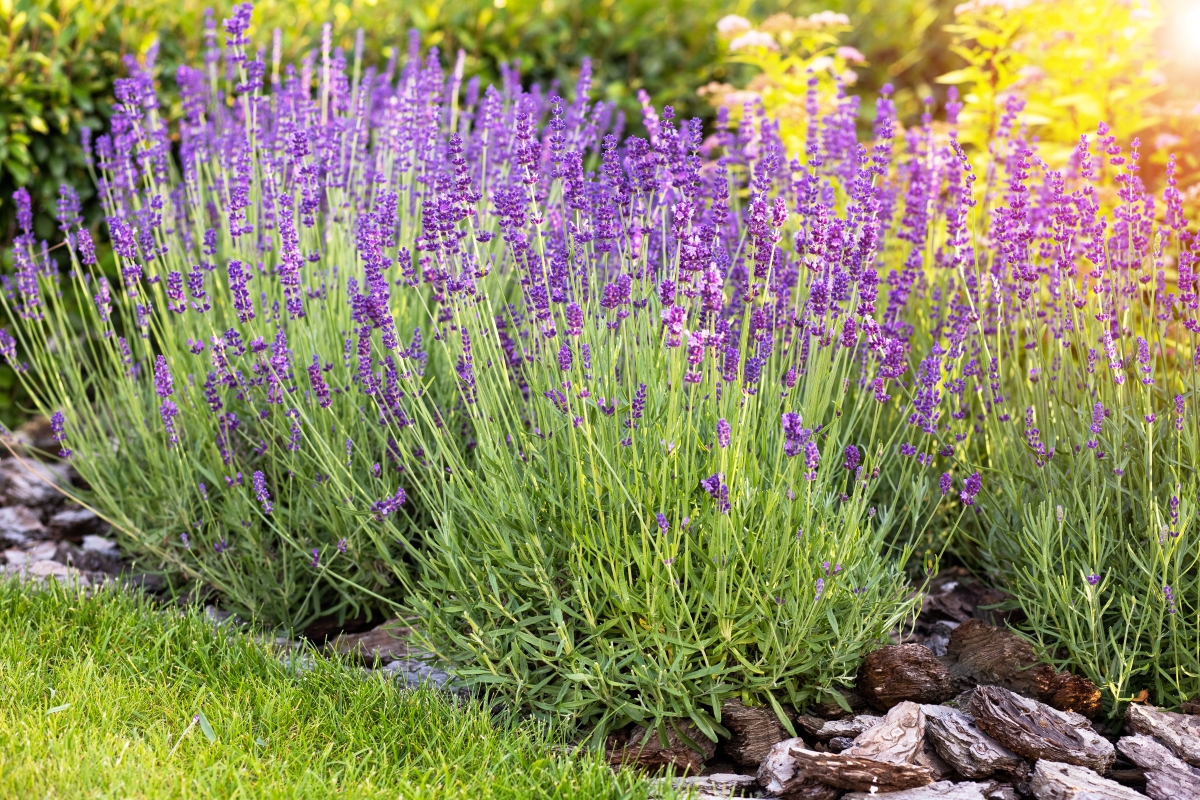
Loved for its calming fragrance and vivid purple flowers, lavender is a bushy perennial herb that is used to add a sweet, floral flavor to baked goods, syrups, teas, lemonade, and other beverages. “Lavender is a beautiful edible herb for sunny borders,” says Mercer. “It offers pollinator value, silvery foliage, purple flower spikes, and fragrance when you brush past it or snip sprigs to bring indoors.”
Mercer finds that lavender works well along walkways, in gravel gardens, or as a low edging plant. It needs full sun and sharp drainage. “Do not plant it in rich, wet soil, especially spots that stay wet in winter,” she warns. Also, trim the plants lightly after flowering to keep them compact.
Best For: Planting along walkways, in gravel gardens, or as a low edging plant
Hardiness Zones: 5 to 9
6. Parsley (Petroselinum crispum)
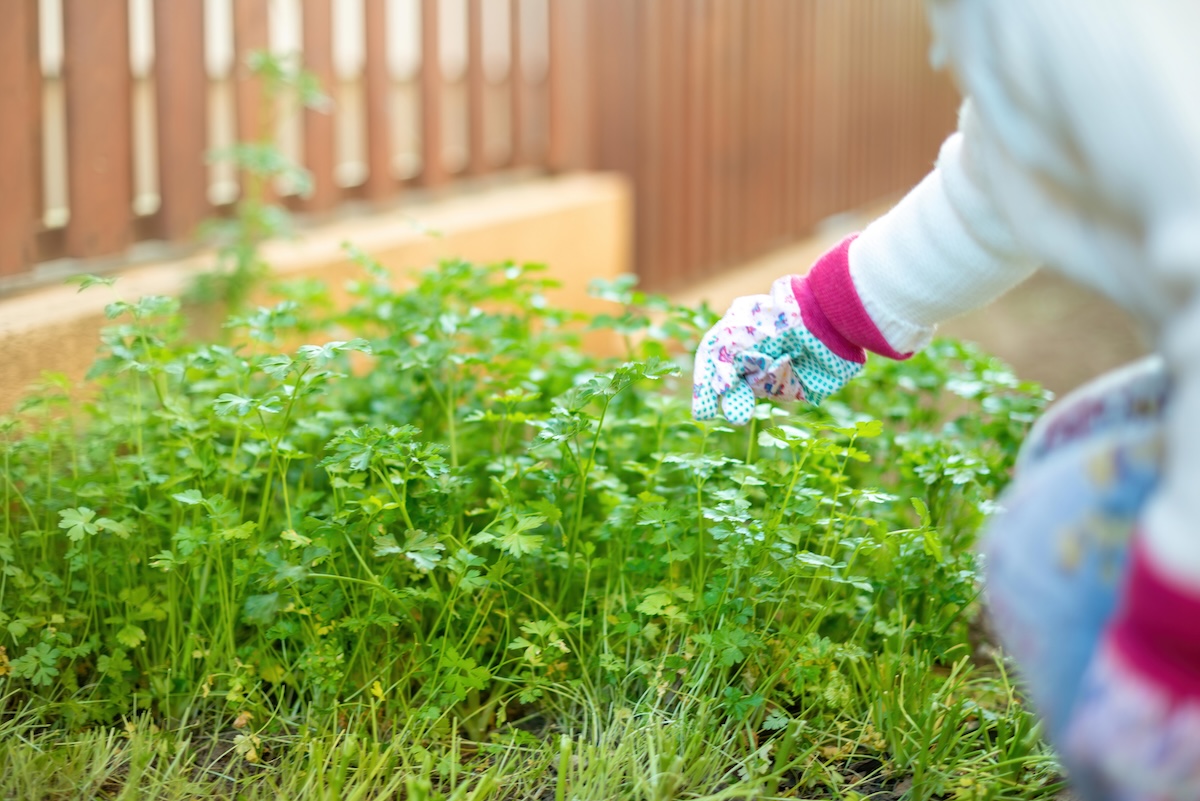
Available in both curly and flat-leaved Italian varieties, parsley is an adaptable biennial. “While it’s considered a biennial, regular pruning will allow parsley to produce consistent harvests year after year,” explains Beirne. “Many people use parsley as an annual because the flavor really starts to change after it starts flowering, but as long as you keep pruning and harvesting your parsley it will keep producing flavorful leaves.” Parsley is very versatile, since it can be added to any meal, even if just as a garnish.
While it can handle full sun, parsley benefits from light or afternoon shade in hot, humid climates. Many gardeners prefer starting this herb indoors in small containers 8 to 10 weeks before the final frost. Once established in rich, consistently moist, and well-drained soil, the parsley plants spend their first year producing flavorful leaves before transitioning to flowers in the second year. Parsley pairs well with flowers in garden beds and can be grown as a tidy edging plant that provides a border.
Best For: Flower beds and edging
Hardiness Zones: 5 to 11