We may earn revenue from the products available on this page and participate in affiliate programs. Learn More ›
A miter saw is a go-to tool for making accurate crosscuts, miters, and bevels in everything from framing lumber to trim and molding. Designed for speed and repeatability, today’s miter saws are far more precise and versatile than earlier manual versions, making them useful for DIYers, remodelers, and woodworkers alike. To identify the strongest options, we tested 13 miter saws hands-on in workshop conditions.
Choosing a quality miter saw matters because small differences in motor strength, cutting capacity, adjustment controls, and build quality will directly impact cut accuracy and efficiency. After testing, our top recommendation is the Bosch Dual-Bevel Glide Miter Saw, which stood out for its powerful motor, smooth cutting action, and space-saving glide design that delivers consistent, precise results for both DIY and professional work.
Ahead, we’ll break down how we tested each model, which features should be prioritized, and how each saw performed so that you can confidently decide the best miter saws for your needs.
- BEST OVERALL: Bosch Professional Dual-Bevel Glide Miter Saw
↓ Jump to Review - RUNNER-UP: DeWalt 12” Double-Bevel Sliding Compound Miter Saw
↓ Jump to Review - BEST BANG FOR THE BUCK: Craftsman V20 Cordless 7¼” Sliding Miter Saw Kit
↓ Jump to Review - BEST COMPACT: Worx Power Share 7¼” Cordless Sliding Miter Saw Kit
↓ Jump to Review - BEST FOR WOODWORKING: Makita 10” Compound Miter Saw
↓ Jump to Review - BEST FOR WORKSHOPs: Kobalt 7¼” 24V Dual-Bevel Miter Saw
↓ Jump to Review - BEST CORDLESS: Milwaukee M18 FUEL 10” Sliding Compound Miter Saw
↓ Jump to Review - BEST FOR BEGINNERS: Ryobi 14-Amp Corded Miter Saw
↓ Jump to Review
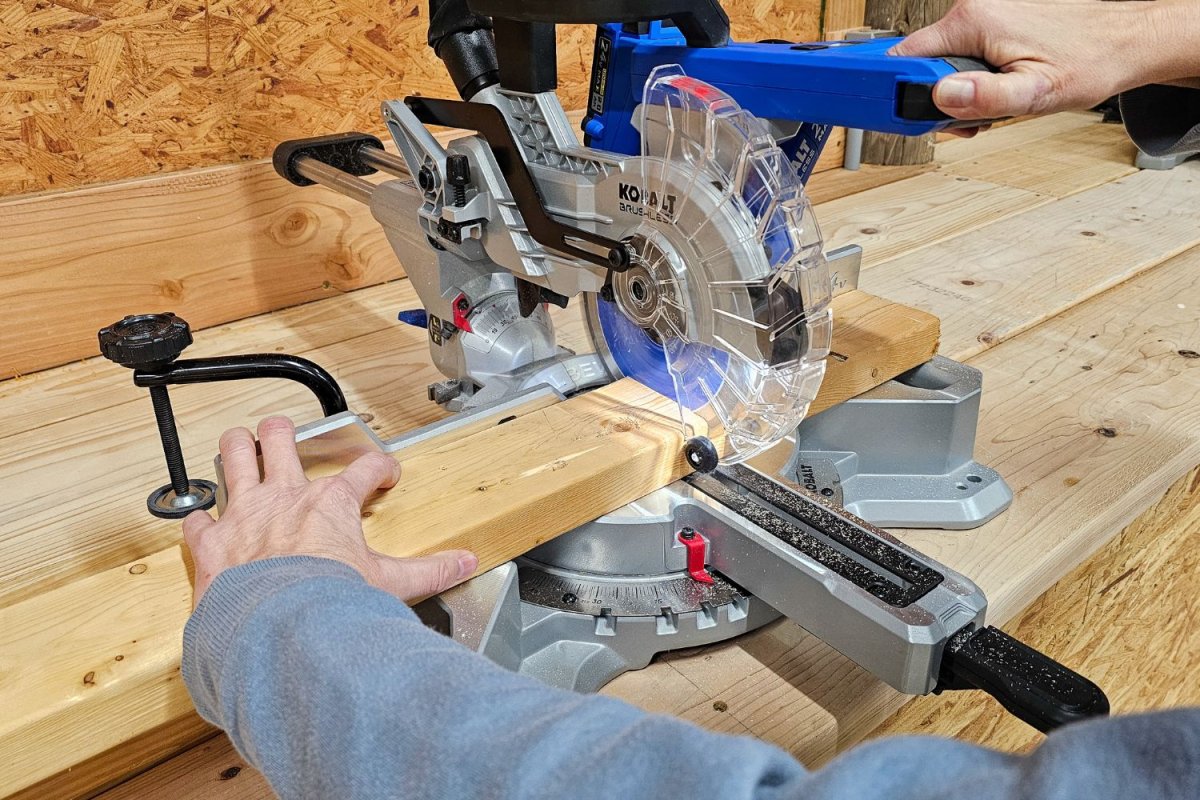
Miter Saws Comparison
| Product | Blade Size | Miter and Bevel? | Sliding? |
|---|---|---|---|
| Bosch Professional Dual-Bevel Glide Miter Saw | 12 inches | Yes, dual bevel | Yes |
| DeWalt 12” Double-Bevel Sliding Compound Miter Saw | 12 inches | Yes, dual bevel | Yes |
| Craftsman V20 Cordless 7¼” Sliding Miter Saw Kit | 7¼ inches | Yes, single bevel | Yes |
| Worx Power Share 7¼” Cordless Sliding Miter Saw Kit | 7¼ inches | Yes, single bevel | Yes |
| Makita 10” Compound Miter Saw | 10 inches | Yes, single bevel | No |
| Kobalt 7¼” 24V Cordless Dual Bevel Miter Saw | 7¼ inches | Yes, dual bevel | Yes |
| Milwaukee M18 FUEL 10” Sliding Compound Miter Saw | 10 inches | Yes, dual bevel | Yes |
| Ryobi 14-Amp Corded Miter Saw | 10 inches | Yes, single bevel | No |
Our Top Picks
A miter saw is an essential woodworking tool for anyone who does carpentry work. Whether you’re a trim specialist seeking precision for intricate cuts or a carpenter tackling a range of projects, this list has a saw to meet your budget and project needs.
Best Overall
Photo: Amazon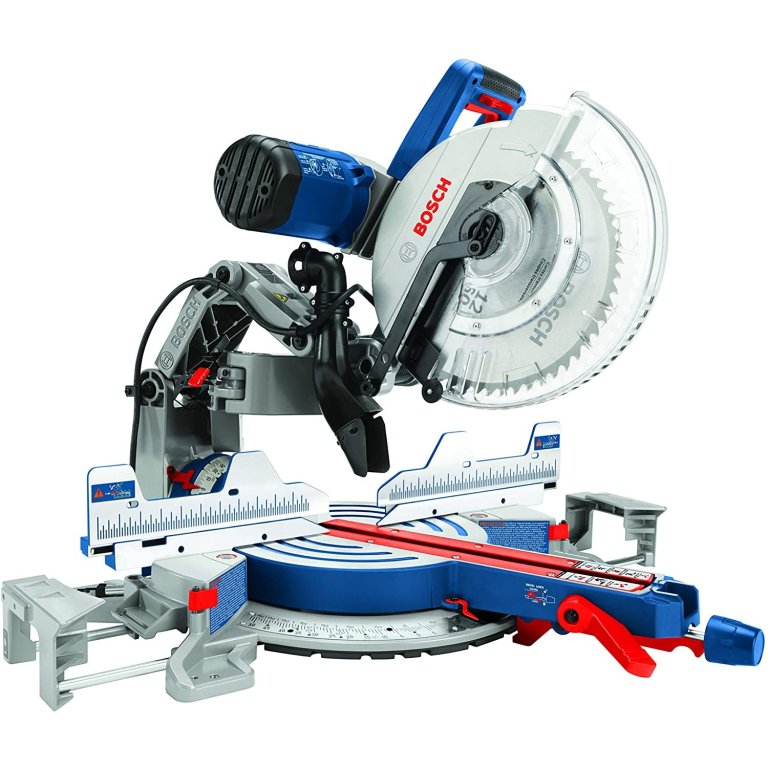
What We Like
- Smooth zero-clearance arm
- Powerful motor provides durability
- Dust-collection system keeps dust and debris out
- Integrated see-through safety guard
What We Don’t Like
- Does not include a light or a laser
- Heavy at 65 pounds
Product Specs
- Blade size: 12 inches
- Miter and bevel? Yes, dual bevel
- Sliding? Yes
This Bob Vila Approved product carries our brand’s highest level of recommendation.

Bob Vila Approved recognizes the household and DIY products that impressed us most in our real-world testing and that exemplify core values of the Bob Vila brand, including craftsmanship, innovation, and value for the dollar. Winners of this designation come recommended by our professional review team and are personally approved by Bob Vila.
Our Ratings: Our Ratings: Ease of Use 5/5; Performance 5/5; Build Quality 5/5; Value 5/5
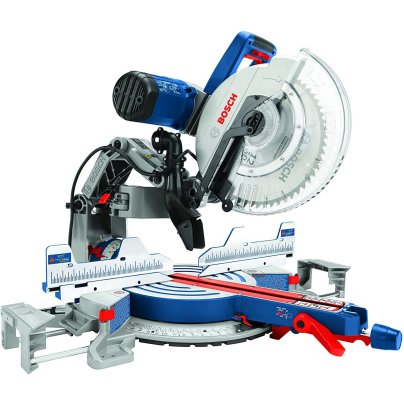
The Bosch GCM12SD 12-inch miter saw comes with a sliding arm that allowed us to cut boards up to 14 inches wide. The saw comes with pull-out material supports on both sides to stabilize boards up to 40 inches long, and it cuts compound bevels in both directions.
The clear saw guard on the Bosch miter saw is designed not to obstruct the user’s view of the cut, and we were able to clearly see our cutlines from start to finish. The trigger handle features an ergonomic grip that can be used by either right-handed or left-handed users just as comfortably, and it features a padded nonslip grip. Fences are adjustable, and the miter scale numbers are etched into stainless steel for durability.
During testing, we found that the Bosch saw truly does belong at the top of this list. First, it has a zero-clearance slide arm that can sit up against a wall if necessary. The smooth zero-clearance arm makes accurate cuts. Also, there wasn’t any assembly to deal with, and there are lots of additional references for roof rafters and valley cuts built in. The dust collection is outstanding, and the motor is incredibly powerful. The only qualms anyone might have with this saw is that it’s a little heavy for carrying around the shop, and there aren’t any lasers or lights.
Get the Bosch miter saw at Amazon, The Home Depot, Acme Tools, or Menards.
Runner-Up
DeWalt 12-in. Double-Bevel Sliding Compound Miter Saw
Buy at Amazon Buy at Lowe's Buy at Ace HardwareWhat We Like
- Powerful motor for frequent use
- Large-capacity design
- Enables quick angle changes
What We Don’t Like
- No integrated laser guide
- Needs a lot of room for sliding
Product Specs
- Blade size: 12 inches
- Miter and bevel? Yes, dual bevel
- Sliding? Yes
Our Ratings: Our Ratings: Ease of Use 5/5; Performance 5/5; Build Quality 5/5; Value 5/5
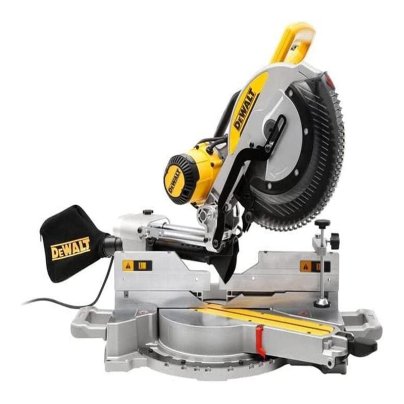
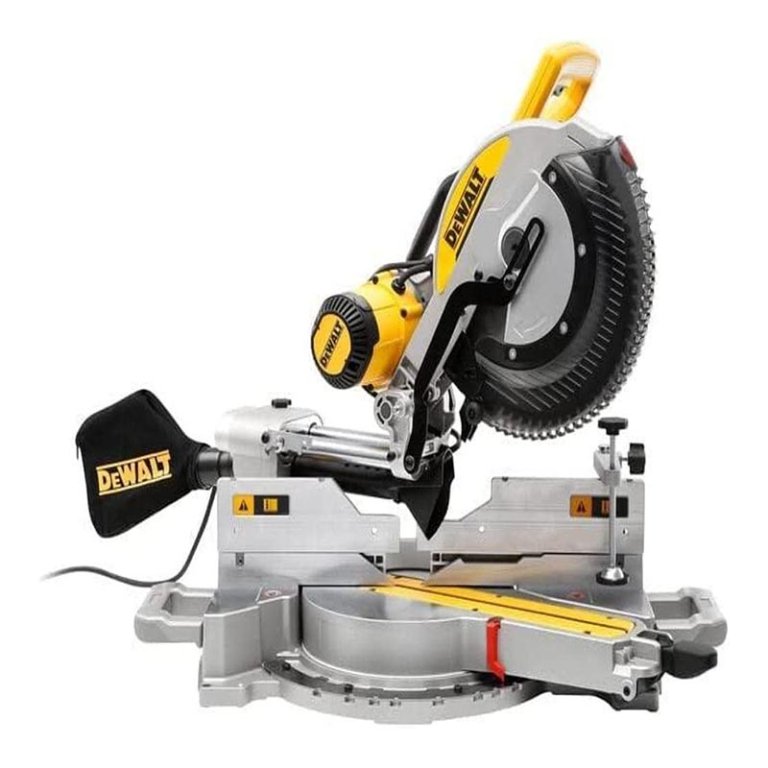
Anyone looking for a double miter saw that does almost everything well may want to check out the DeWalt 12-inch sliding miter saw. The saw comes with a powerful 15-amp motor, and its sliding rails allowed us to cut a board up to 16 inches wide. With its dual-compound action, there’s no need to turn a board over to cut an opposing angle; just tilt the blade arm in the other direction.
This DeWalt miter saw also features a bright LED light that illuminates the cutting field so the user can see exactly where they’re cutting, but it does not have a laser guide. For easier cleanup, it includes a collection dust bag designed to catch up to 75 percent of the dust it generates.
During testing the DeWalt saw proved to be a worthy tool. Despite not having a laser guide, the onboard LED light and powerful motor made cutting a breeze. We appreciated the large cutting capacity, though it does come at the cost of requiring a lot of room for the rails. Also, instead of a turning knob to lock the saw angle in place, this saw uses a locking lever for quick angle changes.
What our tester says: “I cut several types of boards and trim on the DWS780, and this is a workhorse of a power miter saw. It’s heavy at 58 pounds, but it could be transported to a job or project site and mounted, where it would easily serve as the most important saw on the job.” —Glenda Taylor, Product Reviews tester and writer
Get the DeWalt miter saw at Amazon, Lowe’s, Ace Hardware, or The Home Depot.
Best Bang for the Buck
Photo: Amazon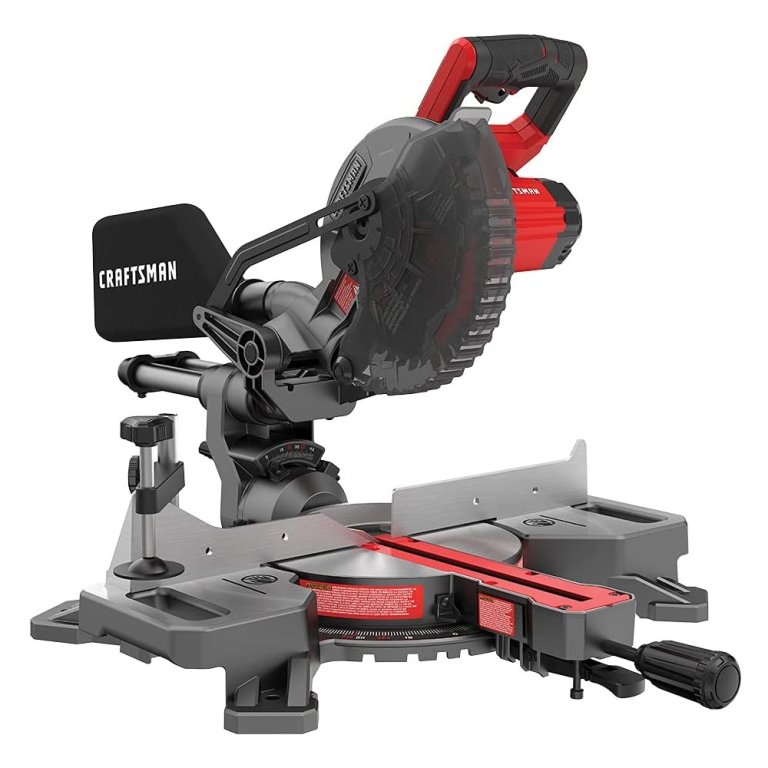
What We Like
- Lightweight, semi-mini miter saw
- Quiet operation volume
- Relatively powerful compared with comparable models
What We Don’t Like
- Lighter build may not provide long-term durability
- Only single bevel
Product Specs
- Blade size: 7¼ inches
- Miter and bevel? Yes, single bevel
- Sliding? Yes
Our Ratings: Our Ratings: Ease of Use 4/5; Performance 5/5; Build Quality 5/5; Value 5/5
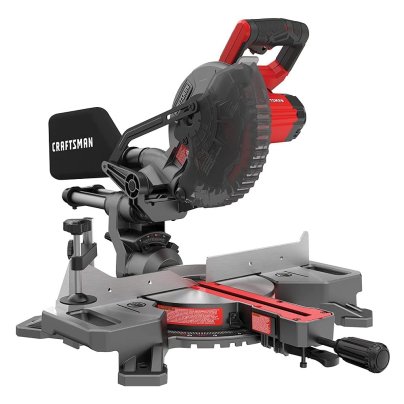
The most significant benefit of the Craftsman V20 is its small footprint and lightweight design. Also, the ability for it to be used even when electricity isn’t available is a plus. Lithium-ion batteries are getting more powerful, and this miter saw can make up to 585 cuts through a 3¼-inch medium-density fiberboard on a single charge. It accepts a Craftsman 20-volt rechargeable battery, which is included along with a battery charger.
This miter saw features a powerful motor that spins the blade at a rate of 3,800 revolutions per minute, making it well-suited to cutting wall studs, baseboards, and molding with ease. It also slides, making it possible to cut boards up to 8 inches wide.
We weren’t exactly sure what we’d find with the Craftsman V20 saw, mainly due to its weight—it’s just 31 pounds—and the large number of plastic pieces. But it was easy to put together, cut well, and was shockingly quiet. We could see using this saw for projects like flooring or trim work, though it did handle the construction lumber. Our only real qualms were the plastic and the single-bevel action (rather than dual).
Best Compact
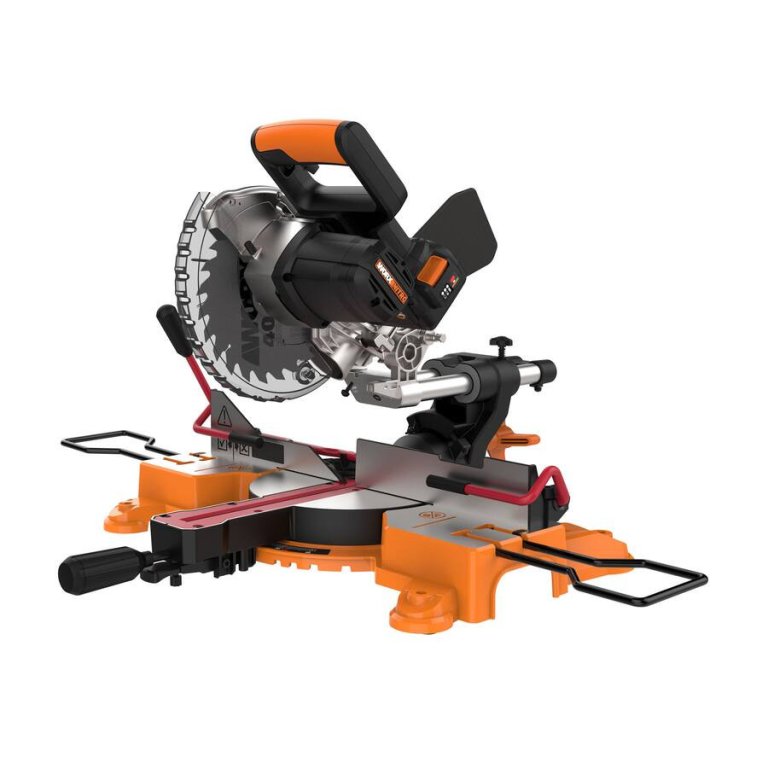
Worx Power Share 7¼” Cordless Sliding Miter Saw Kit
Buy at Lowe's Buy at Ace Hardware Buy at Best BuyWhat We Like
- Lightweight and easy to move
- Sliding design boosts cut capacity
- Clean, visible cut line
- Good power for a compact saw
What We Don’t Like
- Limited capacity for wide boards
- Dust collection could be better
- Plastic parts feel less rugged
Product Specs
- Blade size: 7¼ inches
- Miter and bevel? Yes, compound
- Sliding? Yes
Our Ratings: Ease of Use 4.3/5; Performance 4.5/5; Build Quality 4/5; Value 4.5/5
The Worx 7¼-inch cordless sliding miter saw is a rock-solid option for users who need accuracy and flexibility without committing to a full-size saw. Its compact footprint and relatively light weight make it easy to move around the shop or take to a jobsite, while the sliding rails add versatility beyond what most small miter saws offer. For trim work, flooring, and light framing, it handled cuts cleanly and predictably in our tests.
We appreciated how straightforward the setup and controls felt. The cut line was easy to see, which helped speed up repetitive cuts, and the saw delivered consistent results across common materials like pine, trim stock, and plywood. While it doesn’t have the sheer power of larger corded models, it didn’t feel underpowered for the tests we put it through. Runtime was sufficient for project work.
This isn’t the saw for cutting wide deck boards or heavy timbers, and the dust collection leaves a little room for improvement. Still, for DIYers, remodelers, or anyone tight on space, the Worx is a capable, compact alternative that balances portability, performance, and price well.
Get the Worx miter saw at Lowe’s, Ace Hardware, or Best Buy.
Best for Woodworking
Photo: Amazon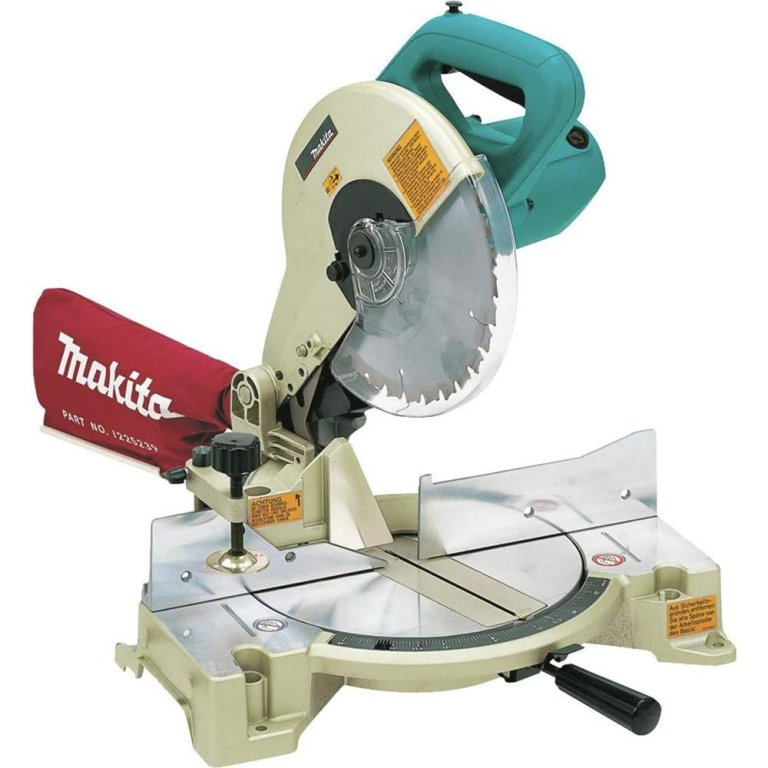
What We Like
- Precise, clean cuts
- Excellent build quality
- Bright cutline visibility
- Woodworking miter saw
What We Don’t Like
- Not a sliding saw
- Light could be brighter
Product Specs
- Blade size: 10 inches
- Miter and bevel? Yes, compound
- Sliding? No
Our Ratings: Ease of Use 4.8/5; Performance 4.3/5; Build Quality 5/5; Value 4.7/5
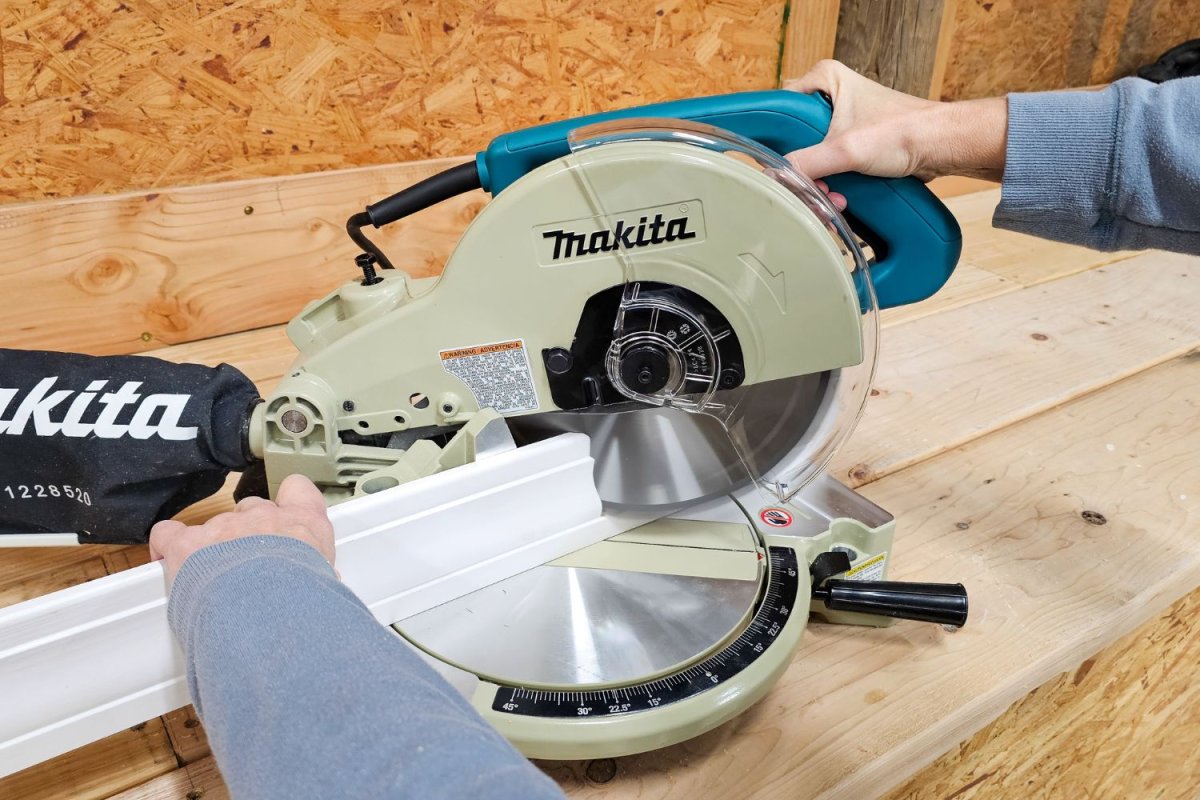
If you’re looking for precise woodworking cuts, check out the Makita LS1040 10-inch compound miter saw. It provides accuracy and reliability without sliding complexity. Its well-engineered compound head delivers clean, accurate crosscuts and bevel cuts that are ideal for frames, trim, moldings, and fine woodworking projects. We found it especially good when working with softer hardwoods and delicate trim, where cut quality matters the most.
Makita’s build quality is evident in the smooth bevel action and miter adjustments, and in the stable, confident feel of the saw during use. The clearly visible cutline helps keep angled cuts precise, which is particularly useful when repeat accuracy matters. While it lacks a sliding feature, for many woodworking applications, especially in smaller shops where space is limited, this fixed design actually enhances stability and footprint. And its corded power is tough to beat.
Dust collection is okay but not exceptional, and the onboard light could be brighter. Still, for woodworkers who need precision and durability in a compact, solidly built saw, the LS1040 delivers. Its performance and balance of features make it an excellent tool for cabinetry, trim work, and fine-detail cuts.
Get the Makita miter saw at Amazon, The Home Depot, or White Cap.
Best for Workshops
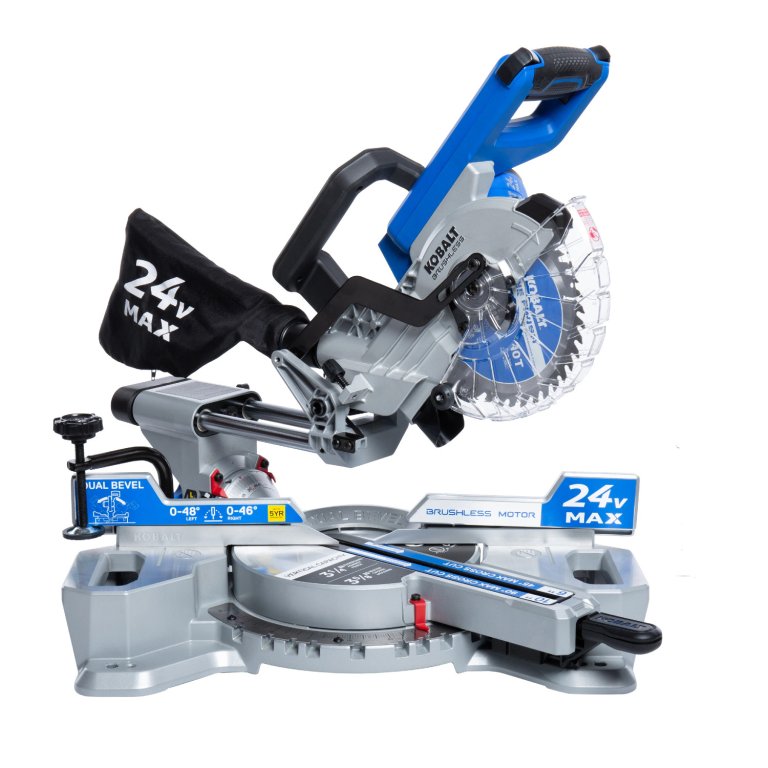
Kobalt 7¼” 24V Cordless Dual-Bevel Miter Saw
Buy at Lowe'sWhat We Like
- Strong battery-operated miter saw
- Smooth sliding action
- Dual-bevel miter saw
- Quick-release clamp
What We Don’t Like
- Small cutting capacity
- Dust collection average
- Battery sold separately
Product Specs
- Blade size: 7¼ inches
- Miter and bevel? Yes, dual bevel
- Sliding? Yes
Our Ratings: Ease of Use 4.7/5; Performance 4.8/5; Build Quality 4.5/5; Value 4.7/5
The Kobalt 7-¼-inch 24V dual-bevel sliding miter saw earned the title of being a workshop favorite with its cordless convenience and rugged performance. Its dual-bevel and sliding design let us easily tackle angled cuts and wider boards than other compact saws we tested. The quick-release clamp and intuitive controls made setup and repetitive cuts effortless, whether we were squaring up trim, framing small assemblies, or cutting stops for cabinetry.
We were particularly impressed with how smoothly the sliding rails operated for a saw in this class – there was minimal binding or stickiness, and cuts stayed true across the board. Power delivery was more than acceptable on pine, poplar, and trim, and the saw remained stable and balanced throughout the testing. While the dust collection isn’t the best we tested, it does reduce cleanup time compared with basic chopsaws, and the overall build was solid and felt well-suited for workshop duty.
This saw isn’t designed for massive timbers or decking boards, and larger batteries (sold separately) will improve runtime, but for most shop environments where real estate is at a premium, the Kobalt delivers versatility, power, and clean cuts that will keep projects moving.
Get the Kobalt Miter Saw at Lowe’s.
Best for Jobsites

Milwaukee M18 FUEL 10” Sliding Compound Miter Saw
Buy at The Home Depot Buy at Acme Tools Buy at AmazonWhat We Like
- Convenient cordless design
- Bright and focused LED light
- Safety switch next to the trigger
What We Don’t Like
- Ineffective dust-collection bag
Product Specs
- Blade size: 10 inches
- Miter and bevel? Yes, dual bevel
- Sliding? Yes
Our Ratings: Ease of Use 5/5; Performance 5/5; Build Quality 4.5/5; Value 4.5/5
The Milwaukee 10-inch miter saw is a powerful precision tool for professionals and DIY enthusiasts alike. This cordless wonder offers many remarkable features, and it consistently delivered accurate cuts on all our test materials.
Like other battery-powered tools that are overtaking the construction and remodeling industry, this miter saw’s cordless design is a game-changer. It liberates the user from the hassles of tangled electrical cords, tripping hazards, and searching for the nearest power outlet, and it provides unmatched versatility in a variety of work settings. This saw offers the flexibility to work wherever projects are set up.
The Milwaukee miter saw offers more than just cordless convenience; it’s also a powerhouse when it comes to cutting performance. It handled a wide range of cutting tasks with remarkable precision during our testing. From basic cuts to complex bevel and miter angles, this saw consistently delivered top-notch results, and the sliding arm allowed us to cut boards up to 12 inches wide.
Although the saw comes equipped with a dust-collection system, the dust bag didn’t collect much sawdust—most spewed into the air before it reached the bag. We connected the hose from our shop vacuum, and the suction from the vacuum kept more of the sawdust from becoming airborne.
The safety switch—conveniently located next to the trigger—offers effortless one-handed operation. This contributes to overall ease of use, especially during extended cutting sessions. Another standout feature is the bright LED light source. It’s not just a token addition; it’s a practical and well-designed element. It provided excellent visibility, casting a focused beam directly onto our test workpieces.
The saw made smooth, precise, and consistent cuts, and the positive stops on the miter scale and the bevel scale allowed us to change angles quickly. Similar to other top-tier miter saws we tested, this one comes with a precalibrated blade ready to start cutting right out of the box. It weighs a substantial 45 pounds, but for the best stability, it should be bolted down.
Get the Milwaukee miter saw at The Home Depot, Acme Tools, or Amazon.
Best for Beginners
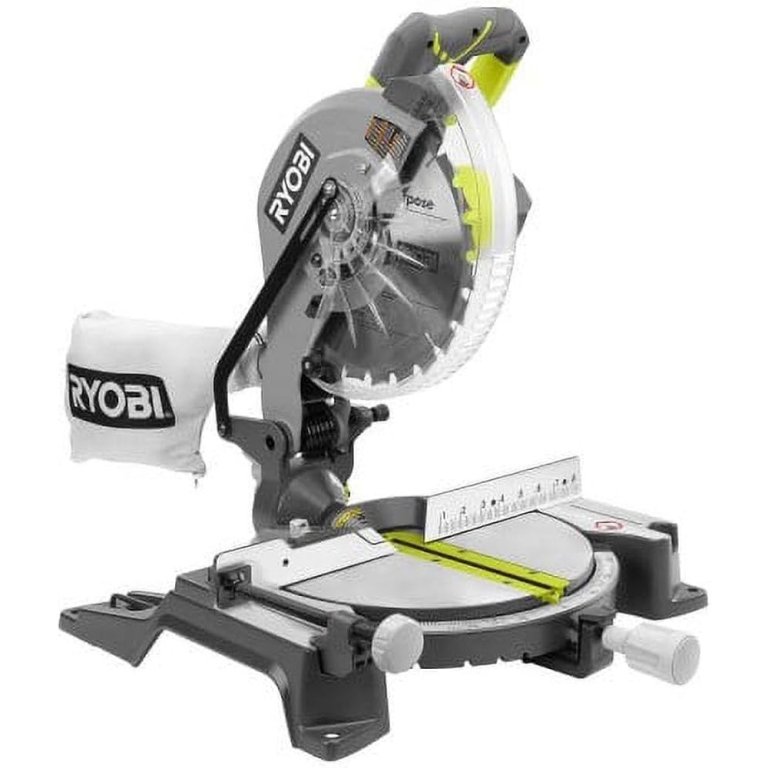
Ryobi 14-Amp Corded Miter Saw
Buy at The Home DepotWhat We Like
- Clear LED cutline
- Affordable corded power
- Easy setup and adjustments
- Good value for beginners
What We Don’t Like
- Not a sliding saw
- Dust collection basic
- Smaller cutting capacity
Product Specs
- Blade size: 10 inches
- Miter and bevel? Yes, dual bevel
- Sliding? Yes
Our Ratings: Ease of Use 4.3/5; Performance 4.5/5; Build Quality 4/5; Value 4.7/5
The Ryobi corded miter saw is a strong choice for beginners stepping up from basic handheld saws or tackling their first serious woodworking projects. Its simple controls and setup make it easy to get accurate crosscuts and bevel cuts without a steep learning curve. We especially appreciated its LED cutline indicator — it makes lining up cuts intuitive and reduces guesswork for those who are newer to cutting compound bevels.
In use, the saw delivered competent performance on common materials like pine, plywood, and trim stock. The corded motor provides steady power without the worry of battery life, and the overall feel is balanced – it’s very approachable for first-time users. While it doesn’t have sliding capability or advanced dust collection, it makes all the essential cuts needed for framing, trim, and hobby projects impressively well for the price.
This saw isn’t designed for large lumber or heavy professional workloads, but for beginners and DIYers who want dependable, accurate cuts without complexity, the Ryobi earns its place as a practical starter tool.
Get the corded Ryobi miter saw at The Home Depot.
Jump to Our Top Picks
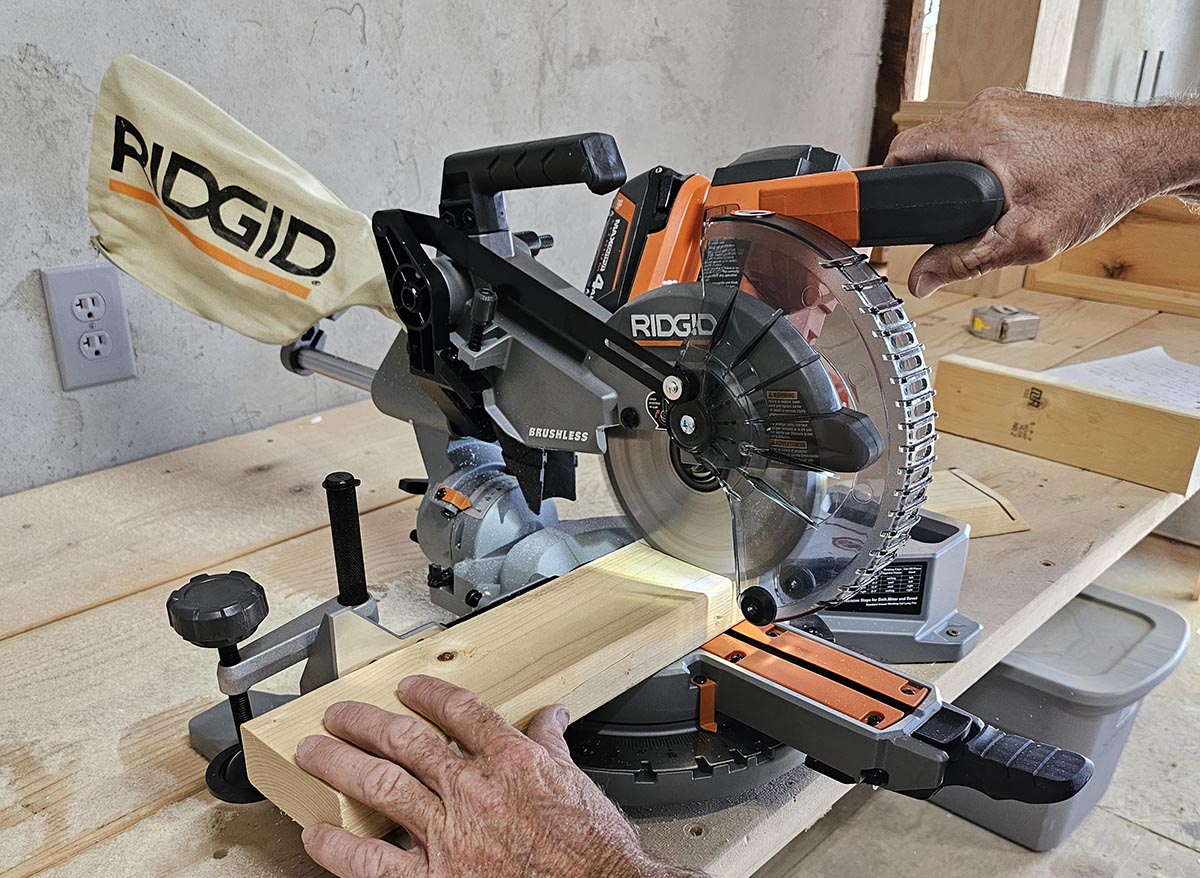
How We Tested the Best Miter Saws
| Products tested | 13 |
| Time spent testing | 27 hours |
| Tests performed | 7 |
| Price range | $250 to $750 |
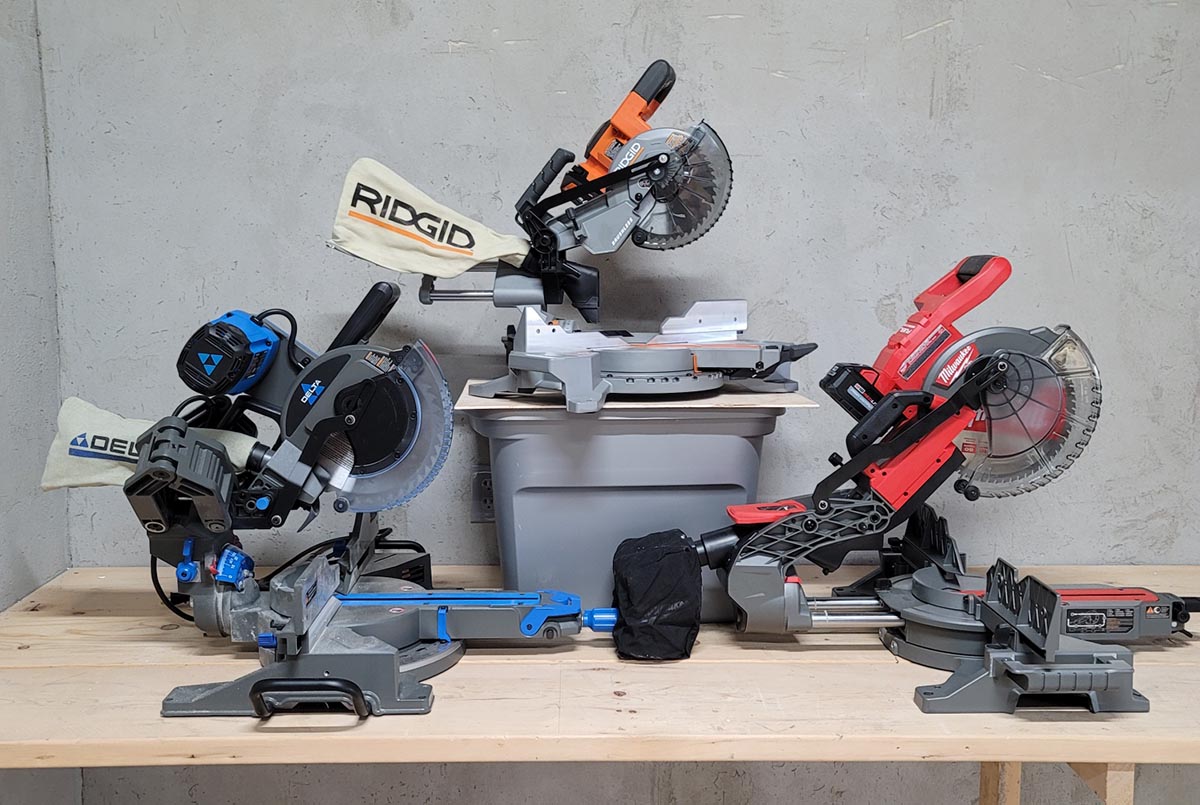
To determine the best miter saws, we evaluated dozens of models from multiple manufacturers, considering a mix of corded and cordless designs suited to different users and workshop needs. Then we selected 13 for hands-on testing.
We assessed each saw’s setup process, examining how easy it was to assemble components, install sharp blades, and dial in miter and bevel adjustments. Testing focused on performance, accuracy, comfort, and durability, with repeated cuts made in common materials such as 2x4s, trim boards, base molding, crown, and stacked lumber. We inspected cut pieces for squareness, smoothness, and consistency, noting vibration and ease of control during extended use.
Additional factors, including price, build quality, dust collection, battery runtime for cordless models, and overall design, were also weighed. Each saw was scored using a standardized rubric focusing on ease of use, performance, build quality, and value, and the final rankings reflect how well each model performed under real-world workshop conditions.
| Product | Ease of Use | Performance | Build Quality | Value |
|---|---|---|---|---|
| Bosch Professional Dual-Bevel Glide Miter Saw | 5 | 5 | 5 | 5 |
| DeWalt 12″ Double-Bevel Sliding Compound Miter Saw | 5 | 5 | 5 | 5 |
| Craftsman V20 7¼” Sliding Miter Saw Kit | 4 | 5 | 5 | 5 |
| Worx Power Share 7¼“ Cordless Sliding Miter Saw Kit | 4.3 | 4.5 | 4 | 4.5 |
| Makita 10″ Compound Miter Saw | 4.8 | 4.3 | 5 | 4.7 |
| Kobalt 7¼” 24V Dual-Bevel Miter Saw | 4.7 | 4.8 | 4.5 | 4.7 |
| Milwaukee M18 FUEL 10″ Sliding Compound Miter Saw | 5 | 5 | 4.5 | 4.5 |
| Ryobi 14-Amp Corded Miter Saw | 4.3 | 4.5 | 4 | 4.7 |
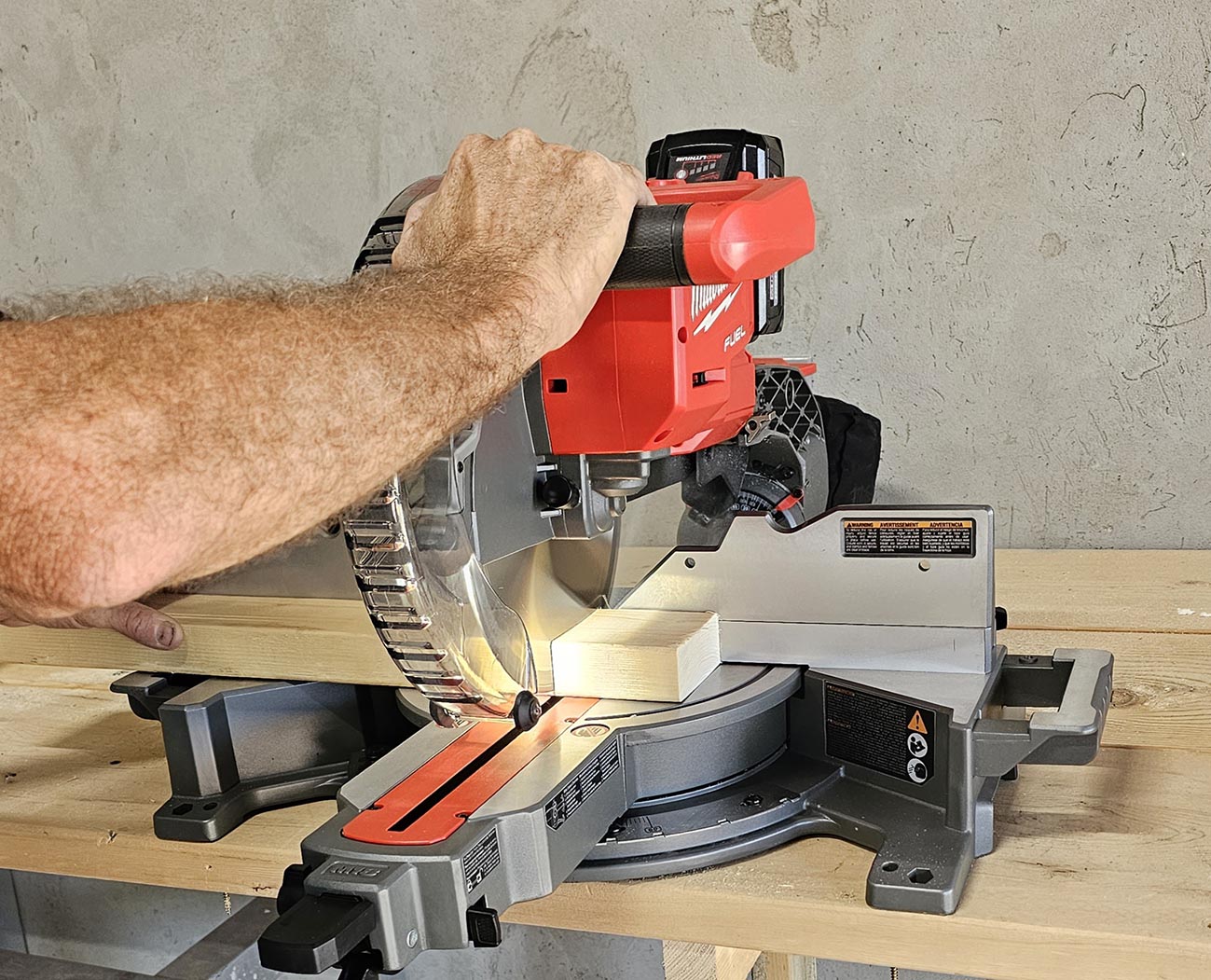
What To Consider When Choosing A Miter Saw
The type of woodworking projects a user intends to undertake will determine the features needed in a miter saw. Someone who only wants a miter saw to make crosscuts on wood flooring strips won’t need the extra features a professional trim carpenter needs to cut crown molding. There are several features to consider when choosing a miter saw, starting with the type.
Types of Miter Saws
All miter saws feature a circular blade encased in a swing arm that pivots from side to side to make crosscuts on narrow strips of wood (5 to 18 inches wide, depending on the saw). However, one saw doesn’t fit all types of projects, so individual woodworking needs will determine which saw is right for you. Depending on quality and features, miter saws can start at around $175 and run up to $1,000 or more. The following are the most common types of miter saws:
- Standard miter saw: This simplest of all miter saws is sometimes called a “chop saw” because the swing arm pivots to the appropriate angle and then chops through the material. These simple power miter saws only make miter cuts, so they’re not as popular as some other types of saws.
- Single-bevel compound miter saw: In addition to cutting angles, the swing arm on a single-bevel compound miter saw tilts in one direction (typically to the left) to make miter or bevel cuts. This comes in handy for tasks such as cutting crown molding or certain types of roof rafters. Many miter saws are compound miter saws.
- Dual-bevel compound miter saw: A dual-bevel compound miter saw also cuts bevels, but unlike a single-bevel compound miter saw, the swing arm tilts in both directions. This is strictly a convenience and a time-saver—a single compound miter saw can still make the same cuts, but the user has to turn the board over to cut a bevel in the opposite direction. The dual-bevel ability saves that step.
- Compound sliding miter saw: Sliding rails on a compound miter saw allow the user to cut wider boards. Nonsliding electric miter saws cut boards a few inches narrower than their blade diameter, so a 10-inch miter saw will cut a board up to 6 inches wide. If cutting a wider board, the user will have to turn the board over to finish cutting through it.
A compound sliding miter saw is the best type of miter saw for cutting wide boards because users can pull the saw’s motorhead toward themselves, lower the head, activate the motor, and push it through the board.
Depending on the model, a sliding miter saw can handle boards from 10 to 18 inches wide, and it can be either a single-bevel compound or dual-bevel compound miter saw. Some of the best compound miter saws also feature zero-clearance arms, which allow the saw to sit close to a wall without limiting the blade’s travel.
Size and Intended Use
Miter saws are labeled by the blade size they can accept. In general, the larger the blade, the larger the board the saw will cut. Not everyone needs the largest blade size—some prefer a tool with a smaller blade because those tools are typically lighter in weight, simpler to move, and often more accurate. A few off-sizes exist, but the most common miter saw blade sizes are 7¼, 8½, 10, and 12 inches.
- 7¼-inch and 8½-inch miter saws: Handy for around-the-house cutting, these saws will make a 90-degree cut on a 2×4 and a 45-degree cut on a 1×2.
- 10-inch miter saw: A 10-inch miter saw will make a 90-degree cut on a 2×6 and a 45-degree cut on a 2×4.
- 12-inch miter saw: The largest size used by DIYers and most builders, a 12-inch miter saw will make a 90-degree cut on a 2×8 and a 45-degree cut on a 2×6.
Any of the above miter saws can cut wider boards if they’re equipped with a sliding arm. For example, a 10-inch miter saw with a 6-inch sliding arm can make a 90-degree cut on a 2×12.
Keep in mind that 10- and 12-inch blades often suffer from a bit of deflection, which is when the blade’s path wobbles a bit during cutting. While it’s not usually an issue, discerning woodworkers and high-end finish carpenters may want to choose a saw that minimizes deflection.
Corded vs. Cordless
Until a few years ago, all miter saws were corded, and most still are, but these cords limit where the saw can operate. Cordless miter saws are the new kids on the block, and they operate on rechargeable lithium-ion batteries. Battery runtime depends on the number of cuts and how thick the wood is, but on average, cordless miter saws can make 150 to 275 cuts on a single battery charge.
Motor Power
The more power the saw’s motor has (measured in amperes), the longer the user can cut boards without the risk of the saw overheating. Typical miter saw motor sizes are 10, 12, and 15 amps.
The larger motors will also generate enough blade-spinning force to cut through thick, dense material. For example, for those only cutting through pine boards, a 10-amp miter saw will likely offer more than enough power. However, a more powerful motor may be necessary for those who need to make repetitive cuts through fiber cement siding or oak stair treads.
Safety
A miter saw isn’t the most dangerous saw in the workshop, but it can still cause injury if it’s misused or if it doesn’t come with safety features. The following safety features are standard on most miter saws.
- Blade guard: This is a clear cover that encases the spinning miter blade. When the user lowers the blade to cut, the guard rotates out of the way. When the user lifts the blade, the guard rotates back over the blade to cover it.
- Trigger brake: Not all miter saws have a brake. If they do, the brake stops the blade from spinning when the user releases the trigger.
- Lockout button: If the saw has a lockout button, the blade won’t spin when the user pulls the trigger unless the lockout button is also depressed. This double-safety measure prevents unintentional cuts.
- Clamps: Most miter saws come with a safety clamp to help hold the material in place while the user is cutting. This keeps a board from slipping, which reduces the risk of the user grabbing it and inadvertently touching the spinning blade.
- Dust collection: Like all power saws, miter saws create a lot of fine dust that can irritate the eyes or lungs. If the saw has a dust-collection port, a user can attach a standard shop-type vacuum hose, and the suction from the vacuum will remove most of the dust before it becomes airborne.
Additional Features
Miter saws are versatile, and some come with additional features. Some accessories come built into the saw, and some can usually be purchased separately if the user desires. Here are some common extra features of miter saws:
- Laser guide: Some miter saws have laser guides that mark a red or green line across the wood where the blade will cut. This is an excellent feature for DIYers and beginners to ensure the board is correctly positioned before cutting.
- Depth stop: A miter saw that comes with a depth stop allows the user to set the depth of the cut—similar to a radial arm saw. This allows the user to cut a groove in the material without cutting all the way through.
- Sliding fences: Sliding fences are built into some miter saws, and they pull out on both sides to allow the user to position the material securely along the fence.
- Flip fences: Flip fences come with locking stops, and the user can lock two or more stops on the fence and simply flip them up and out of the way to cut a different length. Flip fences are handy when the user needs to go back and forth between two or more lengths when cutting boards.
- Nonslip grip: Hot summer days can make the saw handle slippery. Some manufacturers now offer padded nonslip grips to reduce hand fatigue and allow for a better grasp.
- Dust collection: Miter saws tend to kick up sawdust, especially when operated inside a workshop. To remedy this, two types of dust collection are available for miter saws. The first is a small bag designed to collect some of the dust that blows into it naturally as it comes off the blade. The second (and better) option is a dust-collection port that connects to the hose of a shop-type vacuum.
- Stand: Many miter saws come with holes that allow the user to bolt them to the workshop table for stability, but a few come with miter saw stands that hold the saw securely when cutting.
FAQs
Over the past few years, the miter saw has almost replaced the radial arm saw in workshops and jobsites because it’s quicker to adjust angles and it cuts precise degrees. Anyone cutting angles, such as for wood trim, may find that the miter saw quickly becomes their favorite power tool in the workshop. For those thinking about buying their first miter saw, here are some answers to a few common questions.tool in the workshop. For those thinking about buying their first miter saw, here are some answers to a few common questions.
The main use of a miter saw is to cut precise angles on the ends of boards, trim, and molding. Though miter saws are perfect for wood, some options are also ideal for plastic, masonry, and metal.
A compound miter saw cuts bevels in addition to angles, whereas a sliding miter saw comes with a cutting arm that the user can pull to cut wider boards. A miter saw can be both sliding and compound.
No. Ripping, which is the process of cutting boards lengthwise, is usually done on a table saw. A miter saw makes crosscuts and angled cuts. Those interested in rip cuts should consider a circular or table saw that has a rip guide and/or fence.
The best way for a beginner to learn to use a miter saw is to purchase one with safety features and read the operating manual thoroughly before using it. It may also be beneficial for a beginner to watch someone else use a miter saw—either in person or by watching online instructional videos.
Not securing material, rushing cuts, using dull blades, misreading angles, and failing to support long boards properly are the most common mistakes beginners make when learning how to use a miter saw.
Yes, sharp blades are essential for clean cuts, accurate angles, safer operation, and preventing kickback or excessive strain on the saw.
Meet the Testers
Tom Scalisi is a full-time DIY and construction writer for many of the largest websites in the industry, including BobVila.com, This Old House, Family Handyman, and Forbes. He spent years working in the trades and industrial building maintenance.
Glenda Taylor is a product tester and writer specializing in the construction, remodeling, and real estate industries. She tests a wide range of power tools as well as other home improvement, household, and lawn-and-garden products.