We may earn revenue from the products available on this page and participate in affiliate programs. Learn More ›
When it comes to finding a good table saw for beginners, there are few factors one needs to take into account. The table saw should be powerful enough and have the max cutting path and rip capacity to handle the projects a beginning DIYer is most likely to take on. Since this type of saw is among the more dangerous power tools, a quality table saw should also be made with sturdy materials and the proper safety features to prevent injury. Additionally, a good table saw for home use should be affordable without sacrificing performance and safety.
With this criteria in mind, we researched a dozen different beginner table saws and picked one to test in person. We loved the Skil 10-Inch Jobsite Table Saw for its compact size, surprising power, and affordable price—all of which make it a great first-time saw for DIYers. Ahead, we’ve assembled a list of the top table saws that meet the performance and safety demands of a beginner’s workshop while also staying within budget.
Table Saws for Beginners Comparison
| Product | Blade diameter | Cutting depth | Rip Capacity |
|---|---|---|---|
| Skil 10-Inch Jobsite Table Saw | 10 inches | 3.5 inches | 25.5 inches |
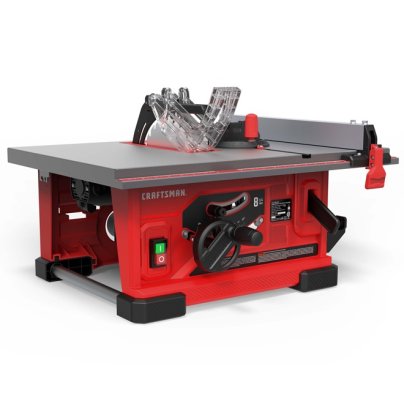
| Craftsman 8.25-Inch Portable Benchtop Table Saw | 8.25 inches | 2.2 inches | 12.5 inches |
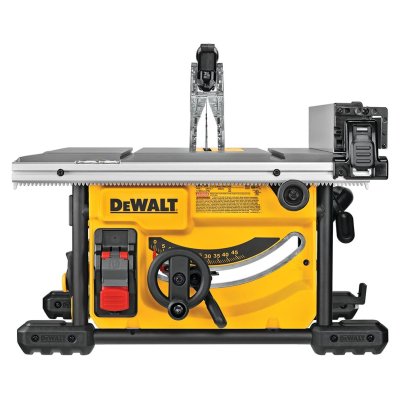
| DeWalt 8.25-Inch Portable Jobsite Table Saw | 8.25 inches | 2.56 inches | 24.5 inches |
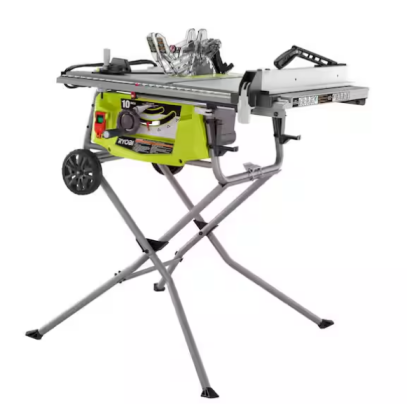
| Ryobi 10-Inch Portable Table Saw | 10 inches | 3 inches | 27 inches |
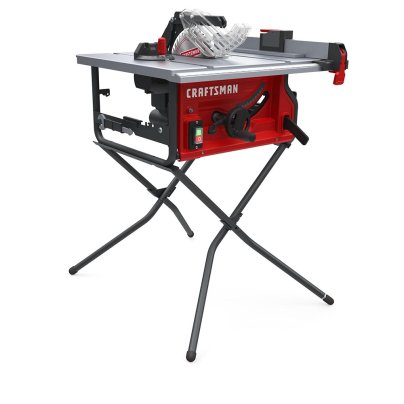
| Craftsman 10-Inch Portable Jobsite Table Saw | 10 inches | 3.125 inches | 12 inches |
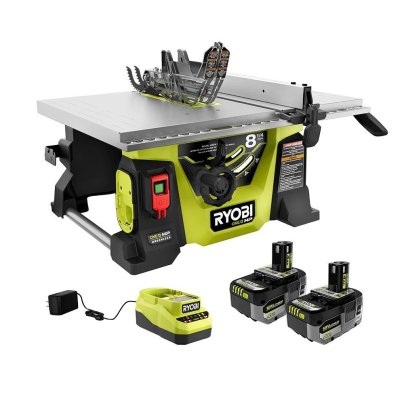
| Ryobi One+ HP 18V Cordless 8.25-Inch Table Saw Kit | 8.25 inches | 2.25 inches | 12 inches |
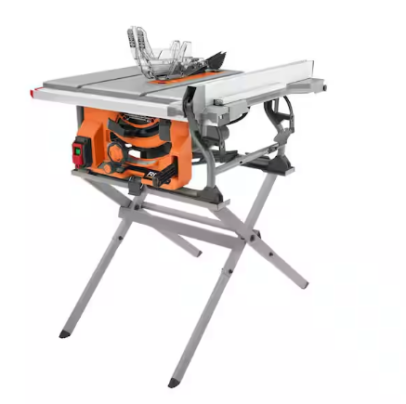
| Ridgid 10-Inch Portable Table Saw | 10 inches | 3.38 inches | 27 inches |
Best Overall
Photo: Amazon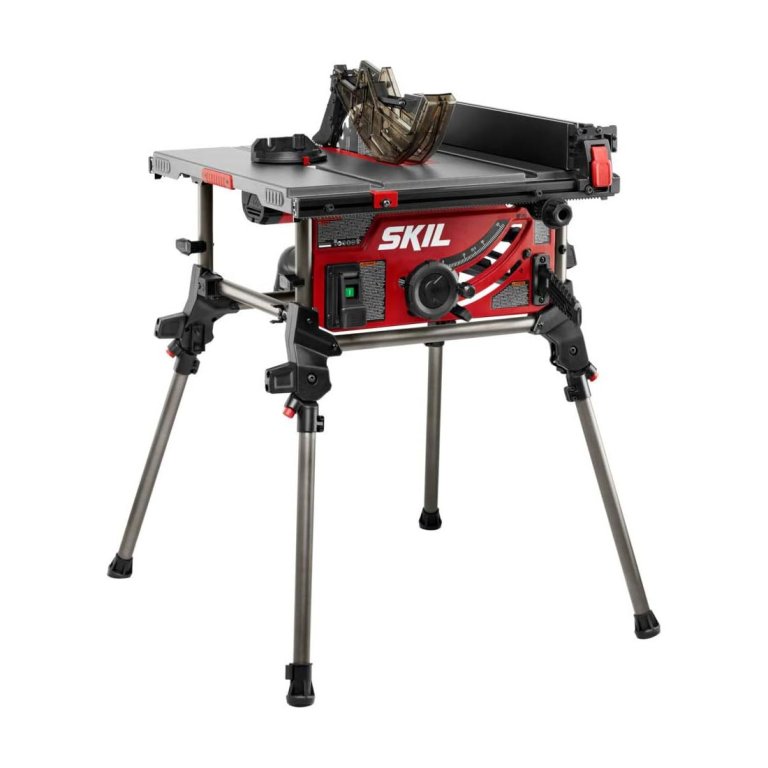
What We Like
- Compact size makes it easier to store
- Powerful enough to cut thicker stock
- Foldable legs create a stable base
What We Don’t Like
- Harder to break down than other table saws
- Small rip capacity
Specs
- Blade diameter 10 inches
- Cutting depth 3.5 inches
- Rip capacity 25.5 inches
Our Ratings
| Ease of Use | 4.4/5 | Performance | 4.5/5 | Accuracy | 4.5/5 | Value | 4.8/5 |
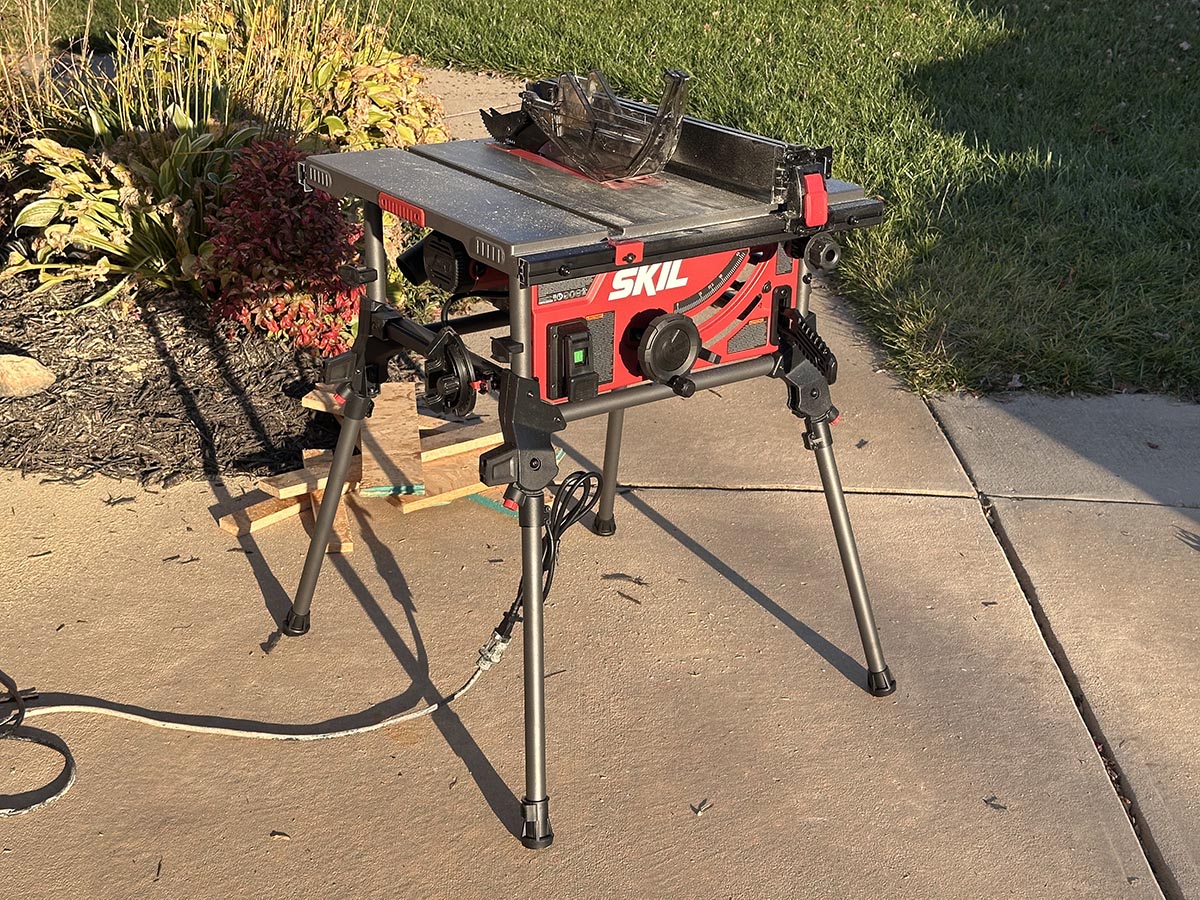
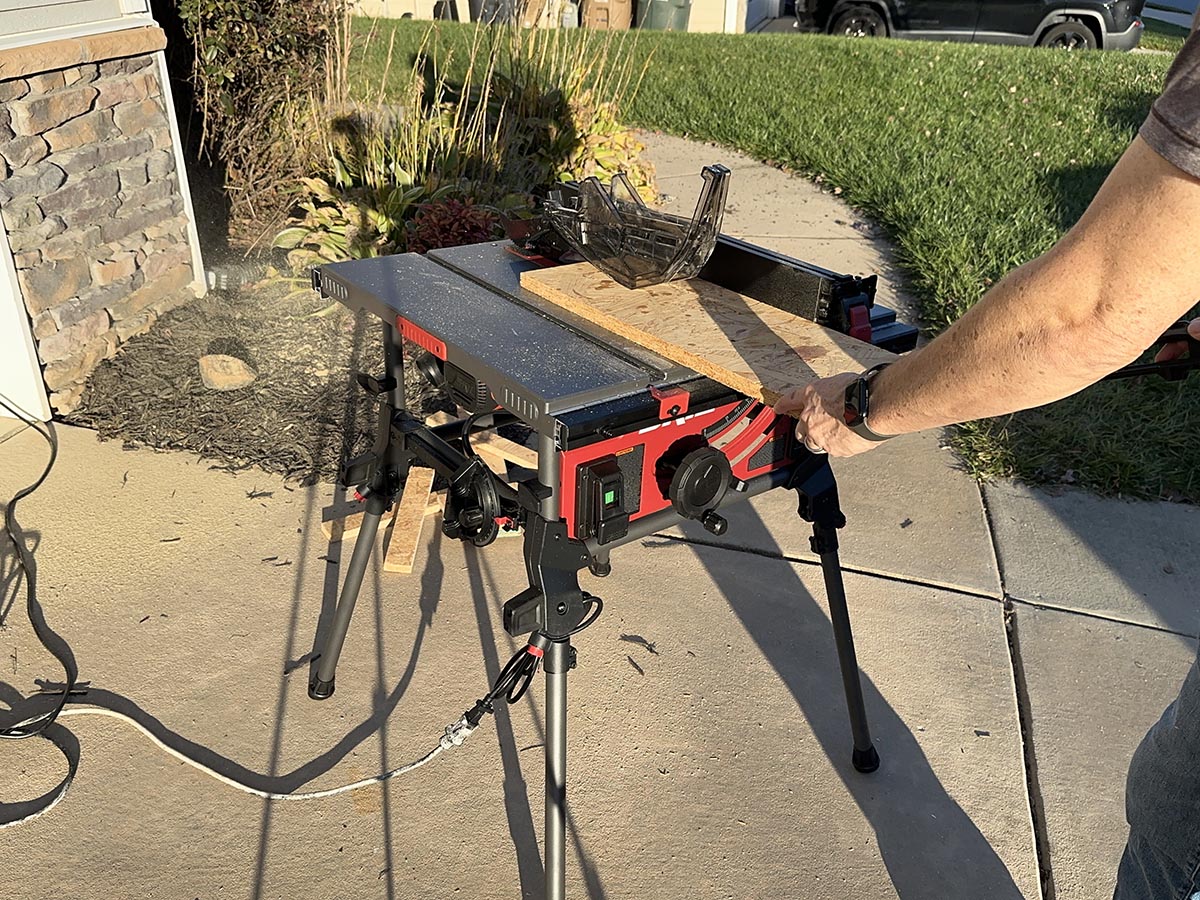
Skil has a knack for making power tools that boast substantial power at a bargain price, and their portable 15-amp jobsite table saw is no exception. Yes, the listed 4,600 RPM (we actually recorded 4,200 RPM) isn’t flashy, but blade speed only tells half the story. During testing, the Skil proved that it could produce substantial torque for cutting. After making several smooth cuts through ⅜-inch plywood, we upped the ante by switching to ⅝-inch plywood, and it handled this thicker stock with surprising ease.
Since the Skil comes with a full-size 10-inch blade, it can cut through boards up to 3 inches thick. Its 25.5-inch rip capacity is on the small side, but it’s enough to handle most projects beginning. Some table saws at this price point have cheaper fence rail systems that make it harder to make precise cuts. The Skil comes with a rack and pinion fence, which not only made setting up rip cuts easier but also allowed us to cut with more precision.
While the Skil’s foldable legs may look spindly, they’re cambered outward, creating a wide footprint and hence a sturdy base that kept the table saw stable while we ran various lengths and thickness of stock through it. Folded up, the Skil is a compact machine. Table saws are typically space hogs in the workshop, so we were thrilled that we were able to fit the Skil on a set of built-in garage shelving.
“I love the compact size, cutting capacity, and power you get out of this table saw for the price.”—Tony Carrick, Product Reviews tester and writer
Get the Skil 10-inch table saw at Amazon or Walmart.
More Table Saws for Beginners Worth Your Money
Along with the above beginner woodworking table saws, we also recommend the following models, which are based on extensive research, spec comparisons, and user reviews.
How We Chose and Tested the Best Table Saws for Beginners
In selecting the best entry-level table saw options for this lineup, we determined essential needs for beginners just learning to use this power tool. A good table saw should produce enough power to make cuts without the operator having to force the wood through the blade. With that in mind, we centered our choices on powerful 15-amp models. We also chose table saws featuring quality materials as well as rip fences and accessories that make the blade easy to adjust and allow for safe and accurate cuts.
Table saws can take up a lot of space, which may be at a premium in a beginner’s workshop. For that reason, we chose portable table saws that are easier to store when not in use.
We put our best overall pick through a series of tests, evaluating its performance by cutting both dimensional lumber and plywood of various thicknesses. We also considered how easy it was to set up cuts and how easy the table saw was to store. We used our experience testing dozens of the best table saws coupled with research to make the remaining selections in the guide.
FAQs
Adding a table saw to a power tool collection opens up a whole new realm of woodcutting possibilities, mainly offering the ability to make straight lengthwise cuts (rips) on the material. Those shopping for the best saw for beginners likely will have some questions.
Q. How many horsepower does a 15-amp table saw have?
Horsepower is relative to the saw’s motor and the amount of electricity the saw draws. A 15-amp table saw that plugs into a standard 120-volt outlet can only produce a maximum of 2.4 HP, which is based on the 120-volt outlet producing 1,800 watts of electricity.
Q. Can I rip a 2×4 board on a table saw?
Yes, but use a push block to guide the wood through the blade to ensure your fingers don’t get too close to the blade. Try a miter saw to make precise, angled cuts on other types of wood.
Q. What should you never use a table saw for?
Never use a table saw to make curved cuts; table saws are designed for straight cuts only. Trying to feed the material into the blade at an angle increases the risk of the blade catching the material and sending it flying. In addition, don’t feed material into the saw from the back end, which also increases the risk of kickback. Don’t use a table saw to cut plastic, PVC, or ferrous metals—it’s not designed for that.
Q. Can you cut against the grain on a table saw?
Yes, you can make crosscuts with a table saw. For best results, use a crosscut blade.
Q. What are five safety rules for a table saw?
Read the operator’s manual and familiarize yourself with the saw before making any cuts.
Wear safety glasses and hearing protection.
Use a push block to feed material through the blade rather than your fingers.
Start the blade before feeding material into it—never position the material against the blade and then turn on the power.
Always unplug the table saw before changing blades.
Q. What are the most important features on any table saw?
The most critical features on a table saw are the blade, safety guard, rip fence, and miter gauge. Hybrid table saws may off other features.
Q. How do I properly use a table saw?
To determine how to use a table saw, it’s important to study the operator’s manual and follow all safety precautions. Cut only wood or wood-fiber products and keep children, pets, and others out of the immediate area while working. Table saw injuries are high on the list of power tool injuries, but most can be avoided by following good safety techniques.
Meet the Tester
Tony Carrick is a freelance writer specializing in home improvement, landscaping, technology, home security, and design. His articles have been featured on such sites as Popular Mechanics, Futurism, SFGate, Pro Tools Review, and more.
Additional research provided by Glenda Taylor.