We may earn revenue from the products available on this page and participate in affiliate programs. Learn More ›
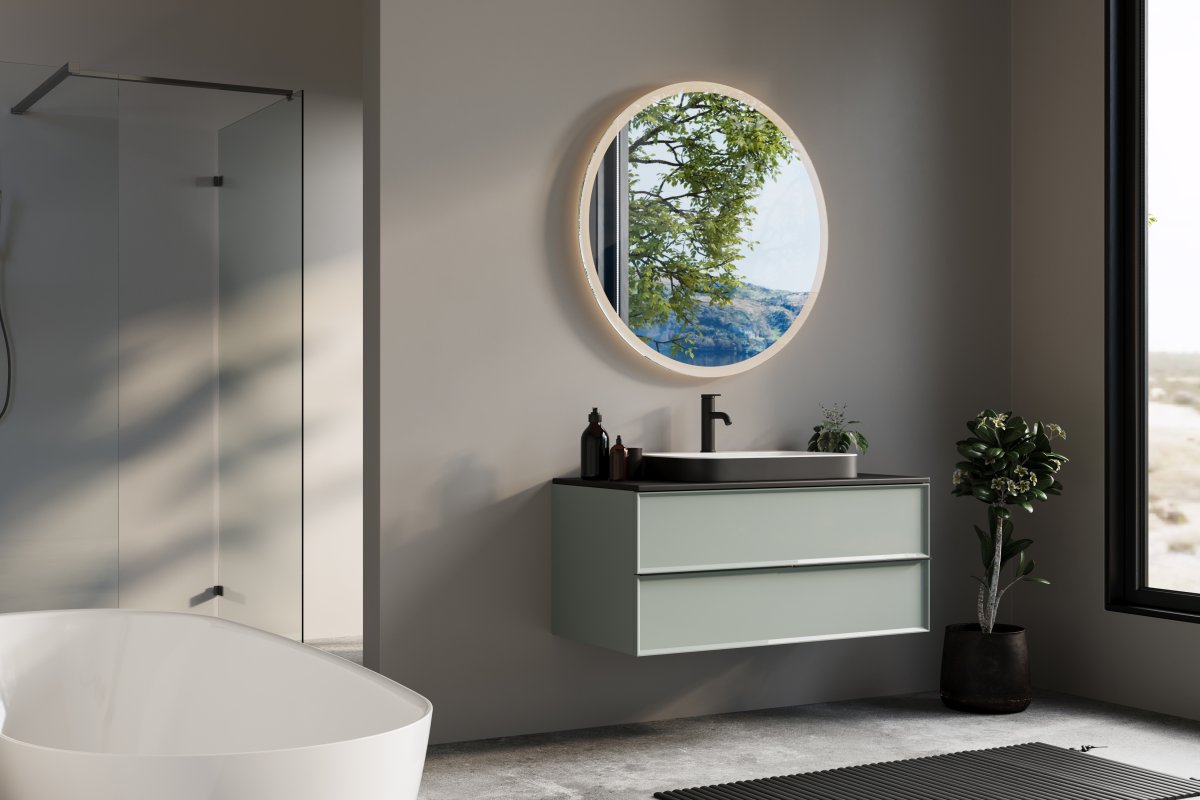
Also known as wall-mounted vanities, floating vanities attach to the bathroom wall and offer a light and airy aesthetic. For a long time, they were the go-to choice for anyone looking for a contemporary, minimalist look. However, they have recently become less appealing. “Although floating vanities initially received popularity due to the sleek and modern look, they are becoming impractical for normal day living among many homeowners,” explains Tony Roberts, interior designer at Direct Splashbacks in the United Kingdom.
We explore the drawbacks of installing a floating bathroom vanity and the best alternatives to choose instead.
Problems With Floating Vanities
Over the years, more homeowners have been turned off by floating bathroom vanities for the following reasons:
Minimal storage: Storage is one of the most important issues, says Roberts: “The limited drawer depth and absence of lower cabinetry with floating designs are often not useful in the actual storage capacity required in bathrooms, particularly in shared or primary bathrooms,” he explains.
Installation challenges: Installing a floating bathroom vanity is more complex than with other types of vanities. “The wall mounting requires structural work that contractors often underestimate,” says Tasha Frie, an interior designer at Sims in Stoughton, Wisconsin. “You need solid blocking behind the drywall to support at least 200 pounds of vanity, stone, and plumbing.” Particular tools are required, and additional bracing is necessary to ensure sufficient support.
Plumbing issues: Not only is it common for plumbing to be visible with floating vanities, but plumbing repairs quickly become major projects. “Floating vanities require uninstalling the entire unit from the wall bracket to reach plumbing connections,” explains Frie.
Durability concerns: “Floating vanities depend greatly on the reinforcement of the wall, and in the case of older houses or the regular construction of drywall, the floating vanity may become unstable,” warns Roberts.
Dirt Accumulation: The gap underneath the vanity collects dust, hair, and debris constantly, says Frie. “You’re either sweeping under there weekly or living with visible buildup. For households with pets or long hair, this is a daily maintenance issue.”
Solutions
Fortunately, floating vanities are only one of many vanity options to choose from for your bathroom. Here are some alternatives that might be a better fit:
Freestanding Vanities
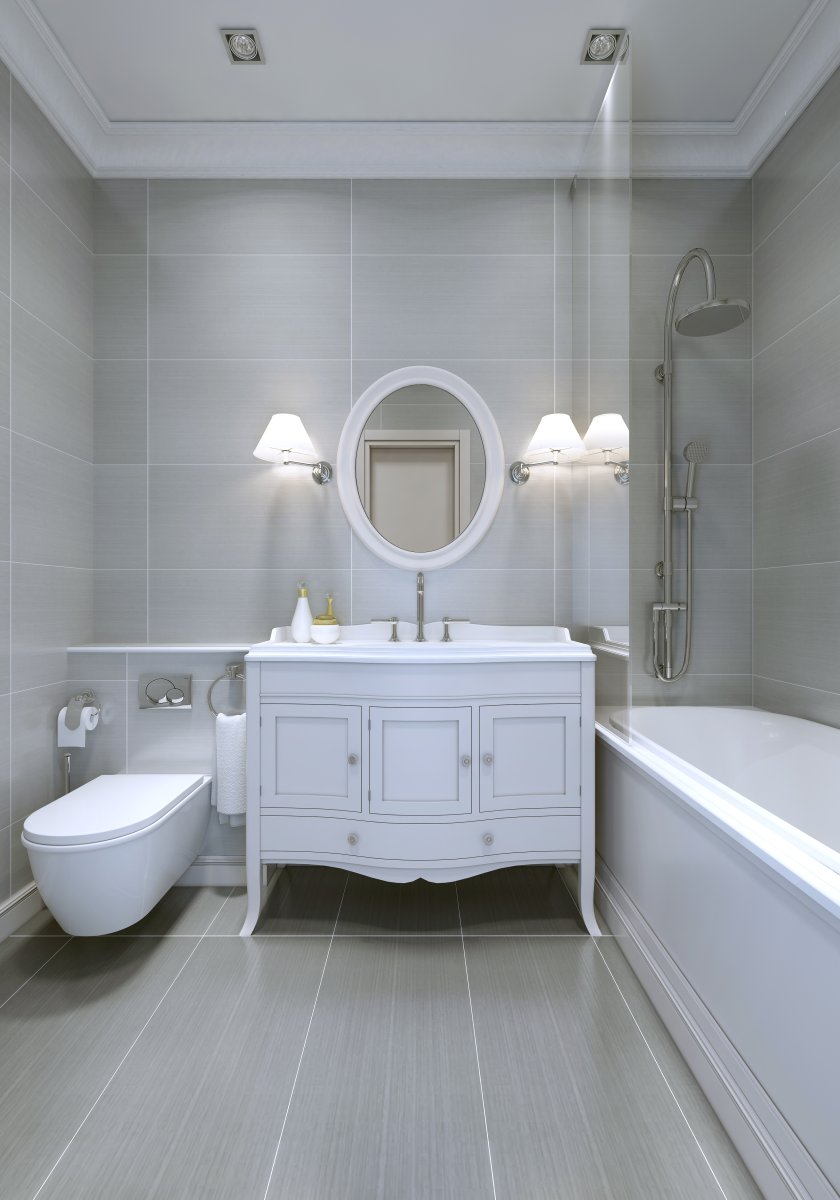
One of the most popular choices is a furniture-style freestanding vanity, which is not wall mounted. They come in a wide variety of styles, sizes, and finishes to match any type of bathroom. These vanities typically feature storage under the sink and are simple to install. “They can be decorated with legs, ornamental fronts, or bespoke finishes, but still include such modern features as soft-close drawers and built-in sinks,” says Roberts.
Our Recommendation
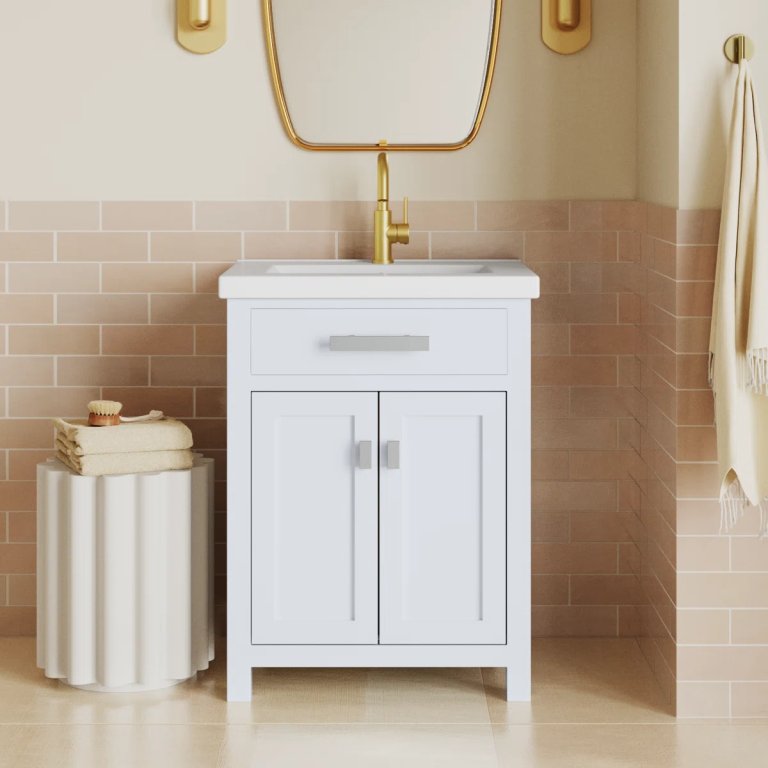
Joss & Main Caitlyn Freestanding Bathroom Vanity
This bathroom vanity comes fully assembled and is available in multiple colors.
Buy NowCabinet Style Vanities
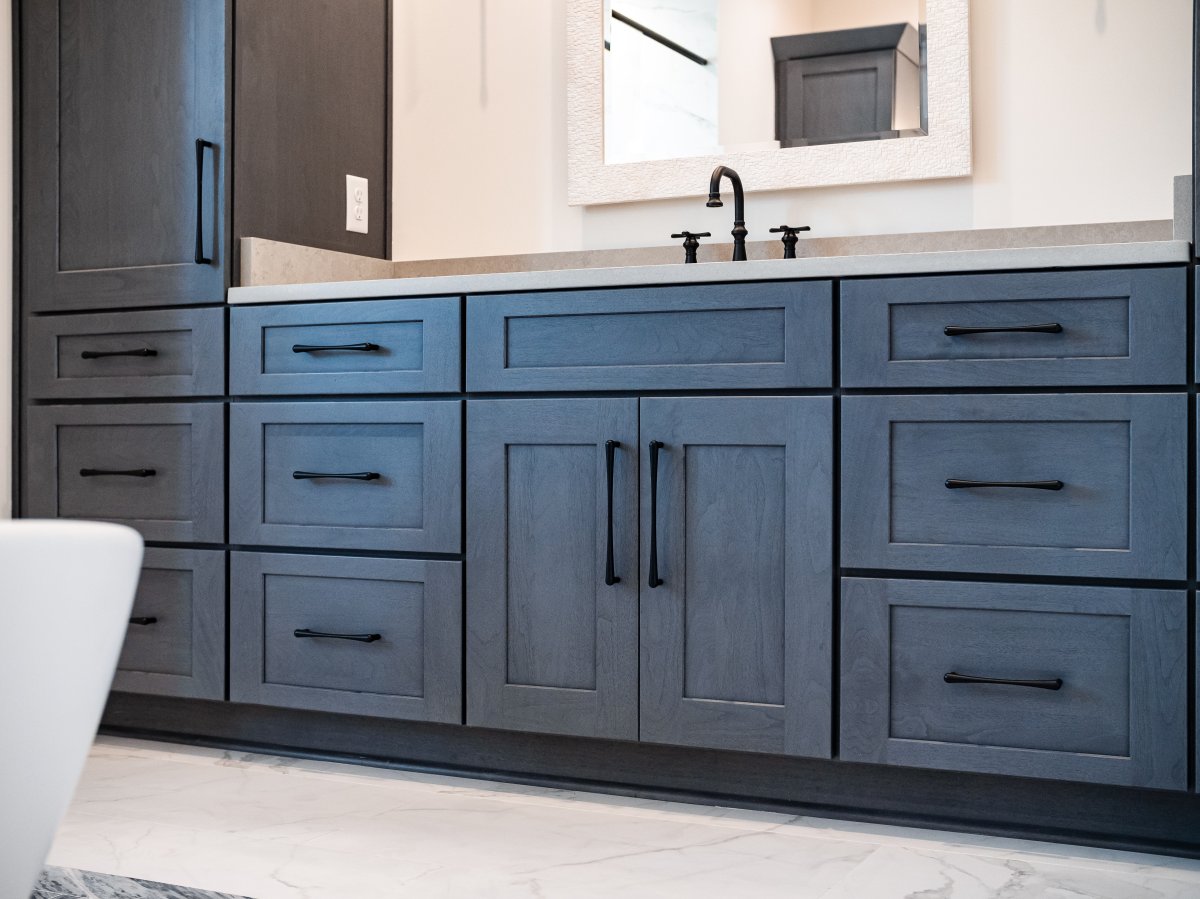
A cabinet-style bathroom vanity functions much like kitchen cabinetry, available in a wide range of designs, dimensions, and finishes to suit different tastes and bathroom layouts. If you are custom-building the vanity, you can also select your preferred countertop material. These vanities provide ample storage through a combination of drawers, shelves, and doors while concealing plumbing behind closed cabinet fronts.
Leg-Style Vanities
Frie recommends leg-style vanities as another possibility. Vanities with legs 6 to 8 inches long provide an airy look without structural headaches. “Also, you can mop underneath without the dust trap problem,” says Frie.
Built-in Vanities
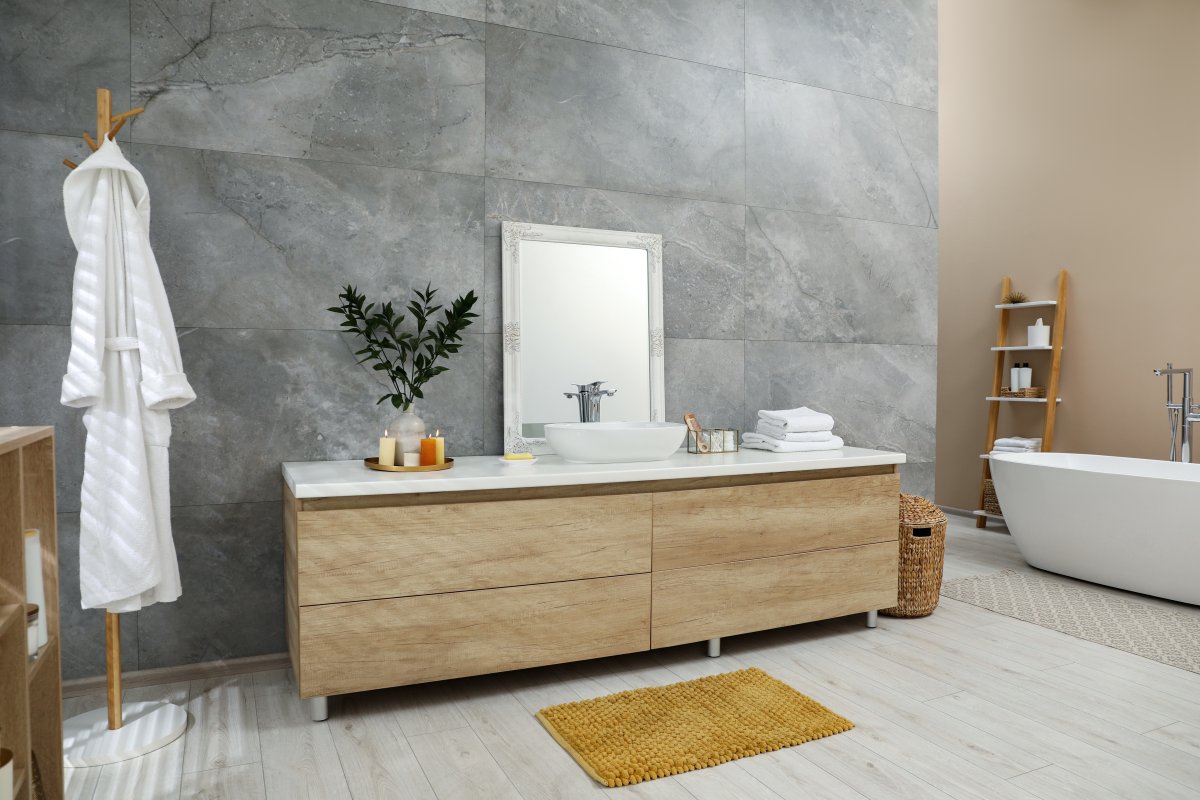
A built-in bathroom vanity is a permanent fixture that is installed directly into a bathroom, usually spanning much or all of one wall. These vanities are constructed as part of the bathroom itself and offer extensive storage options through drawers, cabinets, and shelving. Unlike freestanding vanities, built-in units can’t be relocated, so they are a long-term investment that stays with the home.
Corner Vanities
Corner vanities are a smart choice for tight bathroom layouts like half-baths and guest bathrooms. They fit neatly into a corner of the room and take up minimal space, yet offer some storage. Just keep in mind that they provide less countertop space than other types of vanities and require smaller sink bowls.
Our Recommendation
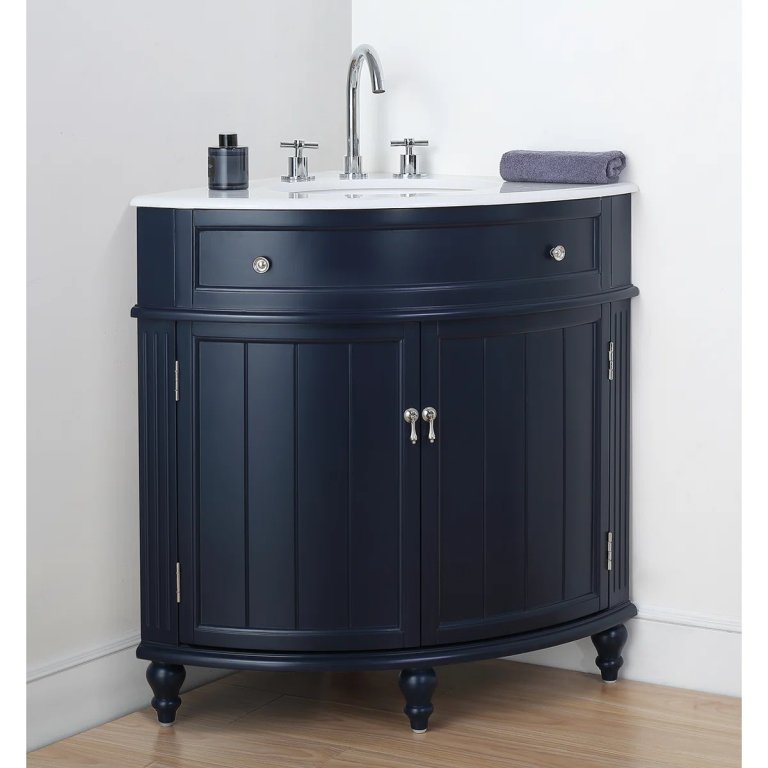
Charlton Home Wilhoite Corner Bathroom Vanity
This bathroom vanity saves space without skimping on style.
Buy NowConsole Vanities
Console vanities, which offer cabinet and/or drawer storage below the sink, also include an open bottom shelf to place towels, baskets, and other items. Frie recommends choosing one with a metal frame to enjoy open storage.
Toe-Kick Recessed Vanities
Semi-floating or toe-kick recessed vanities are a perfect compromise for those who desire a light and open feel, says Roberts. “They are kept up on some visual lift, without losing the ability to maintain balance and storage of a full vanity, which would be perfect in transitional and contemporary bathrooms,” he explains.
Furniture Vanities
Another option is to repurpose a freestanding piece of furniture to serve as a bathroom vanity. This could be an antique cabinet, a vintage dresser, or anything else that can support the weight of a sink.