We may earn revenue from the products available on this page and participate in affiliate programs. Learn More ›
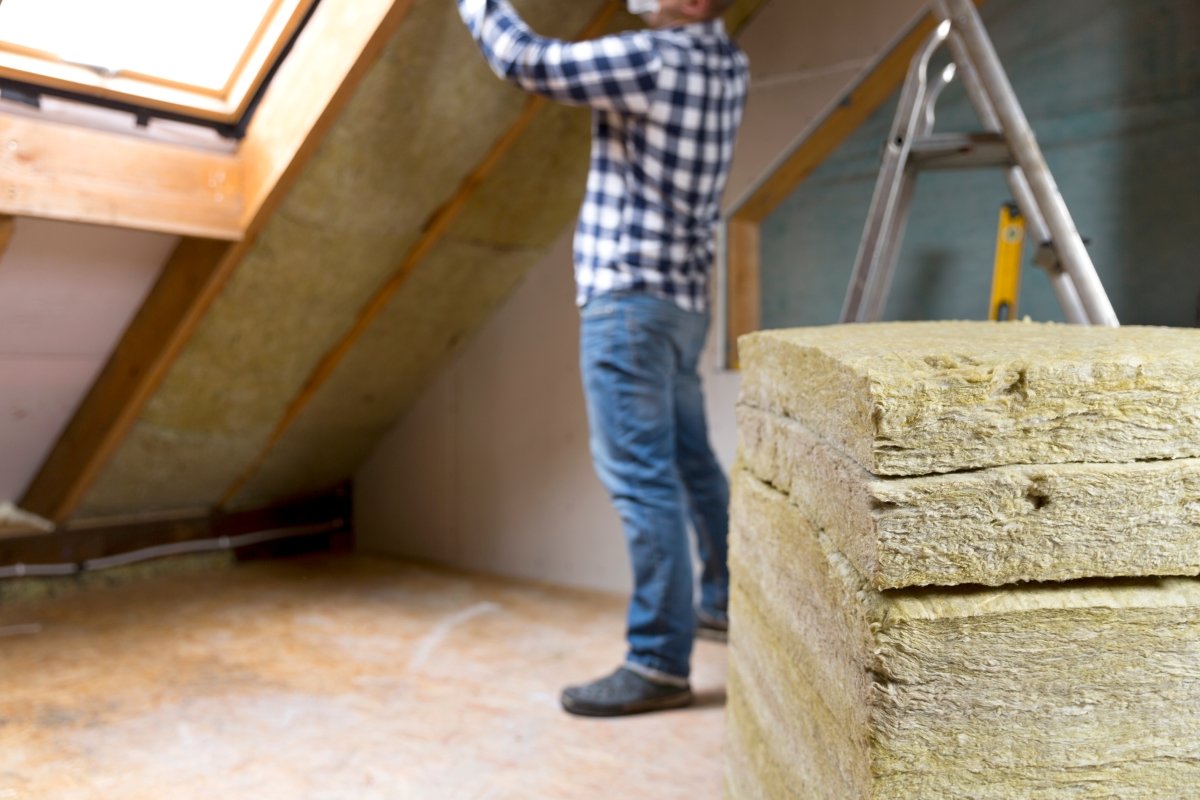
When we think about updating insulation in our homes, our minds usually turn to our exterior walls. We tend to forget insulating the attic, which is one of the biggest energy losses when it comes to heating and cooling the home.
While most modern homes have well-insulated attic floors, that’s not always the case in older homes. If your attic lacks insulation, chances are you’re losing a massive amount of conditioned air through the roof, resulting in much higher energy bills year round. The good news is adding insulation to your attic is a project you can probably handle on your own, and it’s one that can amount in considerable savings.
Benefits of Insulating the Attic
Insulating your attic floor can save you money on utility bills, and make your home more comfortable.
- Improved HVAC efficiency. Energy Star estimates that you could save 15 percent on heating and cooling costs by air sealing your home and insulating your attic.
- More consistent temperatures. Variances in temperature on the second floor are often a result of poor attic insulation. By insulating your attic, you can eliminate uneven heating and cooling.
- Fewer drafts. Air sealing and insulating your attic will result in fewer drafts in upstairs rooms. Seal gaps in plumbing and electrical runs, the attic hatch, and gaps between the living space and attic. When there’s no air leaking through the uninsulated floor and between these crevices you’ll really notice a difference.
- Better attic ventilation. Insulating the floor while keeping vents unobstructed allows for a well-ventilated attic, which means a lower likelihood of mold issues in the summer and ice dams in the winter.
Do you need to insulate your attic?
Insulating the attic floor is the best way to insulate the attic most situations, but there are occasions where it isn’t needed.
- Finished attic space: If your attic is a finished living area, then there is more than likely insulation in the roof. In that case, your roof is already part of your home’s finished living space, so there’s no need to insulate the floor.
- It’s above an unfinished garage: Insulating an attic will only make your home more efficient if it’s above a climate-controlled living space. If your attic sits above an unconditioned garage, there’s no point in insulating the floor.
Safety Precautions
Attic insulation installation exposes you to the small fibers and dust these materials produce. Before beginning a DIY attic insulation project, protect yourself from inhaling fibers or coming into contact with these materials which can irritate the skin, eyes, and lungs. Wear safety glass, gloves, pants and long sleeves, and an N95 or better mask or respirator.
Tools & Materials
Bobvila.com may earn a commission from purchases made through these links.
How to Insulate an Attic
Insulating an attic is a job a homeowner can tackle themselves, but following best practices is crucial to getting the best results out of this project. We tapped Nichlas Riley of Texas-based Driftwood Builders Roofing, for tips and guidance on how to add insulation to an attic.
Step 1: Air seal your attic.
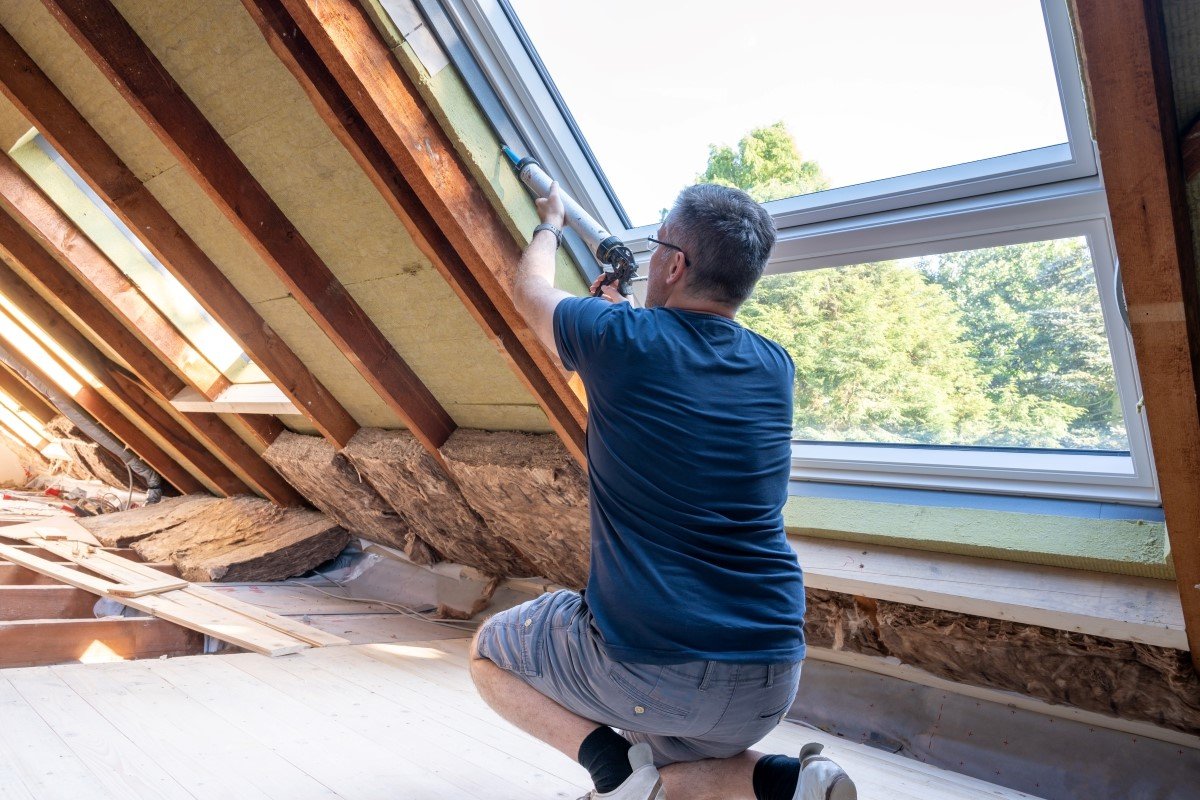
Before you start laying down installation, you’ll need to first take care of any gaps between the attic floor and the living space below. “Common leakage points include plumbing and electrical penetrations, attic access points, recessed fixtures, and gaps around framing,” says Riley. Gaps around the attic hatch are also a prime area for leaks. During the winter warm air will rise up through these holes and gaps, while during the summer, that hot attic air can push down through these holes into your living space. Use an expanding caulk to seal these gaps around plumbing and electrical runs and install weather stripping around the attic hatch door.
Step 2: Decide which type of insulation to use.
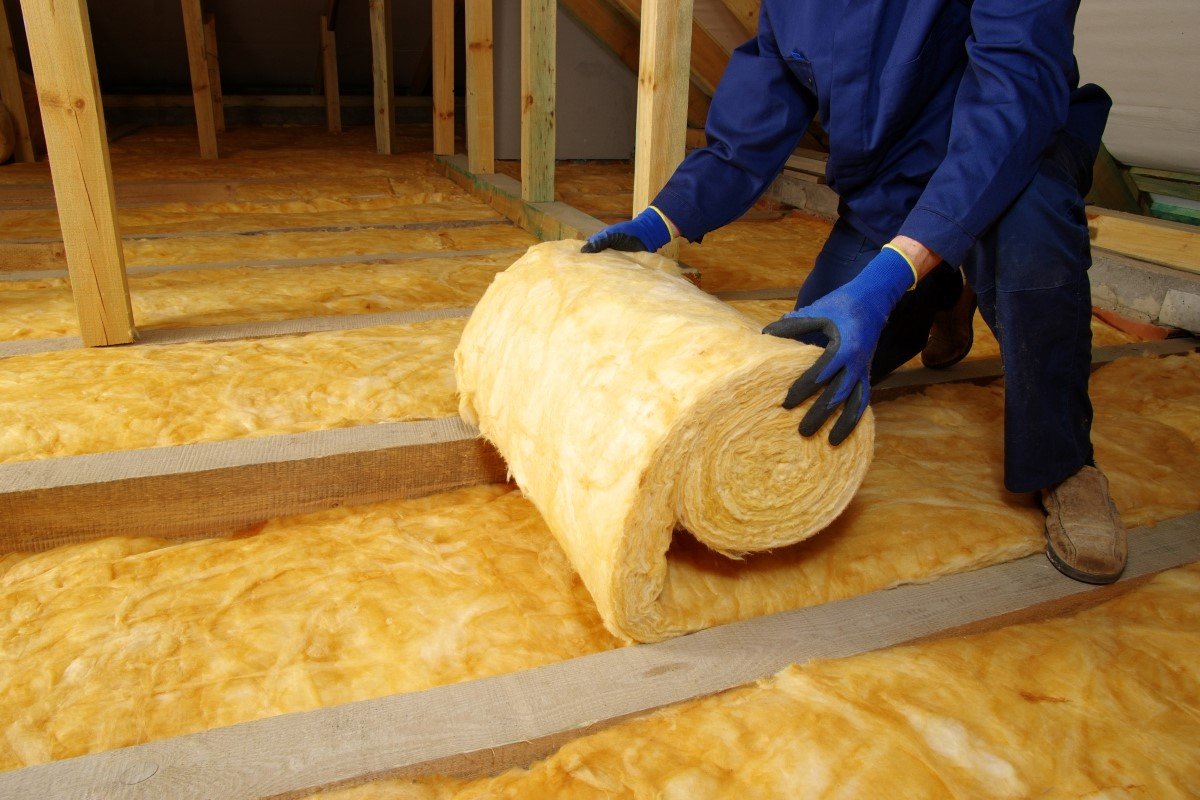
There are three types of insulation: batt and roll, blown-in, and foam spray. Each has advantages and disadvantages to consider as you decide which kind is best for your home.
Batt and roll comes in large rolls that fit between floor joists. They’re easy to install because they don’t require specialized equipment, and they come in both fiberglass and mineral wool. Fiberglass batts “are relatively simple and inexpensive, but can lose effectiveness when they are compressed, poorly fitted, or leave gaps,” Riley says. They must be cut precisely to prevent any gaps between the joists and insulation that can allow for air flow. They can also be difficult to install around wiring, pipes, and irregular framing. Go with this option when the joist bays are relatively open and uniformly spaced with few pipes, wires, and other obstructions to work around.
Blown-in insulation consists of small particles that are blown into the attic using a special blower machine. Since they are made up of small particles, they can cover the spaces between joints evenly around irregularly shaped areas without leaving any gaps. You can also use it to easily shore up existing insulation. Blown-in insulation is messier to install and requires the rental of a blower machine, adding to the cost of the project. You also need to pay attention to installation depth when installing it, Riley says. Go with blown-in insulation if there is already some insulation present or if the attic has irregularly shaped framing and numerous obstacles to work around.
Spray foam insulation involves spraying polyurethane foam over the entire attic floor, insulating and air sealing it in a single step. Since it covers everything, it creates excellent coverage over irregular shapes and gaps, making it an exceptional insulation option. Applying spray foam insulation is complicated and involves using chemicals that can pose major health risks if done without the proper safety gear and standards. As such, installing whole attic spray foam insulation is really best left to insulation pros.
Step 3: Install vents and baffles.
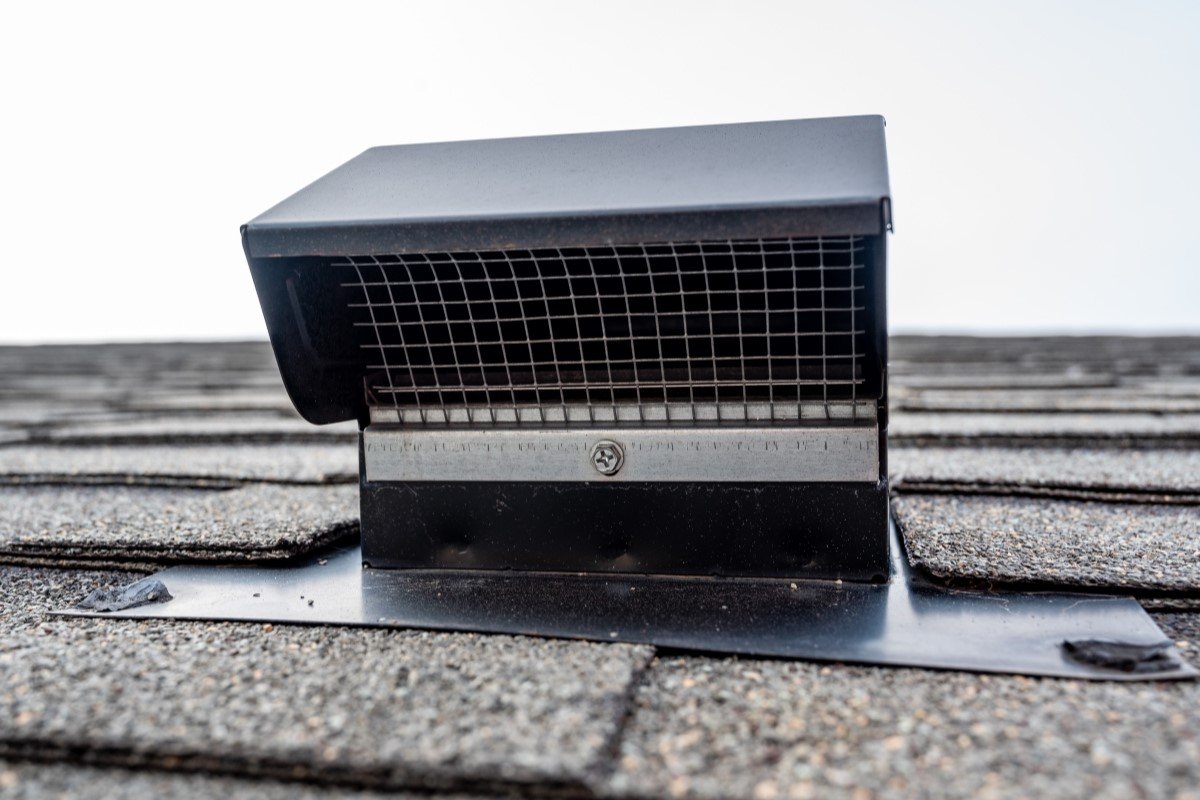
If the attic roof has soffit vents where the roof meets the attic floor, you’ll need to install vents or baffles to prevent the insulation from falling into the soffits and blocking air flow into the attic.
“One mistake we often see during roof and attic inspections is homeowners having plenty of insulation but poor airflow because the insulation has been pushed too tightly against the soffits,” Riley says.
Blocked air flow can cause temperatures in the attic to spike in the summer, driving temperatures upward, while also creating a moist environment where mold can grow. During the winter, blocked vents can cause ice dams to form on the roof.
Install dams around places in the attic that need to be kept separate from insulation, including the attic hatch, non-IC recessed lights, chimneys, HVAC equipment, and furnaces. You generally do not need to install dams around plumbing and wiring runs.
What is R value?
R-value is a measure of how well insulation resists the flow of heat. The greater the R-value the better the insulation does at preventing heat from entering or leaving your home. The R-value you need depends on the climate you live in. Homes in New England, which experiences extreme cold in the winter, might require insulation with an R-value of 60 while warmer climates, such as in the Deep South, may only require an R-value of 30.
“Here in Austin, Texas, a good attic R-value is generally R-38 to R-60, which matters because attic temperatures here can climb well above 130°F during summer, so the insulation has to do a lot of work to slow heat transfer into the living space,” Riley says. You can use an online insulation calculator to determine the R-value you need.
Step 4: Install the insulation.

If you’re using fiberglass and mineral-wool batts:
- Place the first batts into the attic-floor joints, running it from one end of the bay to the other. Use a utility knife to cut the insulation so that it fits snugly from one end to the other without any gaps.
- Cut splits in the batts to work them around wire and pipes. “Avoid compressing the insulation because that can reduce its performance,” Riley cautions.
If you’re using blown-in fiberglass or cellulose:
- Place depth markers throughout the attic to serve as a guide for how much blow in insulation you need to add.
- Have one person man the hose of the blower while the other feeds insulation into it.
- Begin at the furthest point from the attic exit and begin blowing material into the bays, using the depth markers as a guide to reach the proper depth. Riley recommends blowing the insulation to a depth that’s 10% to 20% past the target depth, as the cellulose will settle.
- Avoid covering any vents or fixtures that produce heat. Also make sure that any electrical components are uncovered and accessible.
FAQ
Q. What’s the best way to insulate an attic?
Blow-in cellulose over an attic floor that’s been thoroughly air sealed offers the best results. The blown in cellulose provides better insulation per inch than bat and roll insulation. And since it’s blow-in, it fits seamlessly around joists, wiring, and other obstructions.
Q. How much does it cost to insulate an attic?
You’ll spend between $500 and $1,500 for materials or $0.35 to $1.50 per square foot, depending on the attic’s size and the R-value required. While the attic insulation materials cost is about the same for bat and roll and cellulose, keep in mind that blown-in cellulose requires the rental of a blower machine, which can add several hundred dollars to the cost.
Q. How do you tell if your attic needs more insulation?
Take a look at the attic floor. If the insulation is even with or lower than the floor joists, it likely needs more insulation. Most floor joists are 6 to 8 inches deep, which isn’t thick enough to meet most modern insulation standards. For good coverage, most loose-fill insulation should rise several inches above the joists, completely hiding them. Exactly how deep the insulation should be depends on your climate zone and recommended R-value. You might have to consider attic insulation replacement if the insulation is in really bad shape.