We may earn revenue from the products available on this page and participate in affiliate programs. Learn More ›
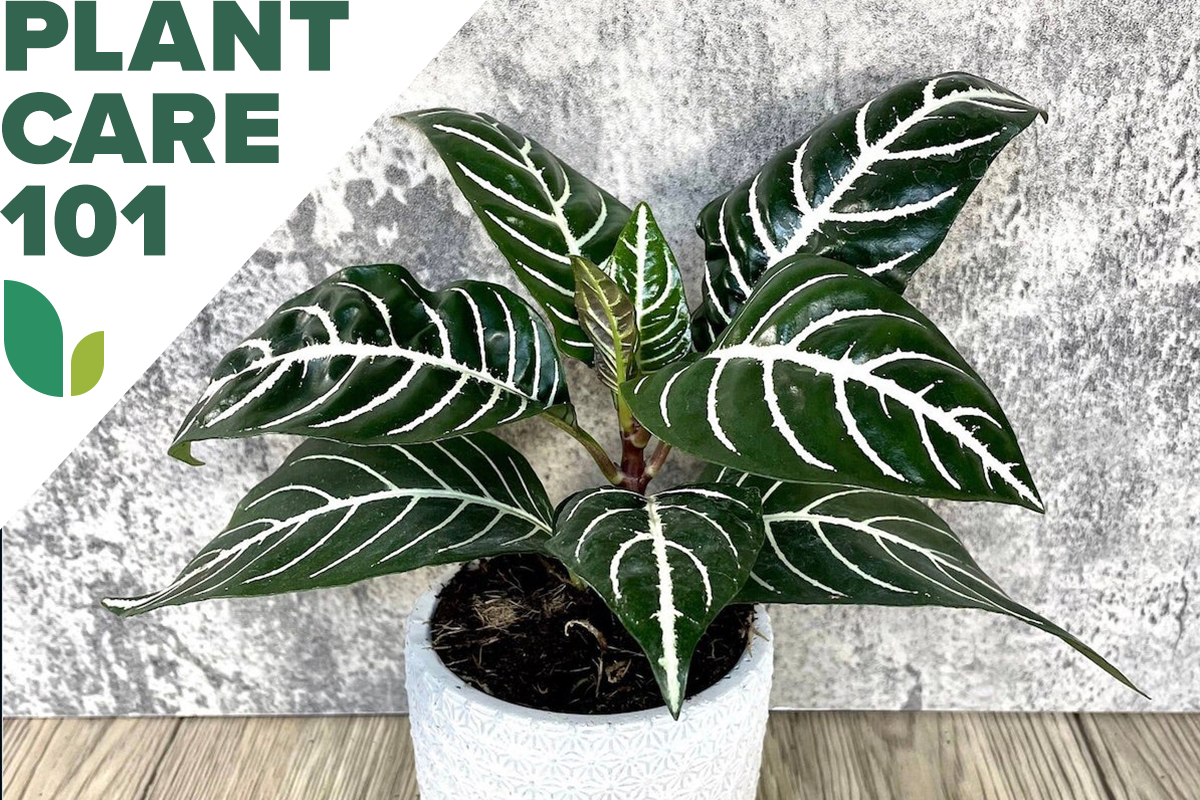
Although zebra plants (Aphelandra squarrosa) have a reputation for being among the hardest-to-please houseplants, their showy, white-striped leaves and sunny bracts help them rank them among gardeners’ favorites, too.
Before we dive in, it is worth noting that a few other houseplants go by the common name of “zebra plant,” including Dipteracanthus spp., Haworthia spp., and Cryptanthus zonatus. This guide, however, only details care instructions for the Aphelandra zebra plant.
Zebra Plant Care at a Glance
Common Name: Zebra plant
Scientific Name: Aphelandra squarrosa
Soil: African violet potting mix
Light: Bright, indirect light
Water: Constantly moist
Food: High-nitrogen plant food
Temperature and Humidity: Above 65 degrees, high humidity
Propagation: Stem tip cuttings
Safety: Nontoxic
Zebra Plant Characteristics
A member of the Acanthaceae family, the zebra plant only is hardy in USDA Zones 11 and 12. Although it can attain heights of 6 feet in the wilds of its native Brazil, growers often treat it with a growth suppressant so it seldom surpasses 2 feet when in a container.
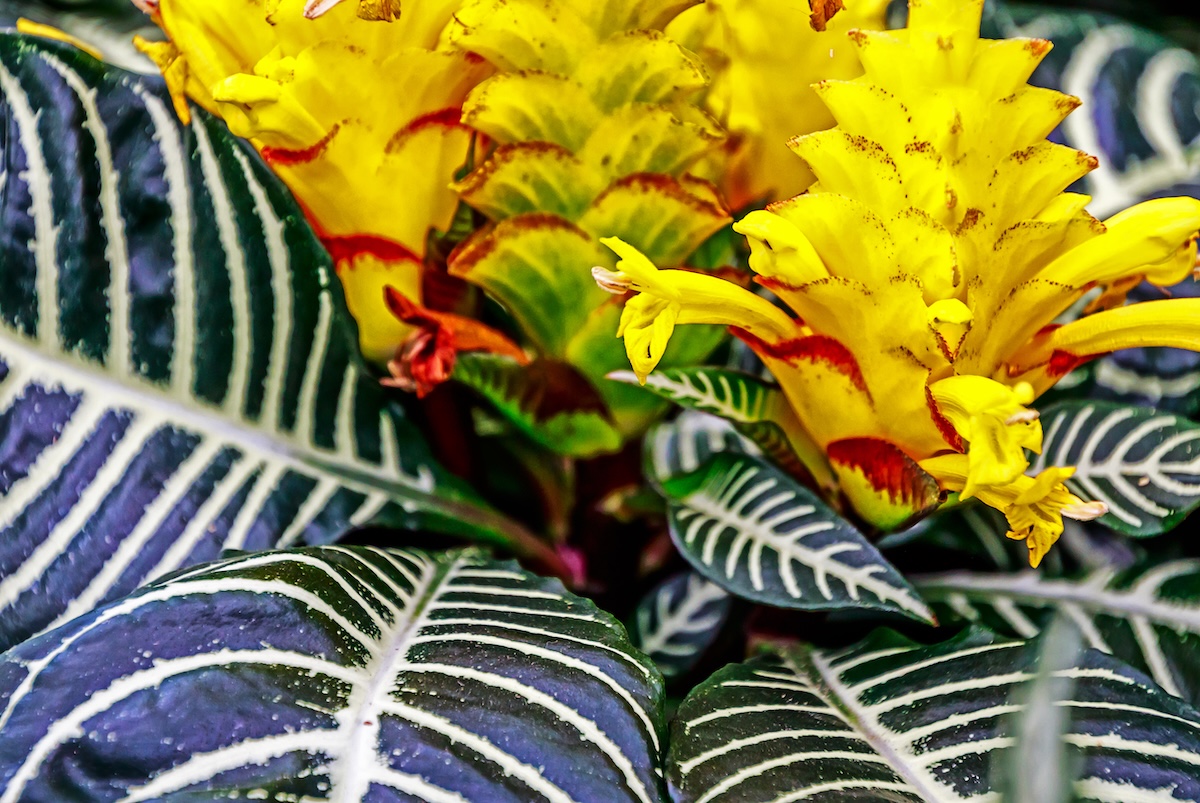
The veins of its glossy and ovate dark-green leaves are heavily striped with white, and the zebra plant occasionally sends up stalks topped with clusters of yellow bracts, usually in autumn, from which emerge tubular yellow flowers. Each of those two-lipped blooms is considered a zebra flower. They don’t last long, but the more showy bracts persist for up to 2 months.
If you don’t like the veined markings on A. squarrosa, you might want to check out other Aphelandra houseplant species with different common names.
Types of Zebra Plant
- Dania: The most common variety, ‘Dania’ has the typical white-veined, dark-green leaves accompanied by yellow bracts and blooms.
- Apollo: This cultivar boasts wider white stripes than ‘Dania’ does, but ‘Apollo’ is otherwise similar to it.
- Red Apollo: The ruddy ‘Apollo’ adds another color to the green, white, and gold mix, with its stems and leaves’ undersides being stained with red.
Soil
Give zebra plants a light, fluffy, and mildly acidic potting soil such as an African violet mix with a pH between 6 and 6.5. If you don’t have access to African violet potting soil mix, try combining two parts of peat moss with one part each of vermiculite and perlite.
A standard potting mix should also work, provided that it isn’t too heavy. Plants that prefer to be kept constantly moist, including zebra plants, can rot easily in heavy soil or in too-large pots. Confine it to a container with drainage holes that’s no larger than 6 inches in diameter.
Light
The zebra plant prefers bright, indirect light. During the summer months, give it as bright a location as possible without direct sun, since that will encourage it to set buds in autumn. The University of Arkansas Cooperative Extension advises, “The zebra plant requires average night temperatures above 65 degrees and light levels around 650 footcandles for about 12 weeks before flowers will form.”
One way of achieving that level of brightness without direct sun is to place the plant in a south-facing window with a sheer curtain between it and the windowpane to diffuse the glare. Another option is to set it on an east-facing windowsill where it receives sun only in the morning, since those mild rays often are considered equivalent to bright, indirect light. In winter, you can reduce its light to moderate (around 500 footcandles), but don’t leave it in the dark.
Water
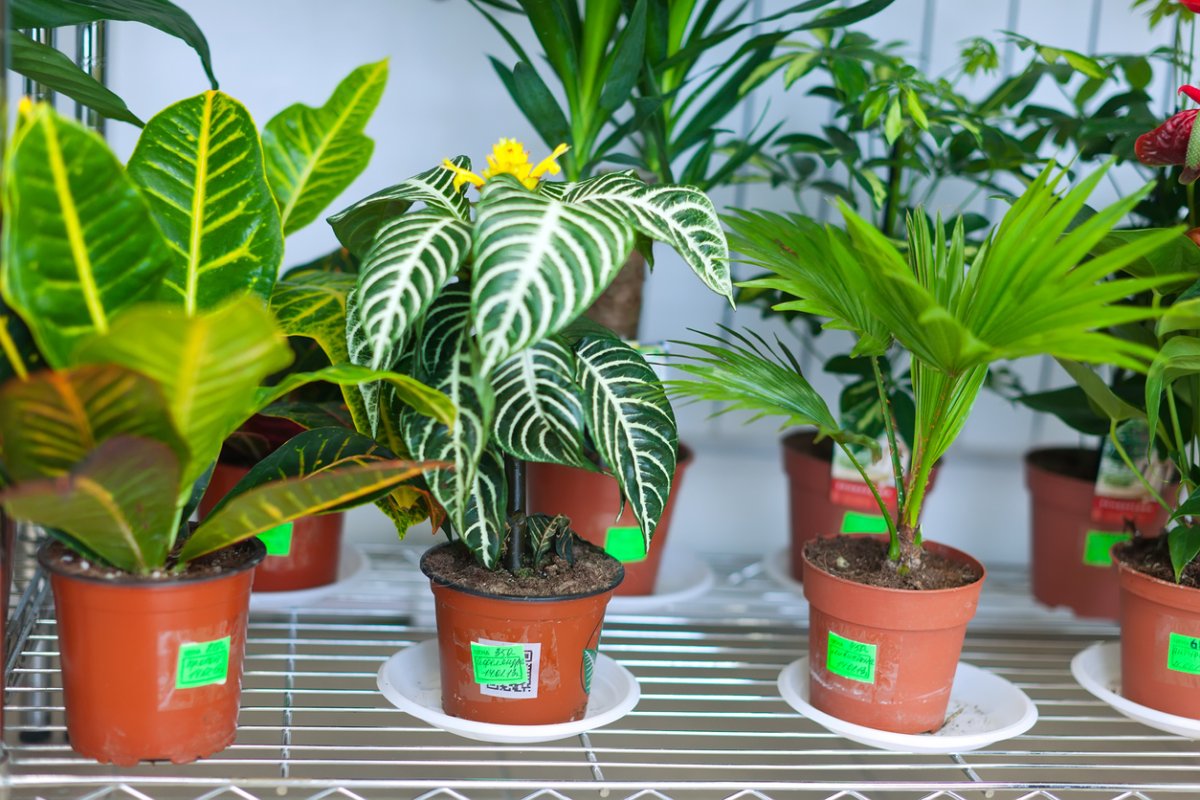
Zebra plants prefer to be kept evenly moist, so water them whenever the surface of the soil has almost dried out. Lukewarm rainwater or bottled spring water are better than hard tap water. After a zebra plant has flowered in autumn, cut back on its water and keep it at a temperature of 65 degrees Fahrenheit for a couple of months to give it a rest. Never allow its soil to dry out completely.
If the top of the plant wilts, it likely is parched and needs attention quickly. However, the symptoms of root rot, caused by too much water, sometimes can mimic those of drought.
Fertilizer
Fertilize your zebra plant every 2 weeks from spring through autumn with a high-nitrogen plant food (one in which the first fertilizer number is higher than the other two) at half strength. Refrain from feeding the plant in winter.
Since a zebra plant probably will spend most of its life indoors, you’ll want to leach its soil a couple times during summer to prevent fertilizer salt buildup. To do so, set the pot (without its saucer) in a sink with an open drain, and water the plant thoroughly until water runs from the pot’s drainage holes. After allowing the soil to drain for a half hour, repeat the process. Then make sure the soil drains thoroughly before you return the pot to its saucer.
Temperature and Humidity
The zebra plant prefers temperatures between 65 and 80 degrees Fahrenheit. It probably should stay indoors during summer rather than being moved outside, since, in much of the U.S., nighttime summer temperatures often fall below 65 degrees.
Because zebra plant relishes high humidity, you might want to keep the plant in a bathroom, near a sink, or atop a humidity tray, misting it once a day. Keep in mind that air conditioning reduces air moisture indoors, much as central heating does. If your plant’s leaves begin to exhibit brown tips, consider ways that you can raise the humidity around it.
Propagation
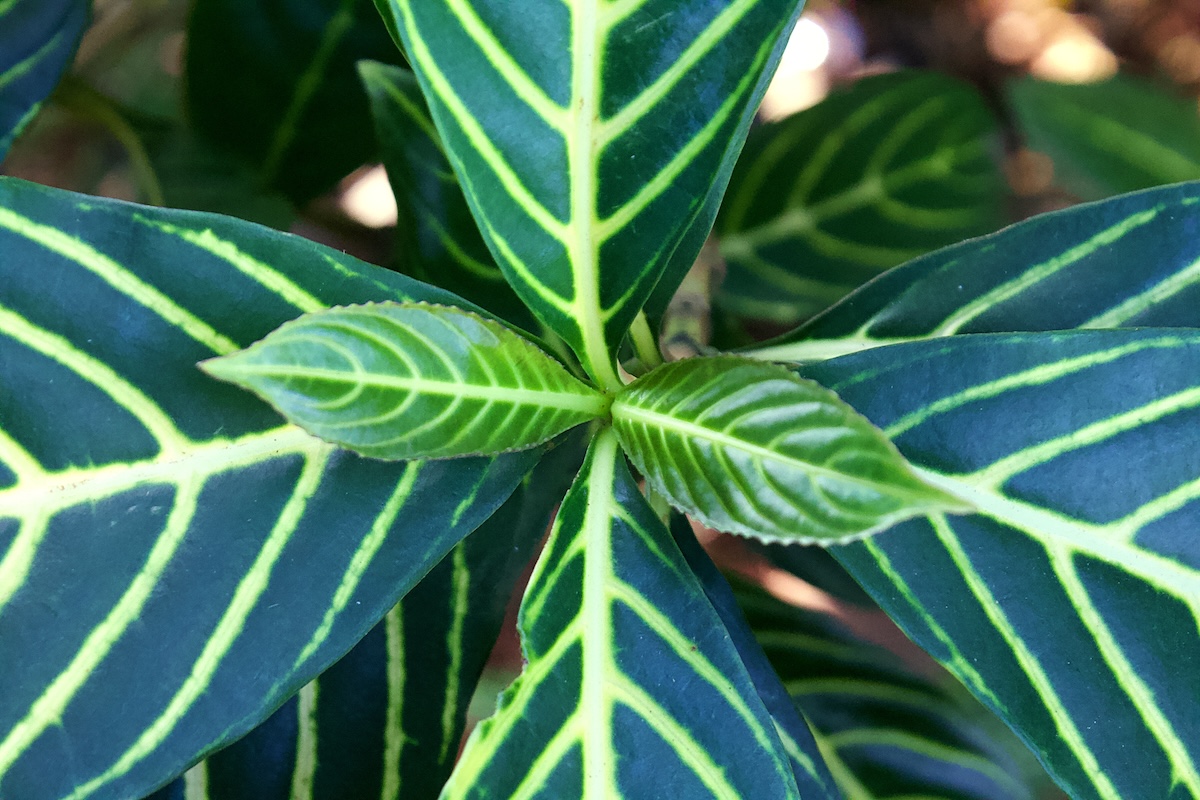
Since it’s a good idea to cut back your zebra plant after it blooms, you might want to use the cuttings to propagate the houseplant. To do so, take 4-inch shoots from the plant’s tips, remove the lower leaves and dip the now-bare leaf nodes at the cuttings’ bases into rooting powder or liquid. Then, insert those bases into a potful of damp, sterile soil such as seed starting mix until the treated nodes are covered.
Be sure to cover the cuttings and their pot with an upended plastic bag to retain humidity around those cuttings while they root. Use plastic straws or sticks to hold that plastic away from the cuttings and fasten the bag shut beneath the pot. Place it in bright, indirect light where the temperature is between 70 and 80 degrees Fahrenheit. Tip cuttings typically take 3 to 4 weeks to root.
Safety Considerations
Zebra plants are nontoxic to pets and people. However, the large bracts that make up part of a zebra plant flower might pose a choking hazard to toddlers or pets attracted by their bright color, who either pull them off or pick them up. Keep the plant out of reach and snip off those fading bracts before they drop. Its sap can reportedly irritate skin, so wear gloves when pruning the plant and clean your pruning tools afterward.
Potential Pests and Diseases
Should your zebra plant exhibit the unhappy houseplant symptoms, examine it carefully. If its top leaves curl under and look crimped or crispy, they probably are receiving too much sun. The lower leaves might “curl up and die” due to dryness, drafts, or too much drenching.
Although real zebras’ stripes reportedly help protect them from insects, the plants aren’t as lucky and may occasionally suffer damage from aphids, mealybugs, and scale. Due to the glossy finish on the zebra plant’s foliage, you should be able to knock off the aphids with strong squirts of water and scrub off the other insects with a damp paper towel.
FAQ
Q. How often should a zebra plant be watered?
Water your plant whenever the surface of its soil begins to dry out in spring through fall. Cut back in winter and water just enough to keep the soil from drying out completely.
Q. Do zebra plants need sunlight?
No. The plants prefer bright, indirect light rather than sunlight.
Q. How do you make a zebra plant bushy?
After its flower bracts wither, snip them off and cut the plant back to its first two tiers of leaves to make it bushy.
Q. Should I trim my zebra plant?
Only prune off faded flower bracts, as described above.
Q. How big can a zebra plant get?
Although it may reach a height of 6 feet in the wild, it usually doesn’t grow taller than 2 feet in a container.
Q. Can you propagate zebra plants from leaves?
Most sources recommend that you use stem tip cuttings rather than leaves to propagate zebra plants. (See “Propagating Zebra Plants” above.)
Looking for other challenging houseplants to test your skills? Check out our guides on caring for avocado, bird of paradise, and croton.