We may earn revenue from the products available on this page and participate in affiliate programs. Learn More ›
Being a perennial cheapskate, I prefer to make use of what I have rather than buy new garden tools—and what I have includes trash. Since it would otherwise be filling up landfills, I can even feel virtuous about upcycling it to support my miserly ways.
That reuse of items which would otherwise be thrown out also leaves me more money to spend on seeds and plants, since my skinflint habits don’t extend to them. For upcycle garden ideas, consult my list below of items from the trash that I have used as garden helpers.
Old Metal Containers
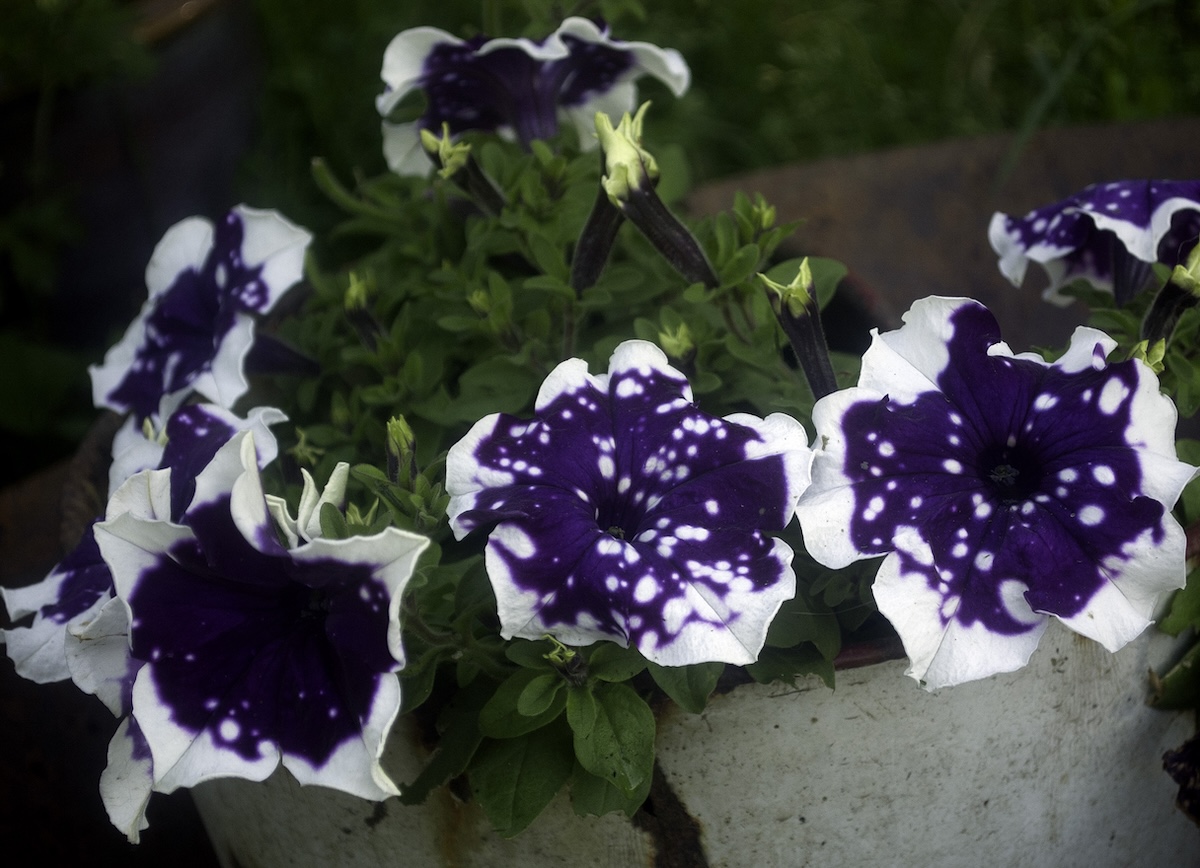
An old house once stood on our farm and its residents had a junk heap out back in which I have found a variety of discarded metal containers, including kettles, buckets, a wheelbarrow bed, etc. Most were thrown out due to rust or punctures that would make them unusable back then and unacceptable to an antique dealer nowadays.
But, where other people see leaks, we gardeners see drainage holes! I grabbed them up for use as free garden containers in my own version of shabby chic. (The wheelbarrow bed worked well as a large “tray” in which to cluster other metal containers.)
Greenhouse Daisy Trays
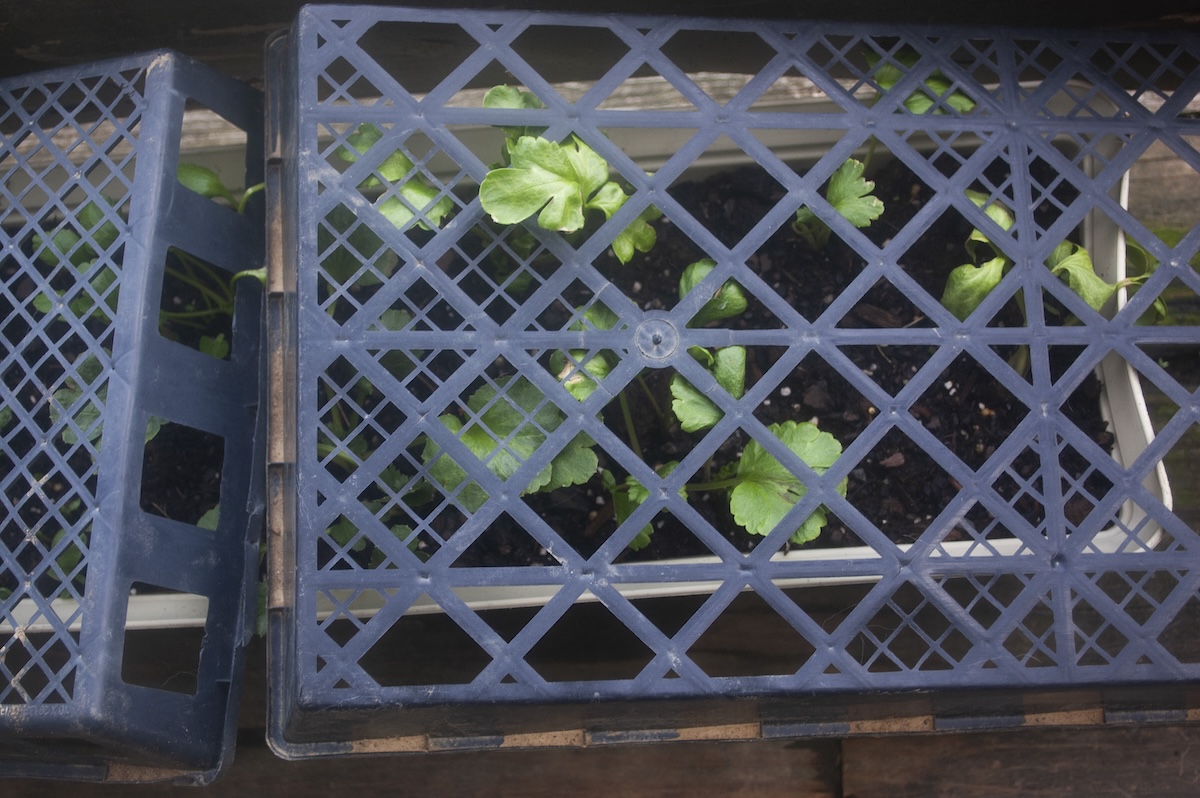
Many of the greenhouses hereabouts give customers daisy trays in which to carry home their purchases, i.e. plastic trays similar to flats but with webbed bottoms. I never throw those out, since I can use them to carry my own seedling packs from beneath the grow lights in the basement to the great outdoors.
I also often invert them, sometimes weighing them down with stones, to cover ground or containers in which I have recently planted bulbs. Otherwise, my pets and poultry see any freshly turned soil as a good place to scratch, dig, or otherwise wreak havoc.
Potting Soil Bags
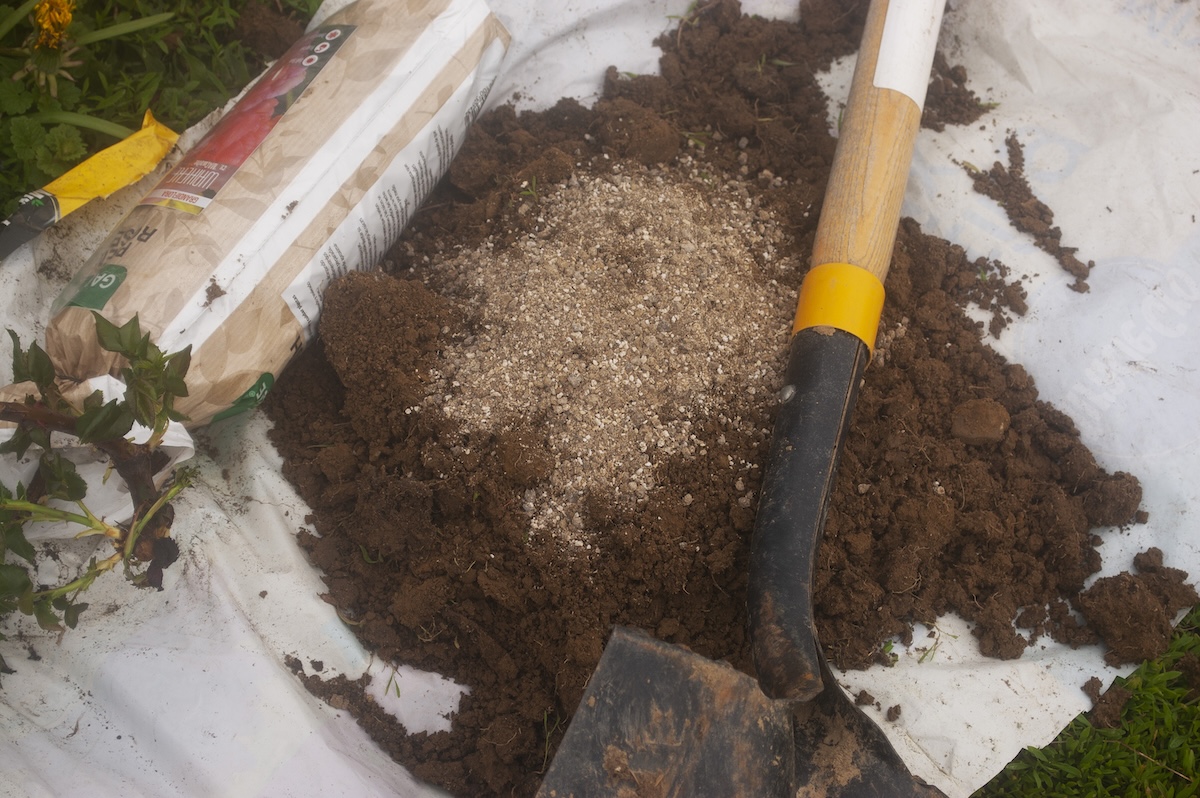
I buy potting soil in large bags, since it is more economical that way. Those plastic bags have another advantage after emptied: They are large enough, if cut open, to serve as tarps upon which to pile garden soil when I am planting a rose bush or a potted perennial that requires a deep hole.
This landscaping hack also makes mixing organic fertilizer into the fill dirt easier, when that dirt is lying on top of the plastic. Large pet food or bird seed bags also work for this purpose.
Aluminum Cans
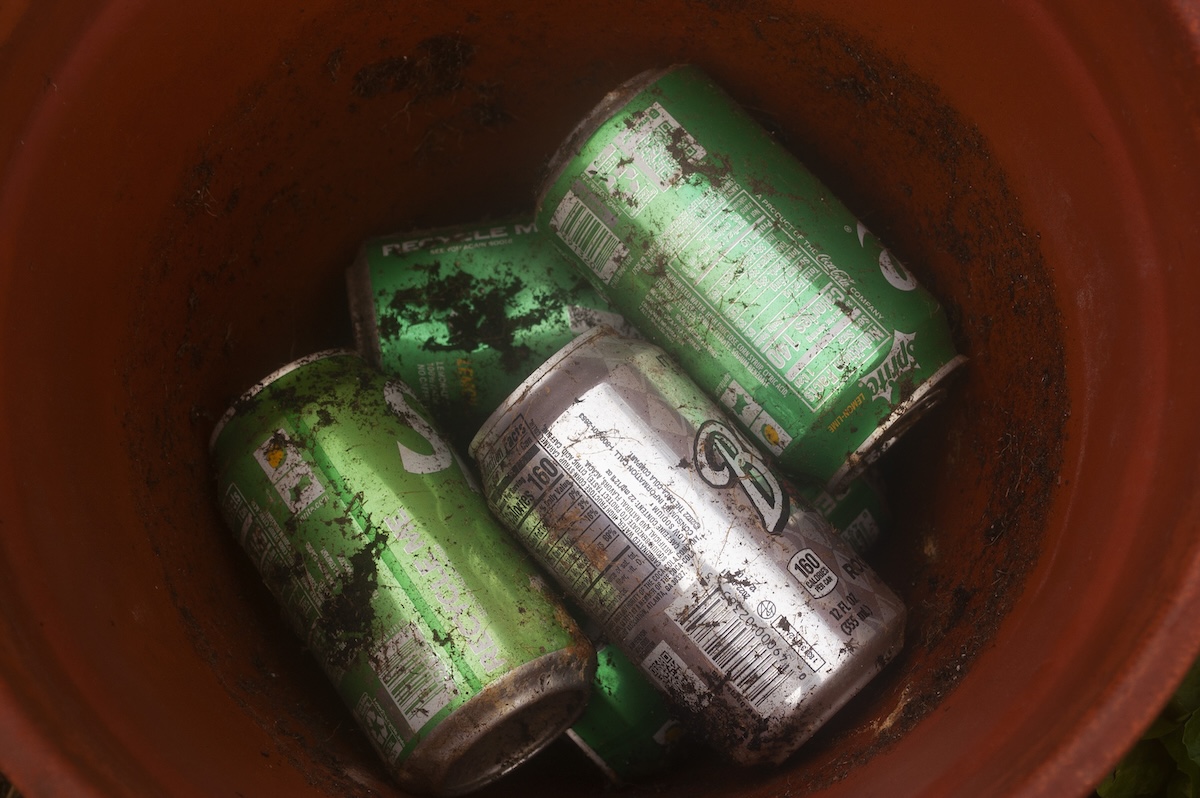
If I am planting annuals in a large, deep container, I often place empty aluminum cans lying on their sides at the bottom to occupy some of the space. This garden hack prevents me from having to use large amounts of expensive potting soil.
Annuals generally don’t have root systems as deep as those of perennials, so you might want to skip this hint if you are growing perennials in your containers instead. Being light, aluminum cans take up space without adding extra weight.
Broken Terra Cotta Pots
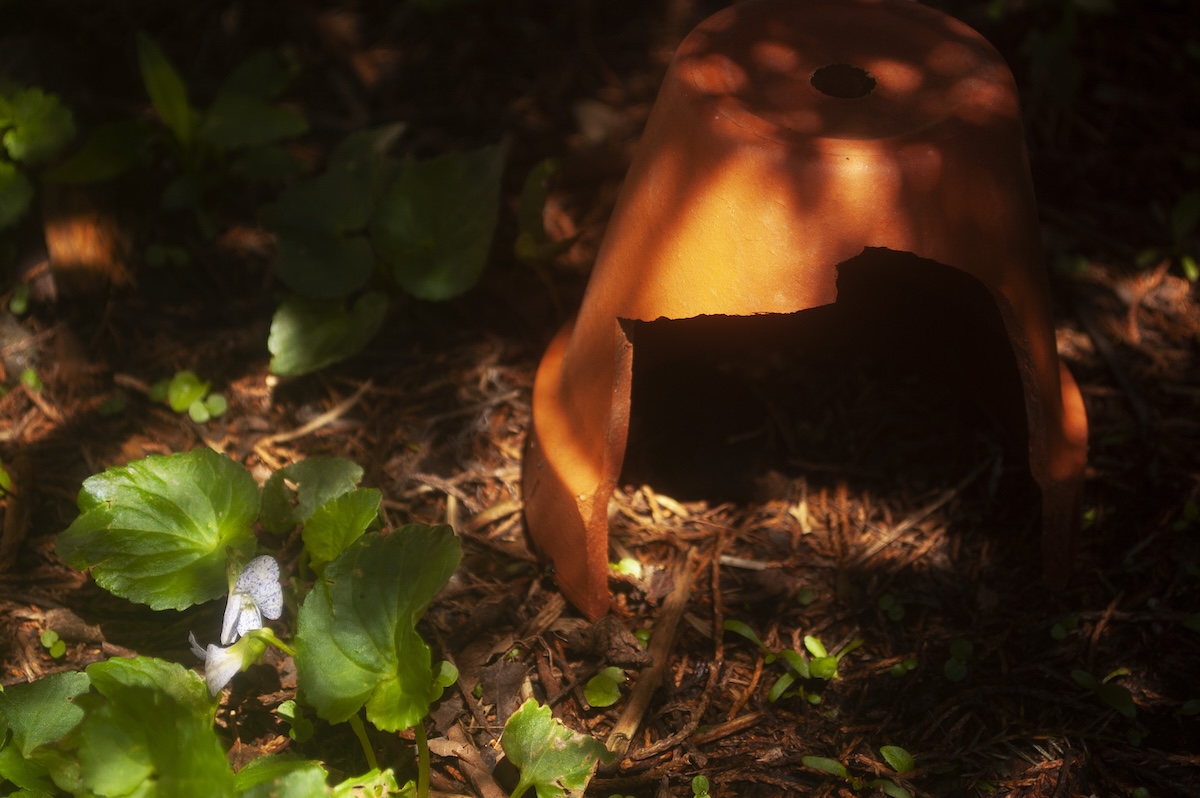
After one of my small terra cotta pots broke on one side, I decided that the opening looked like a door and placed the inverted pot under my junipers as a cute little toad house. I’m hoping that will convince one of those bug-eating amphibians to take up residence in my garden.
I’ve also used shards from a broken pot to cover the drainage holes in the bottoms of other pots. You may also want to use such pieces as rustic plant markers.
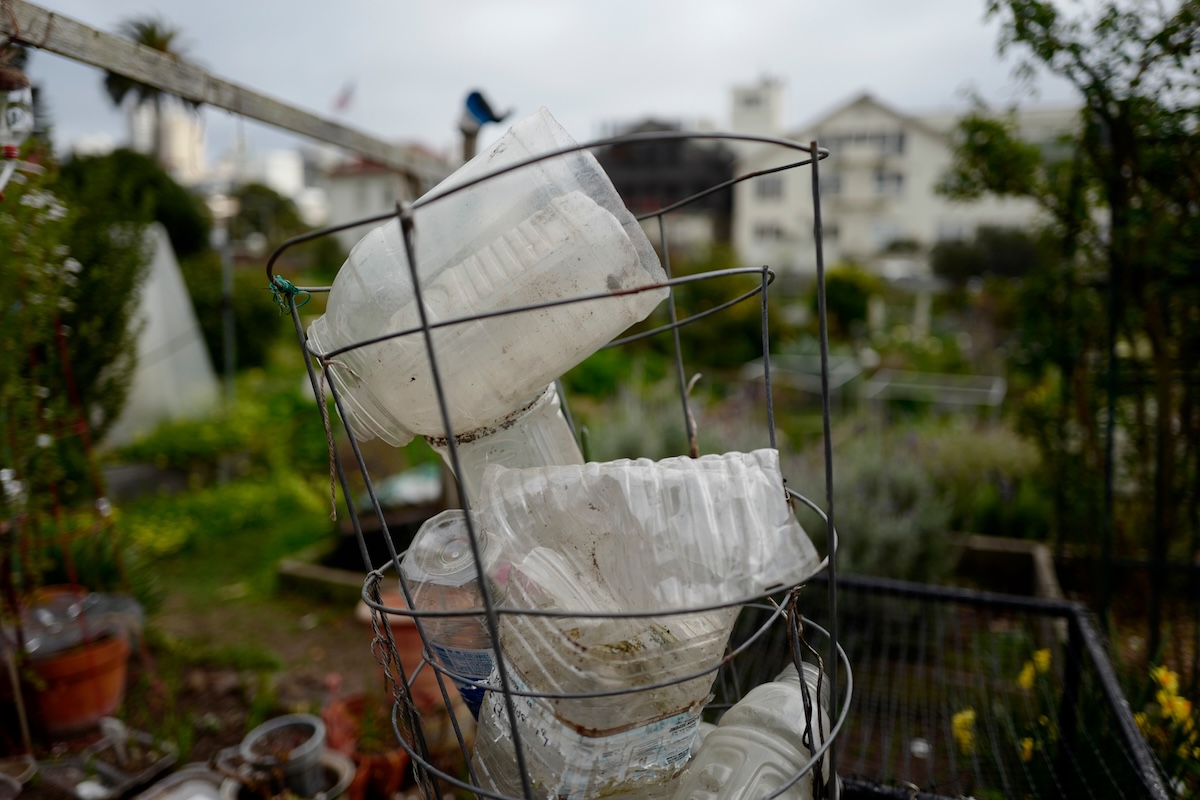
Plastic Milk Jugs
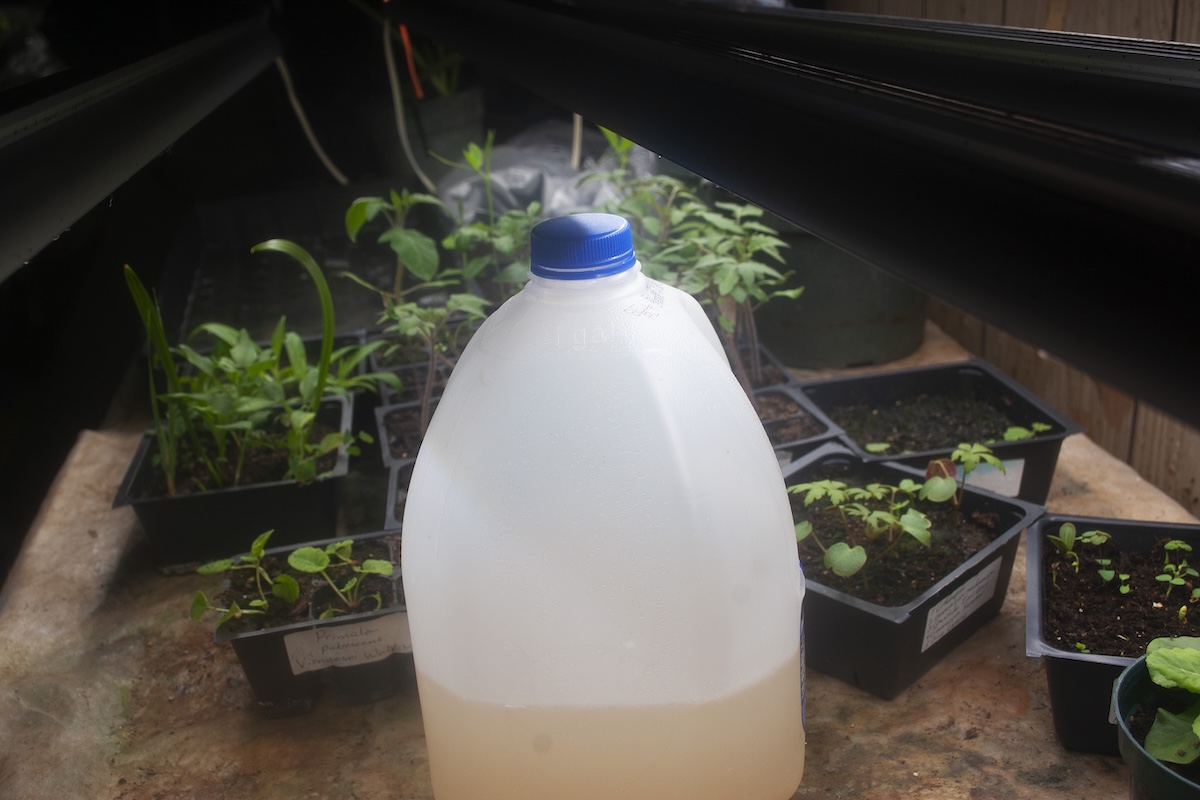
I generally use a cleaned plastic milk jug to prepare the weak fish/kelp emulsion fertilizer I use for my seedlings. Since the emulsion tends to settle to the bottom, I can easily shake the capped jug to mix that fertilizer into the water again.
Those of you who want to start plants outdoors during winter can also use cut-open plastic jugs as miniature greenhouses. To get started, see my tips on winter sowing.