We may earn revenue from the products available on this page and participate in affiliate programs. Learn More ›
Perennials can live for years or even decades, beautifying your garden with very little care. Flowering perennials typically produce blooms by the second year, though some will burst with color the very first year. Spring-blooming perennials signal the coming of warmer weather and more colorful gardens.
However, fall, with its combination of still-warm soil and cooler, wetter weather, presents an ideal opportunity to encourage root growth in new spring perennials. So admire this list of perennials to plant in fall, pick your favorites, and take advantage of planting spring-blooming perennial flowers before winter strikes.
Benefits of Planting Perennials in the Fall
Planting perennials in the still-warm fall soil gives the plants a chance to get established underground, building a strong root system that will prepare them for vigorous aboveground growth—and flowering—come springtime. This helps lessen the risk of heat and water stress in spring. In addition, fall planting is beneficial in drought-prone areas. According to High Country Gardens, “as plants begin to go dormant in fall, and their energy shifts from top growth to root growth, they use much less water.”
With cooler fall soil and typically less windy conditions than spring, weather tends to stress young plants less in autumn. If you live where it’s still blisteringly hot, wait until temperatures cool down, but don’t wait so long that the plants have little to no chance to get somewhat established before a freeze hits.
Our Favorite Perennials to Plant in Fall
Many perennial plants fare better with a fall planting and are better able to produce flowers in spring. Several of the plants on this list are herbaceous perennials, which typically die back to the ground in winter anyway, but remain alive underground and leaf out in spring, so they are well suited for fall planting. As with any new plant, don’t expect your fall-planted perennial to reach its mature size and full flowering in its first year, but give it some time to establish.
1. Hellebores (Helleborus spp.)
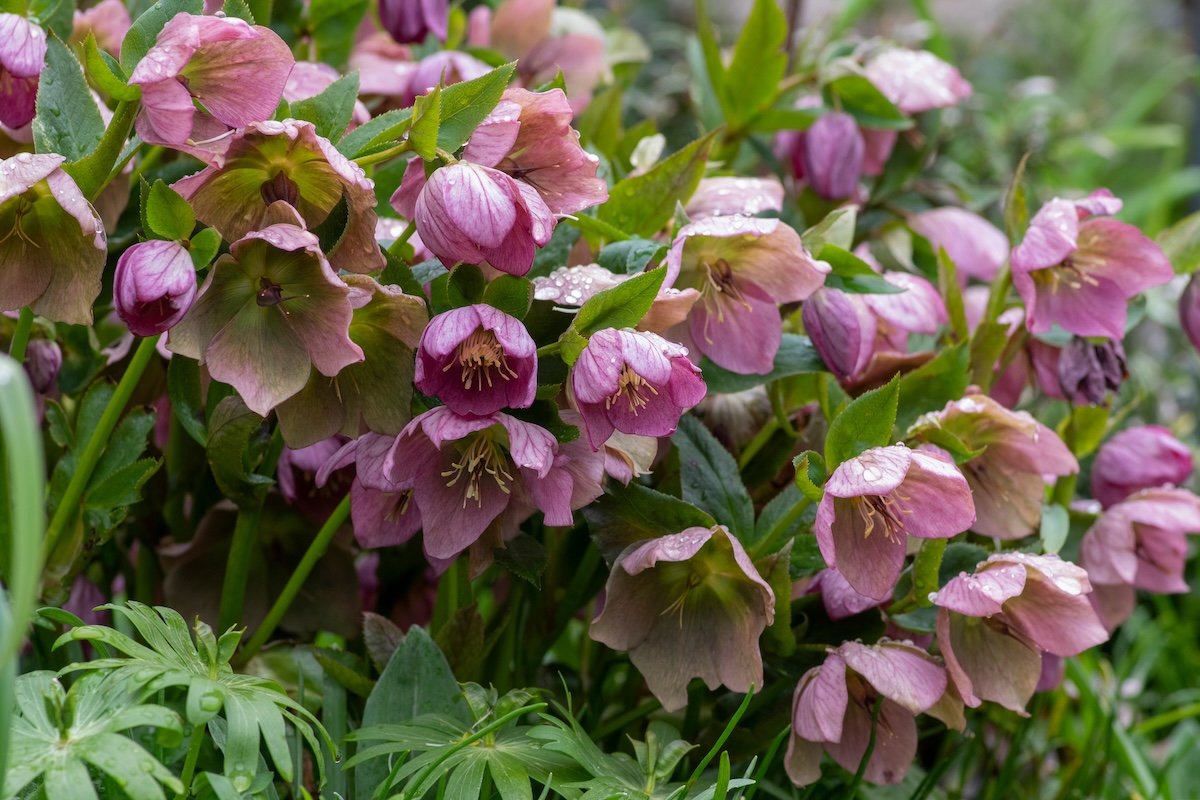
If you get impatient for posies as the winter drags on, put in hellebores now. Summer is too hot for them, so these are among the best perennials to plant in fall. Also known as Lenten rose, this is one of the first flowers to appear each year, often poking through the snow in late winter or early spring with big, bowl-shaped pink, yellow, or maroon blooms. Hardy hellebores do best in slightly shaded spots and neutral to alkaline soils with good drainage. Though deer and rabbits avoid munching on hellebores, the plants’ leaves, stems, and sap are poisonous if ingested.
Best For: Early blooming in a mass planting or ground cover.
USDA hardiness zones: 5 to 8
Size: 12 to 15 inches tall
Light: Dappled sunlight to partial shade
2. Pasque Flower (Pulsatilla vulgaris)
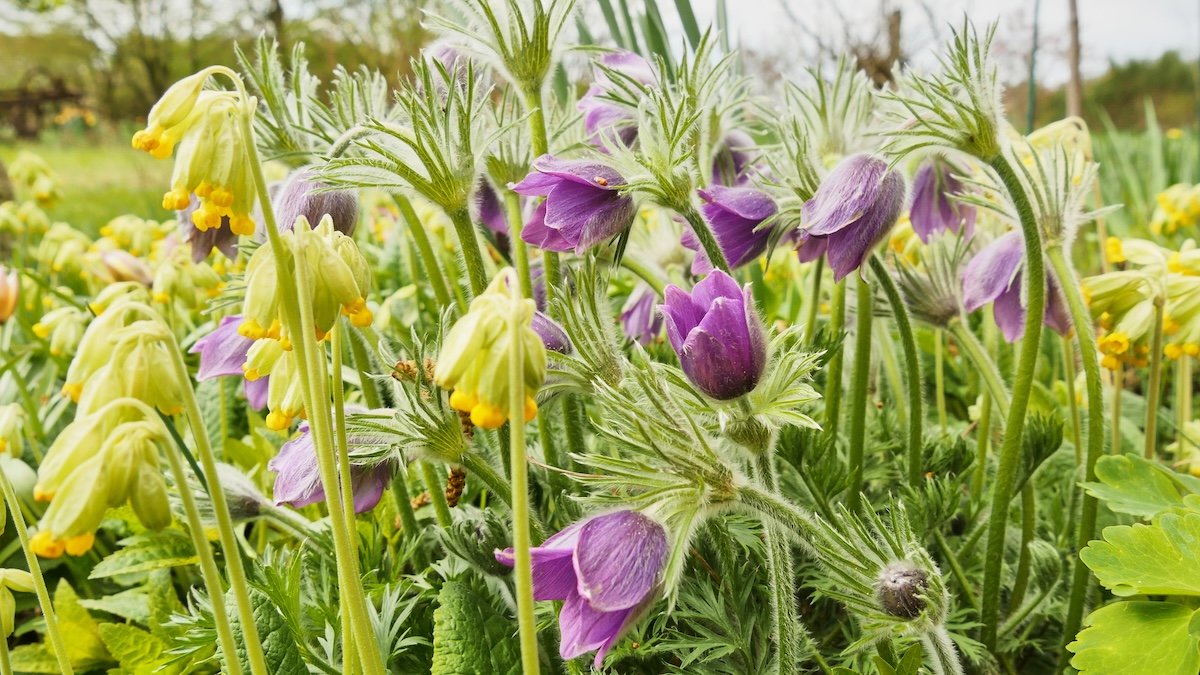
Certainly no shrinking violet, pasque flower is a showstopper with purple bell-shaped blossoms that is native to dry meadows in parts of Europe. Pasque is the Old French word for “Easter,” and this perennial is bound to bloom in time for the holiday (fortunately, it is also rabbit-resistant). The gorgeous garden star, which is also known as windflower and meadow anemone, flourishes in fertile soil with good drainage for easy purple spring flowers. Plant it in August if possible to give it time to produce blooms.
Best For: Winter to early spring color in cooler zones.
USDA hardiness zones: 4 to 8
Size: 4 to 10 inches tall
Light: Partial shade to full sun
3. Creeping Phlox (Phlox subulata)
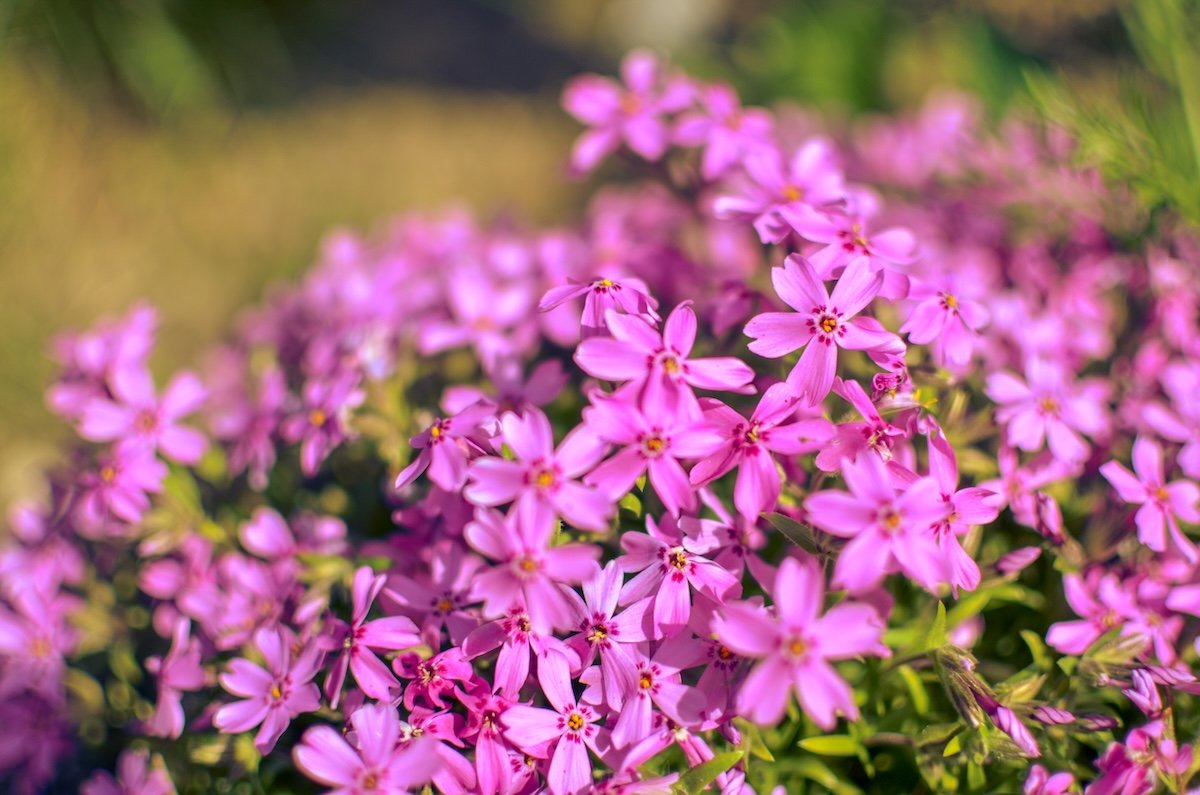
For colorful ground cover, consider creeping phlox. Phlox is the Greek word for “fire,” and this mat-forming plant will set your landscape ablaze with small, flat, fragrant blooms in purple, pink, red, or white beginning in March. It’s a favorite for filling in rock gardens and can be especially pretty draping over a wall. Choose a spot that receives dappled sun and has sandy soil that drains well. Though phlox might need dividing if it gets too crowded, it is a low-maintenance ground cover.
Best For: Colorful spring-blooming groundcover or to drape over walls or rocks.
USDA hardiness zones: 3 to 9
Size: 6 inches tall
Light: Dappled shade to full sun
4. Virginia Bluebells (Mertensia virginica)
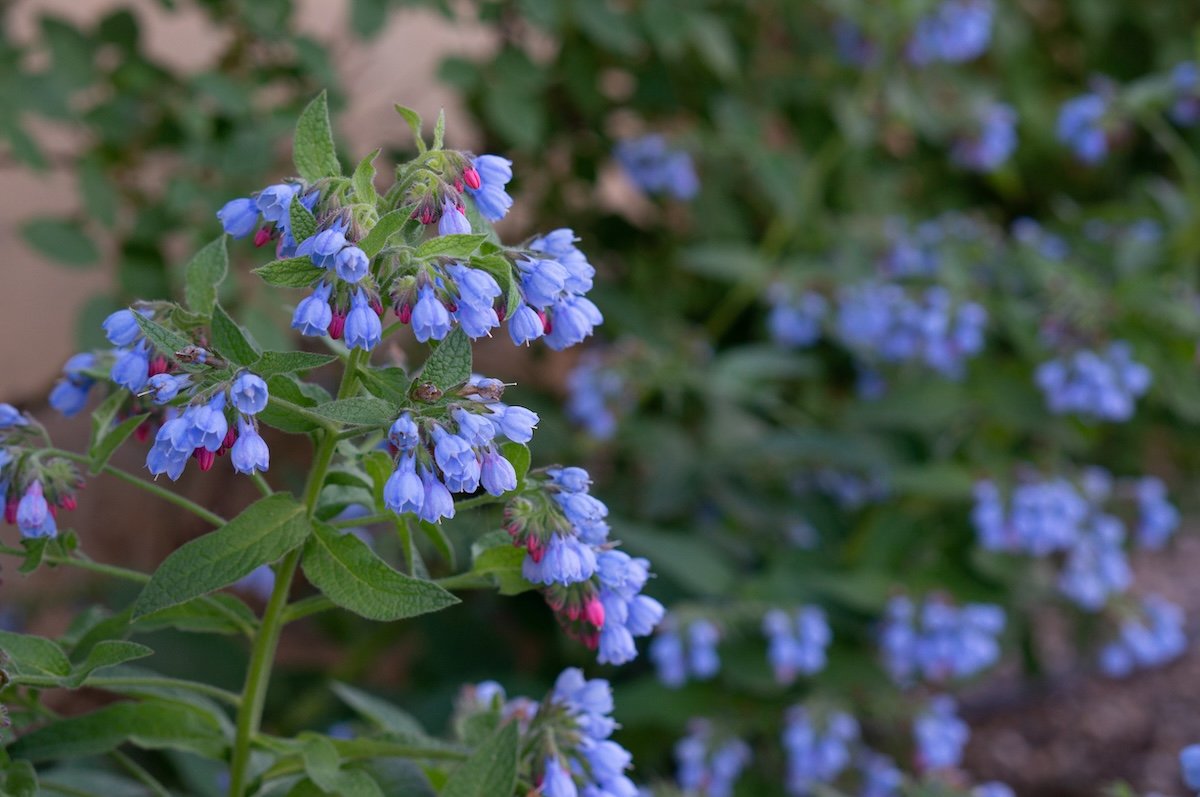
Gardeners who don’t like a lot of toil may love growing Virginia bluebells. Plant them in fall and In early spring, the perennial pops out flowers that start pale and turn a rich, true blue. They thrive in moist soil and mostly shady conditions, eventually establishing a colony of pollinator-friendly ground cover filled with foolproof flowers that require virtually zero care.
Best For: True blue color in moist woodland gardens.
USDA hardiness zones: 3 to 9
Size: 1.5 to 2 feet tall
Light: Partial to full shade
5. Columbine (Aquilegia spp.)
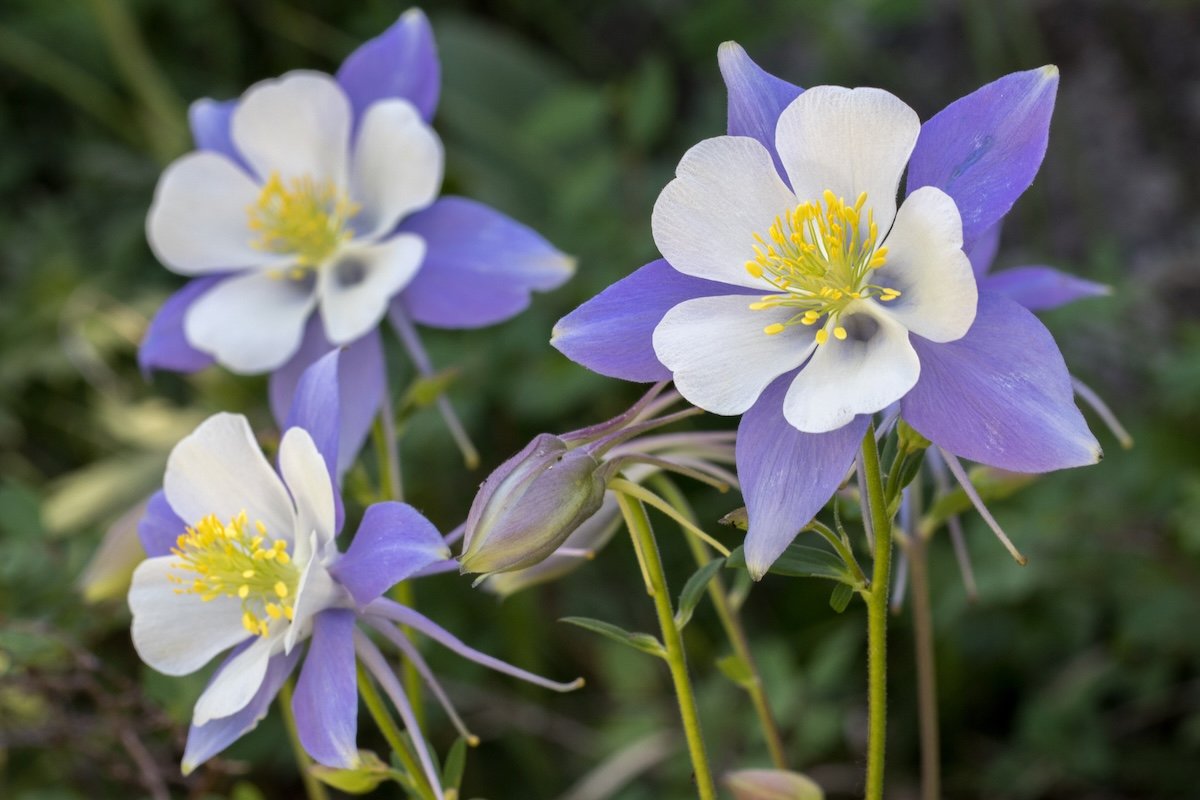
Prized for its graceful, nodding blooms, columbine is a woodland perennial, so it likes a partly shaded location and consistently moist soil. Its white, yellow, red, or blue flowers appear in early spring and bloom through midsummer. These native flowers also are deer- and rabbit-resistant, a plus in gardens visited by wildlife. The only caveat is that columbine is one of the shorter-lived perennials; if you love them, add a few plants every year or so to keep their color going and the butterflies and hummingbirds happy in mountain, forested, and cooler growing zones.
Best For: Spring color in natural and woodland gardens or meadows.
USDA hardiness zones: 3 to 8
Size: 1 to 3 feet tall
Light: Partial shade to full sun
6. Indigo (Baptisia spp.)
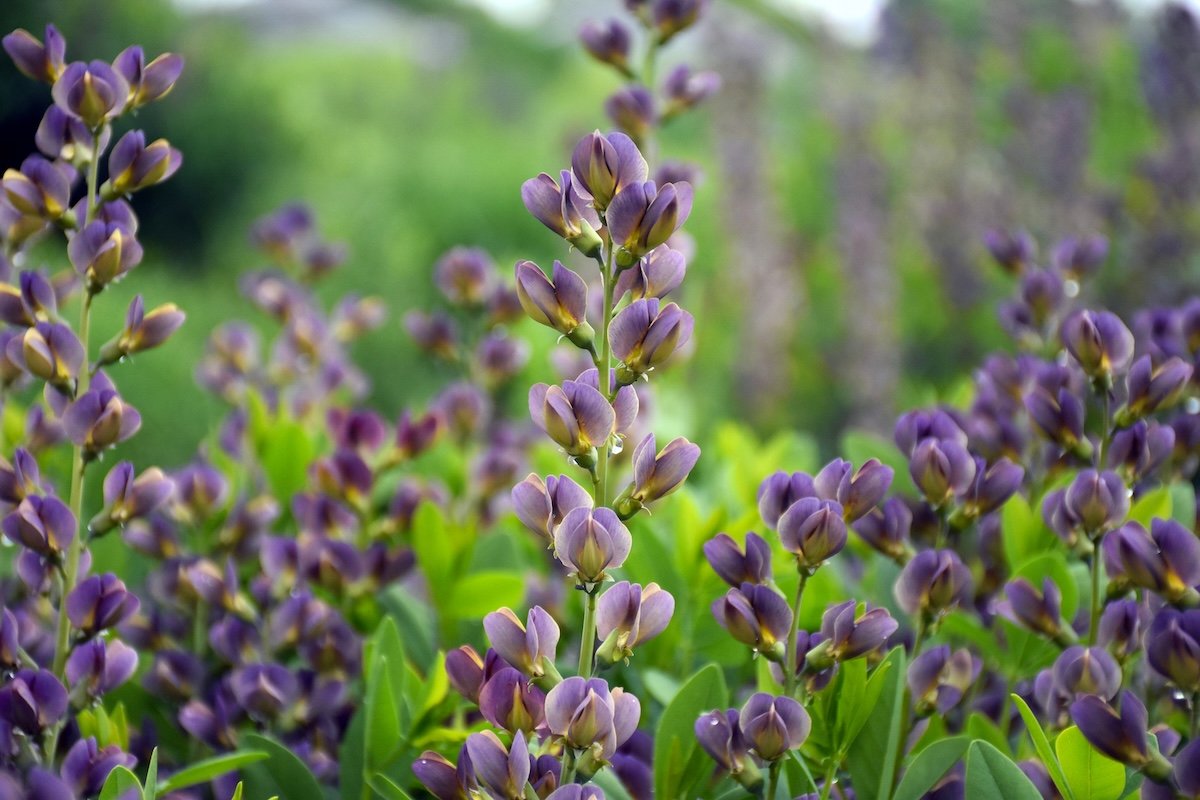
Tall, resilient false indigo (also known as blue wild indigo) flowers in late spring through fall with thick stalks and spires of small dark-blue blooms. If blue isn’t your bag, check out hybrids in other colors, including yellow and pink. False indigo likes full sun but can deal with some shade and is best planted in fall in hotter climates. The drought-tolerant native that’s a member of the pea family beckons bees and butterflies, and is unlikely to get nibbled by deer and rabbits.
Best For: Blue flowers above oval blue-green leaves in drought-tolerant gardens
USDA hardiness zones: 3 to 9
Size: 3 to 4 feet high and wide
Light: Partial shade to full sun
7. Astilbe (Astilbe spp.)
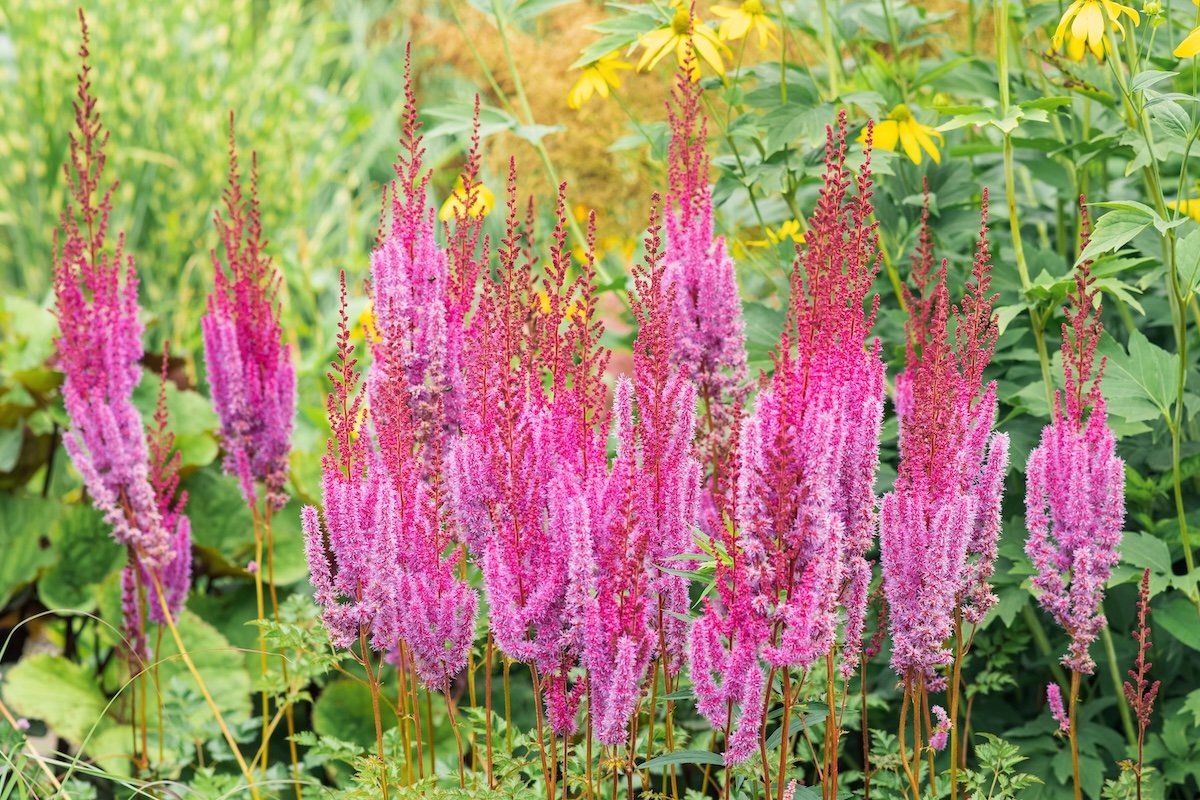
It must be those long, fuzzy, pale-colored flowers that give Astilbe its common nickname: false goat’s beard. This practically trouble-free plant that blooms from spring through summer is especially popular as a shady border plant and for its deer resistance. Its flowers contrast well against broad, leafy foliage. Astilbe thrives in loamy, slightly acidic soil and usually needs dividing every 3 to 4 years.
Best For: Border plant for part shade in gardens with acidic soil.
USDA hardiness zones: 3 to 8
Size: 1 to 4 feet tall
Light: Shade to part shade
8. Sundrops (Calylophus hartwegii)
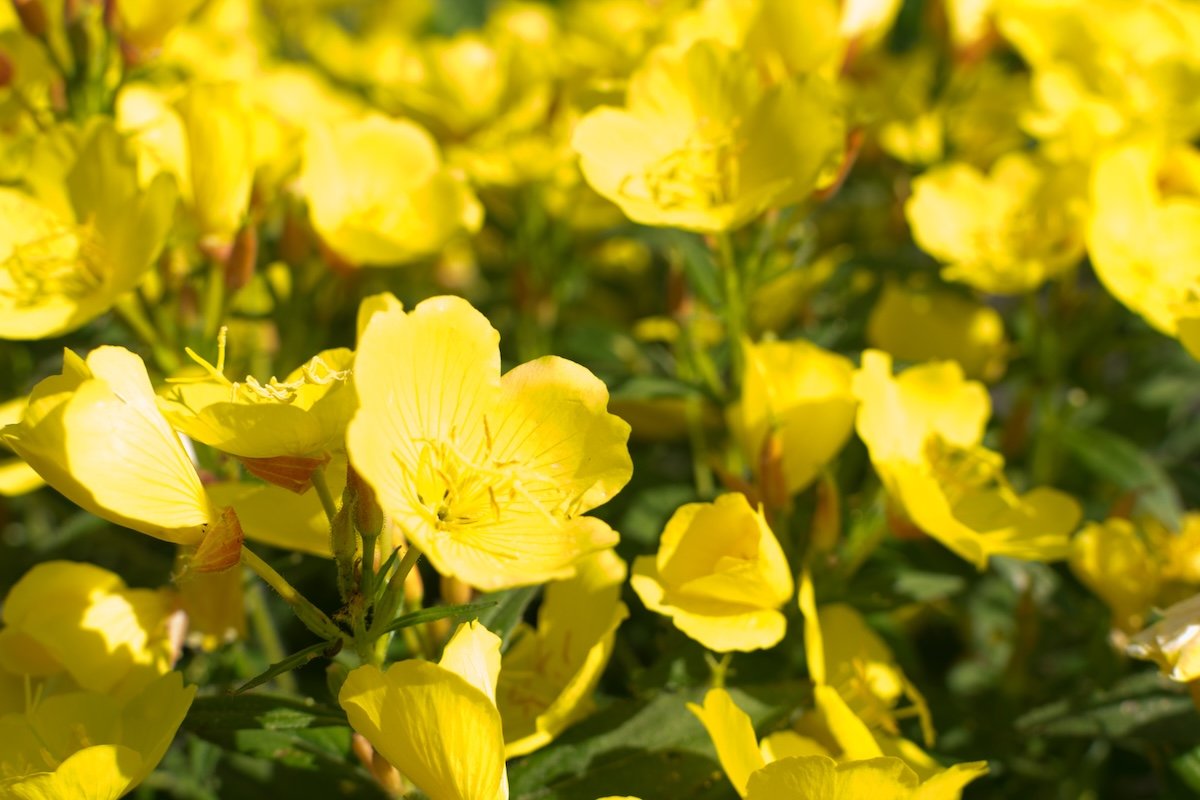
Attention gardeners in the Southwest who can’t get by on cactus alone: Hartweg’s or Texas sundrops are a perfect perennial pick, flowering in March through October. Also called evening primrose, this night-blooming perennial features flowers with bright yellow petals that open around sunset and remain through the next day. Once classified as Oenothera, the low-growing plant thrives in regions with hot prairies and plains. Sow seeds or plant in partly shaded areas for earlier opening times.
Best For: Large yellow flowers that bloom in the evening for rock gardens or moon gardens.
USDA hardiness zones: 5 to 9
Size: 1 to 1.5 feet high and 2 feet wide
Light: Part afternoon shade to full sun
9. Spotted Dead Nettle (Lamium maculatum)
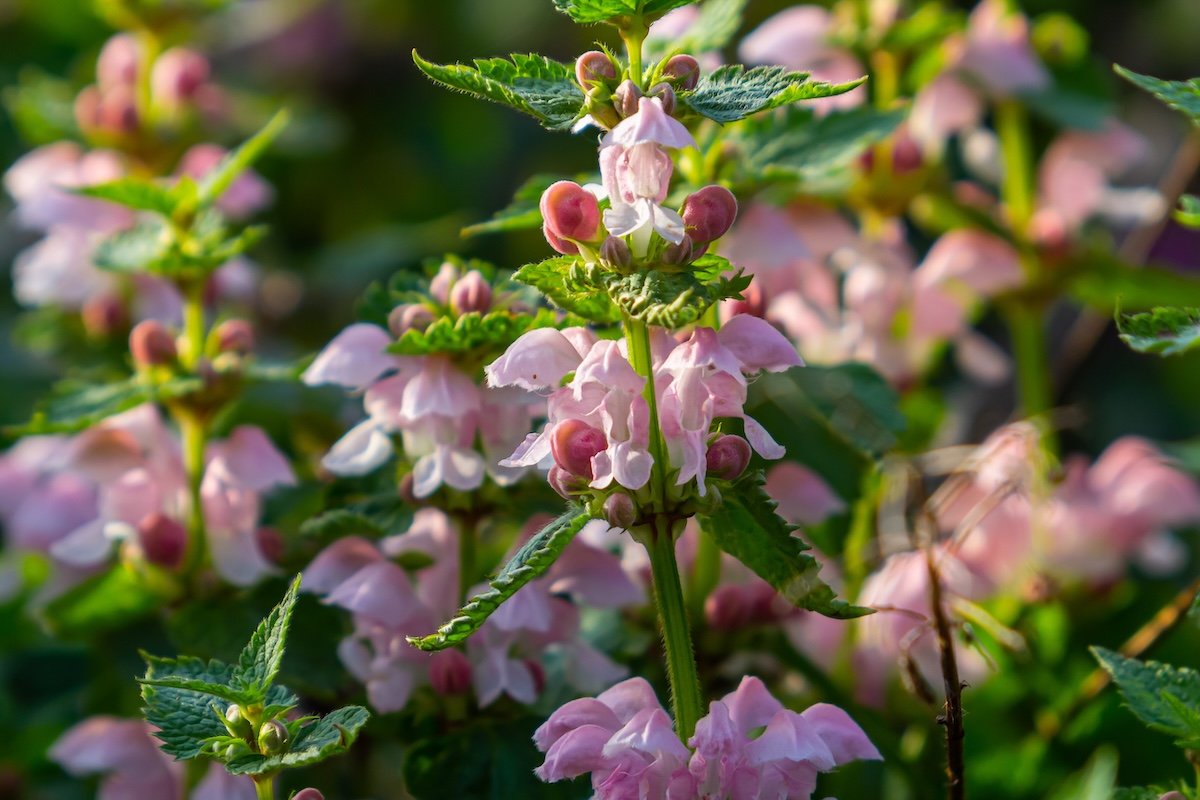
Shade happens—and that’s not a problem for lamium. This lovely yet tough ground cover can easily take on bare spots like those beneath trees. Lamium boasts variegated foliage in silver, gold, and green along with dainty pink and purple flowers that appear in late spring and summer. This rugged plant can thrive in clay and alkaline soils, and it actually prefers dry conditions. Deadhead the flowers once they fade to encourage a new crop of blooms.
Best For: Ground cover under trees or other areas where sun transitions to shade.
USDA hardiness zones: 3 to 8
Size: Less than 12 inches high with 2- to 3-foot spread
Light: Partial to full shade
10. Dianthus (Dianthus spp.)
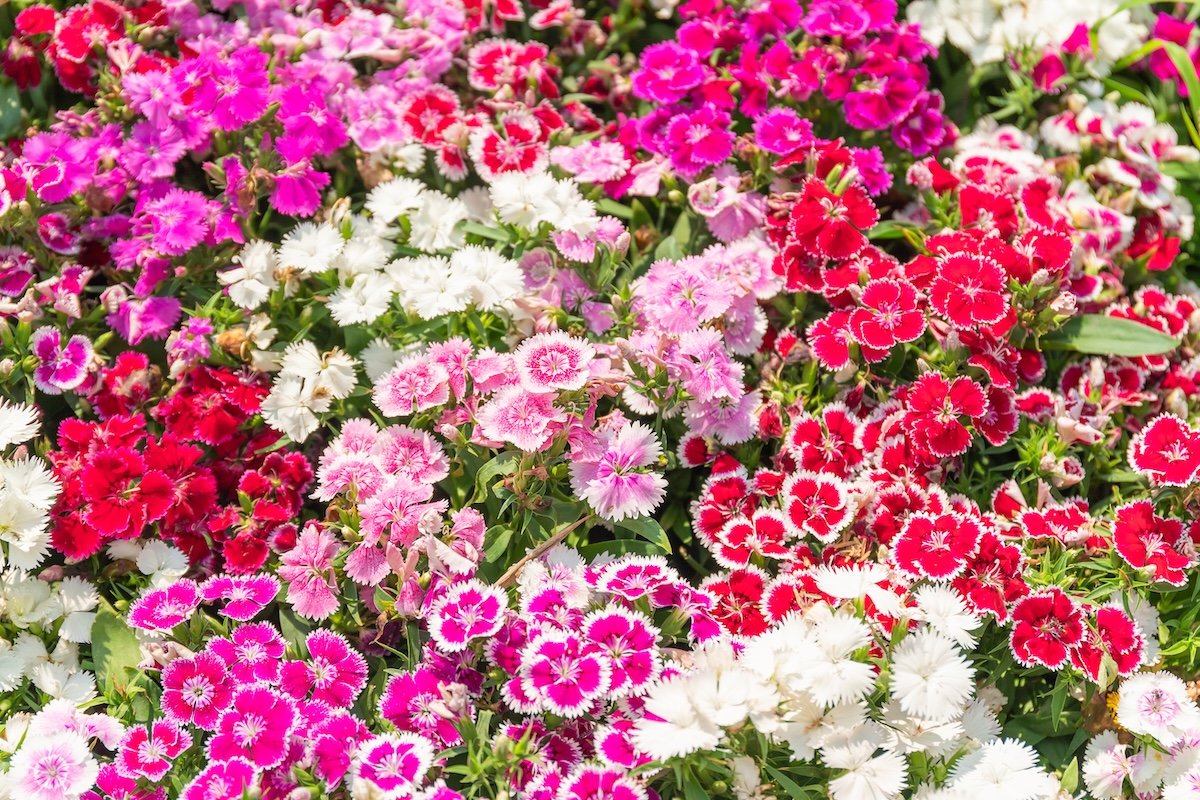
For a flowering perennial that smells as nice as it looks, let dianthus adorn your landscape. Some dianthus species are biennial (living about 2 years) and they require fall planting so they can gain energy over winter. All types offer clusters of spunky spring-through-summer blooms in a range of hues, including pink, white, yellow, and red against blue-green leaves. Dianthus loves sun and well-draining soil, and is ideal for rock gardens, containers, and borders. Its rich nectar will attract pollinators, yet deer and bunnies won’t bother with it.
Best For: Sun-loving flower for rock gardens, containers, and along rock walls.
USDA hardiness zones: 3 to 8
Size: 6 to 12 inches high; 6 to 24 inches wide
Light: Full sun
11. Shasta Daisy (Leucanthemum x superbum)
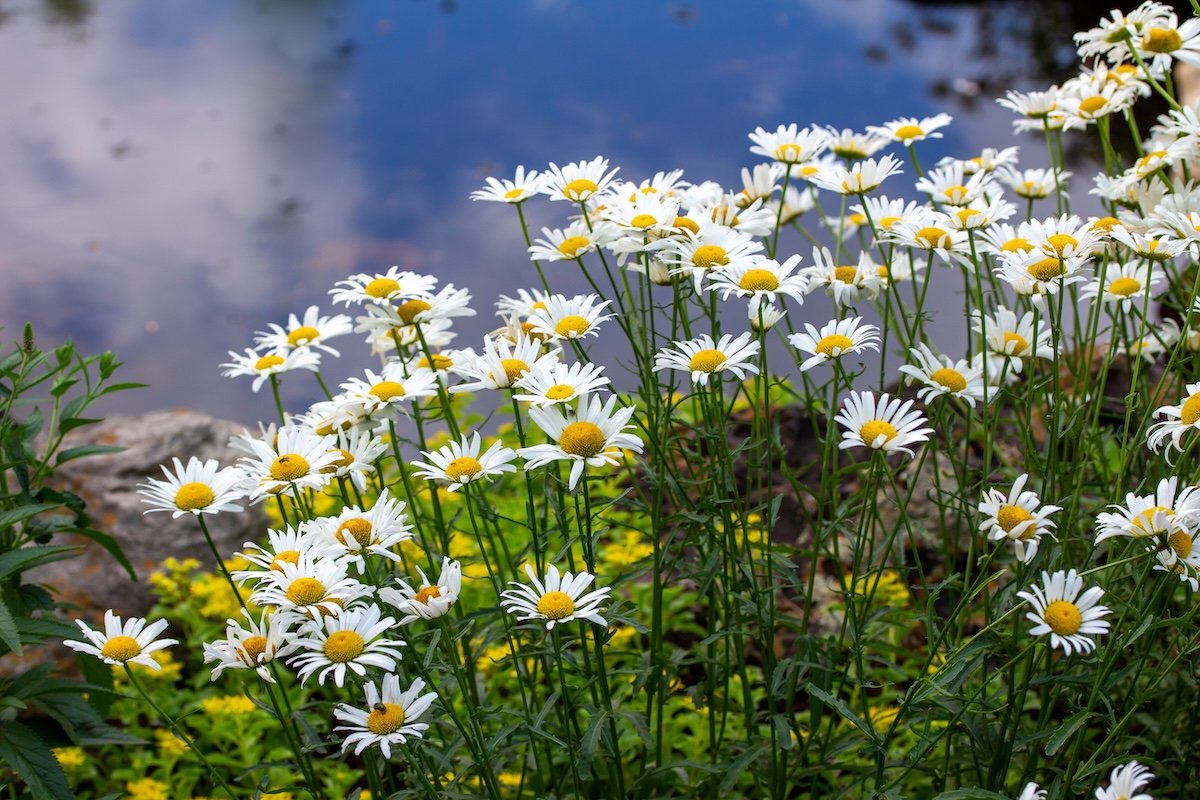
This cold-hardy daisy can add a touch of elegance to borders and garden beds. In late spring and early summer, the daisy comes alive with large white flowers with yellow centers, adding a contrast to other perennial garden flowers. The flowers fare best in rich soil with good drainage and are among perennial flowers to plant in fall (or sow from seeds). Shasta daisy is a flower that can handle heat. And while it does well with regular watering, it handles short periods of drought better than soggy soil. Deadhead spent flowers to keep the blooms coming, and even cut fresh ones for flower arrangements.
Best For: Sunny butterfly or cutting gardens or in containers.
USDA hardiness zones: 4 to 9
Size: 1 to 4 feet high; 1 to 2 feet wide
Light: Full sun
12. Pincushion Plant (Scabiosa columbaria)
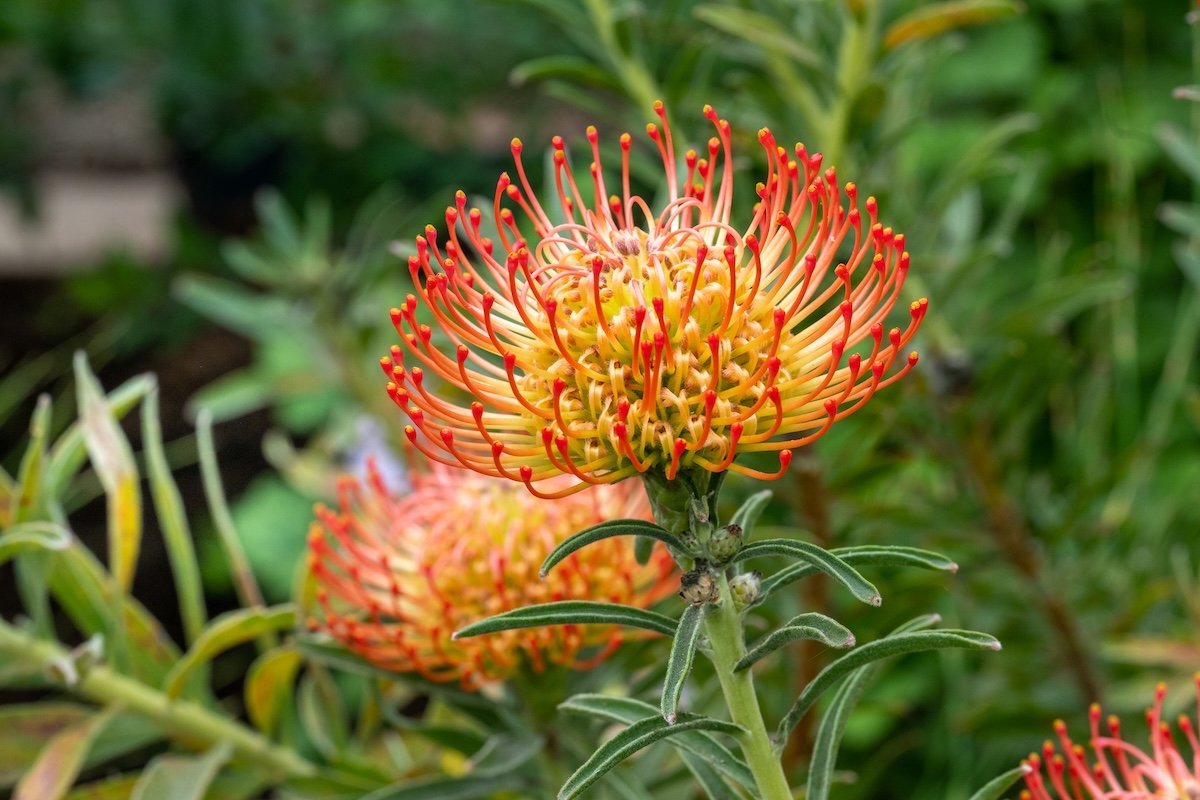
Add a pincushion plant to your garden and enjoy the springtime reward of delicate lavender, pink, or white flowers borne on gangly stalks that rise from a clump of gray-green leaves. Perennial in all but the coldest regions, pincushion flower is moderately drought-tolerant, attracts butterflies and hummingbirds, and thrives in sunny spots of the garden. The cut flowers of this plant make a wonderful, somewhat quirky, addition to a bouquet. Sow the seeds in fall.
Best For: Rock gardens or sunny fairy gardens and along walkways.
USDA hardiness zones: 5 to 9
Size: About 1 foot high and wide
Light: Full sun
13. Purple Coneflower (Echinacea purpurea)
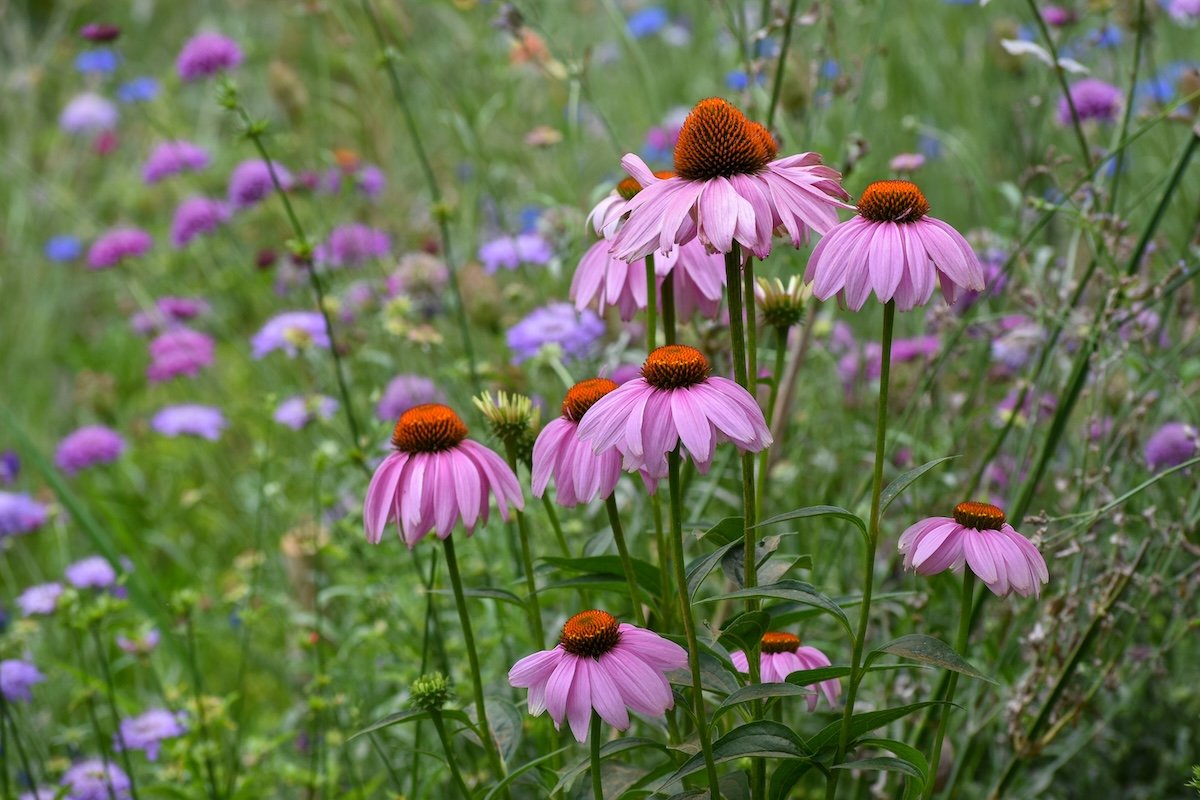
A springtime profusion of plum-colored blooms greets those who plant purple coneflower or sow its seeds thickly in fall. The large, daisy-like flowers sit high above the medium-green foliage on this clumping plant. This hardy perennial can take a bit of shade but needs some sun to produce its stunning blooms. Purple coneflower is not terribly picky about soil, but will do best in soil that drains well. It’s also fairly drought-tolerant once established, and wilts a bit when it needs water. Harvest the blooms to add to indoor flower arrangements.
Best For: Native and butterfly gardens or meadows, or behind lower-growing flowers.
USDA hardiness zones: 3 to 8
Size: 3 to 4 feet high; 1 to 2 feet wide
Light: Full sun but can handle partial shade
14. Tickseed (Anacis or Coreopsis spp.)
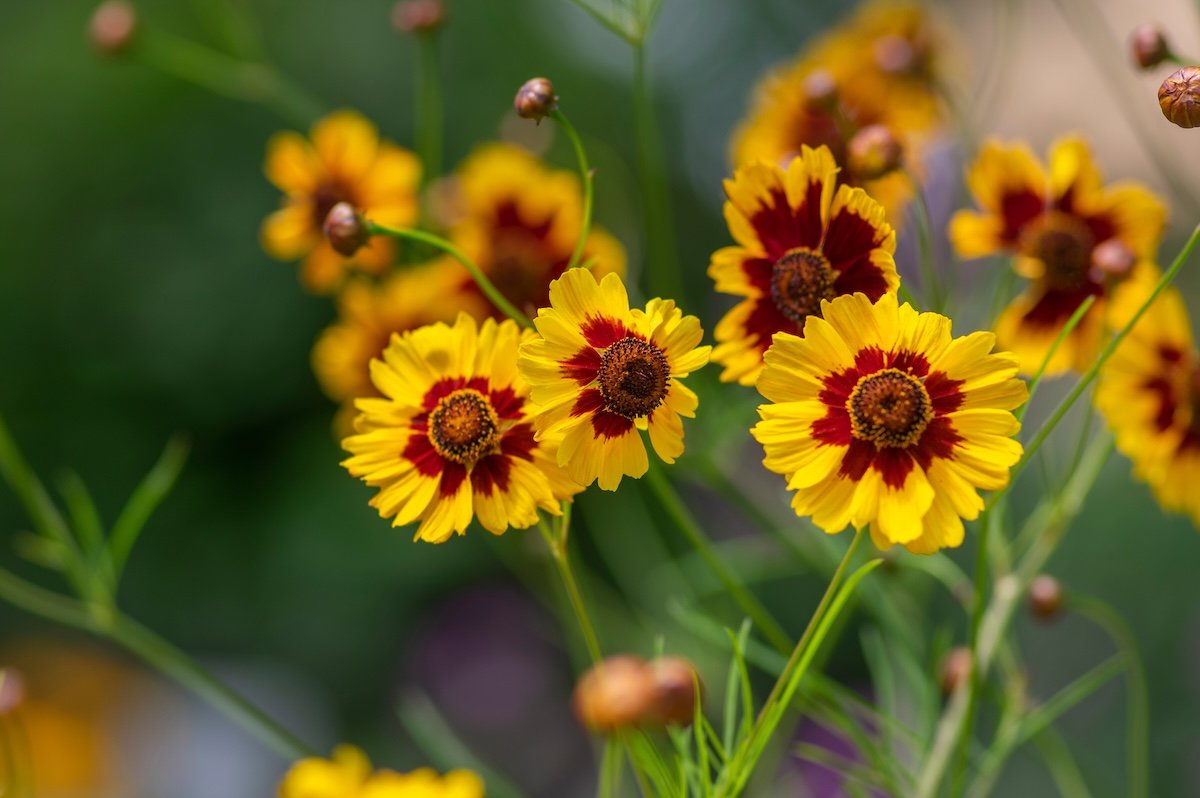
Occasionally referred to as tickseed, and recently reclassified as Anacis, this pretty flowering plant is most commonly known as coreopsis. It comes in both annual and perennial varieties. If you’re planting in the fall, be sure to look for a perennial variety. The profuse bloomer produces scads of yellow flowers throughout spring and summer, and even into autumn. Deadhead spent flowers to encourage this long bloom time. Coreopsis is drought-tolerant and deer-resistant, but it will attract pollinators and songbirds.
Best For: Natural areas in rocky or sandy soil, rock gardens, and butterfly gardens.
USDA hardiness zones: 3 to 9
Size: 3 to 4 feet tall; 1 to 2 feet wide
Light: Full sun or light shade
15. Whirling Butterflies (Oenothera lindheimeri)
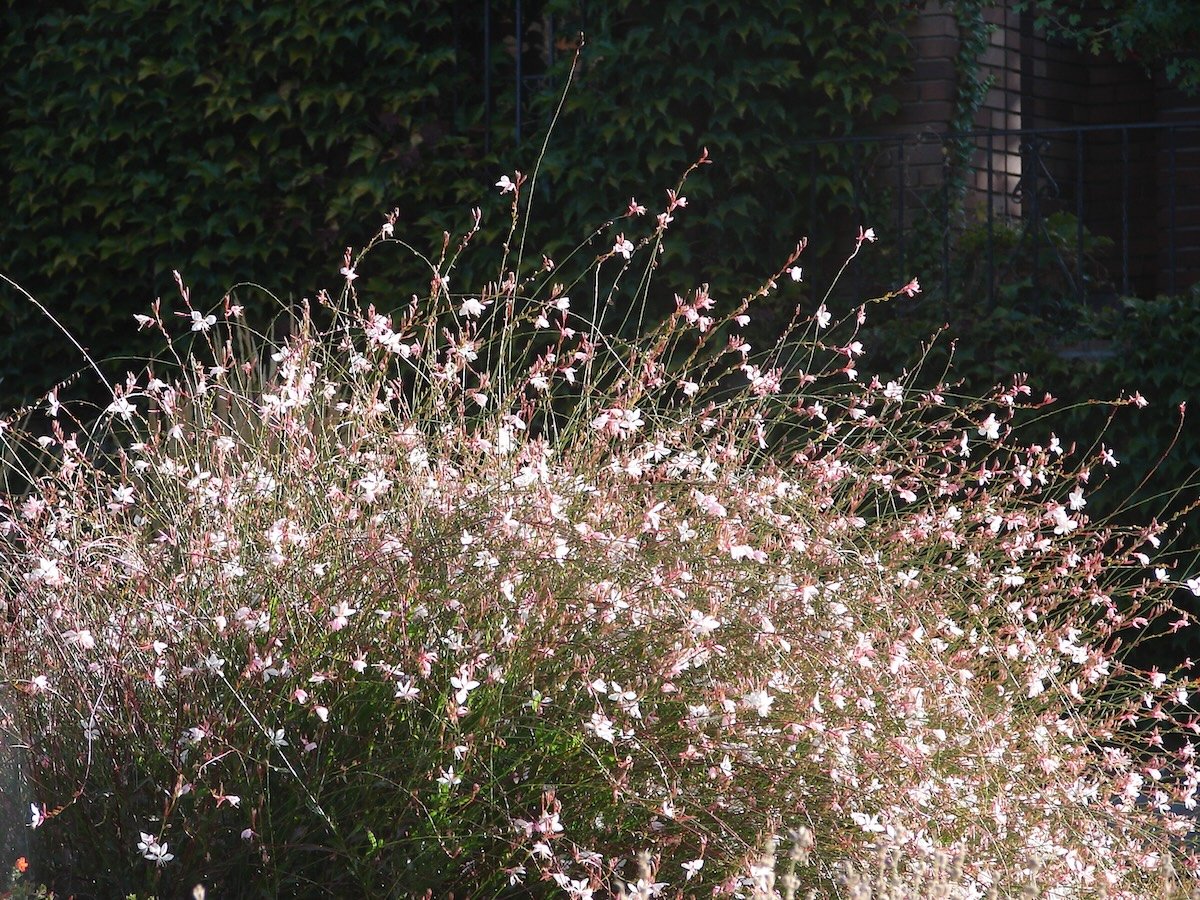
The delicate, intricate flowers of Oenothera lindheimeri (also known as gaura or whirling butterflies), are said to resemble supercharged butterflies. With white-tipped pink “wings” that surround long white stamens topped with yet more pink, gaura provides an elegant feature in the garden. This loose, shrubby plant is native to Texas, Louisiana, and Mexico, and it’s drought- and heat-resistant.
Best For: Native or prairie-style gardens or areas with sandy, well-draining soil.
USDA hardiness zones: 5 to 9
Size: Flower stems to 4 or 5 feet; about 2 feet wide
Light: Full sun
16. Catmint (Nepeta spp.)
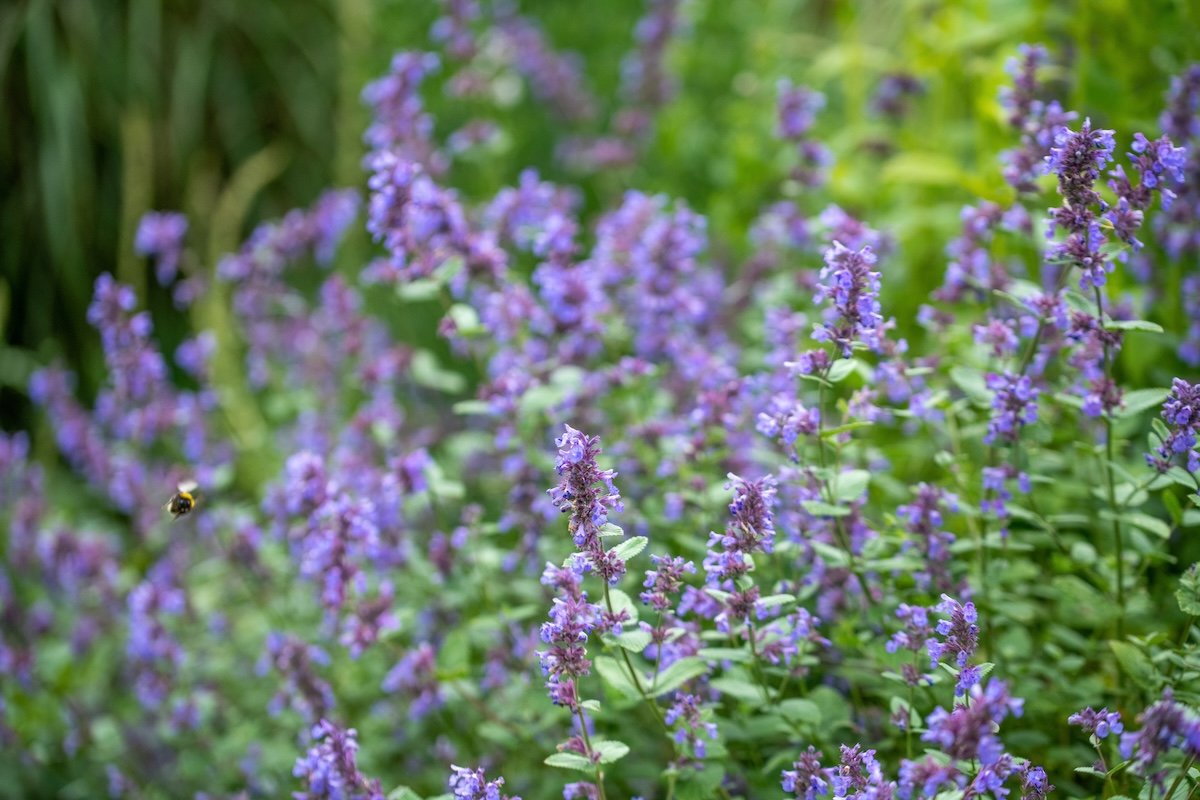
This member of the mint family offers both attractive purple flowers for bees in late spring and aromatic foliage is considered an herb that can go into teas or savory dishes. It’s a reliable plant that can stand alone in a rock garden or spread to form a border along a path. Catmint needs no fertilizer and will rebloom if you shear the plants to remove the first bloom of flowers. Plant it in fall in time to establish some roots before frost. It prefers good drainage and can thrive in rocky or sandy soil. It’s also drought-tolerant and deer-resistant.
Best For: Borders and walkways or in pollinator rock gardens.
USDA hardiness zones: 3 to 8
Size: 1 to 3 feet high, 1 to 2 feet wide
Light: Full sun
17. Bleeding Heart (Lamprocapnos spectabilis)
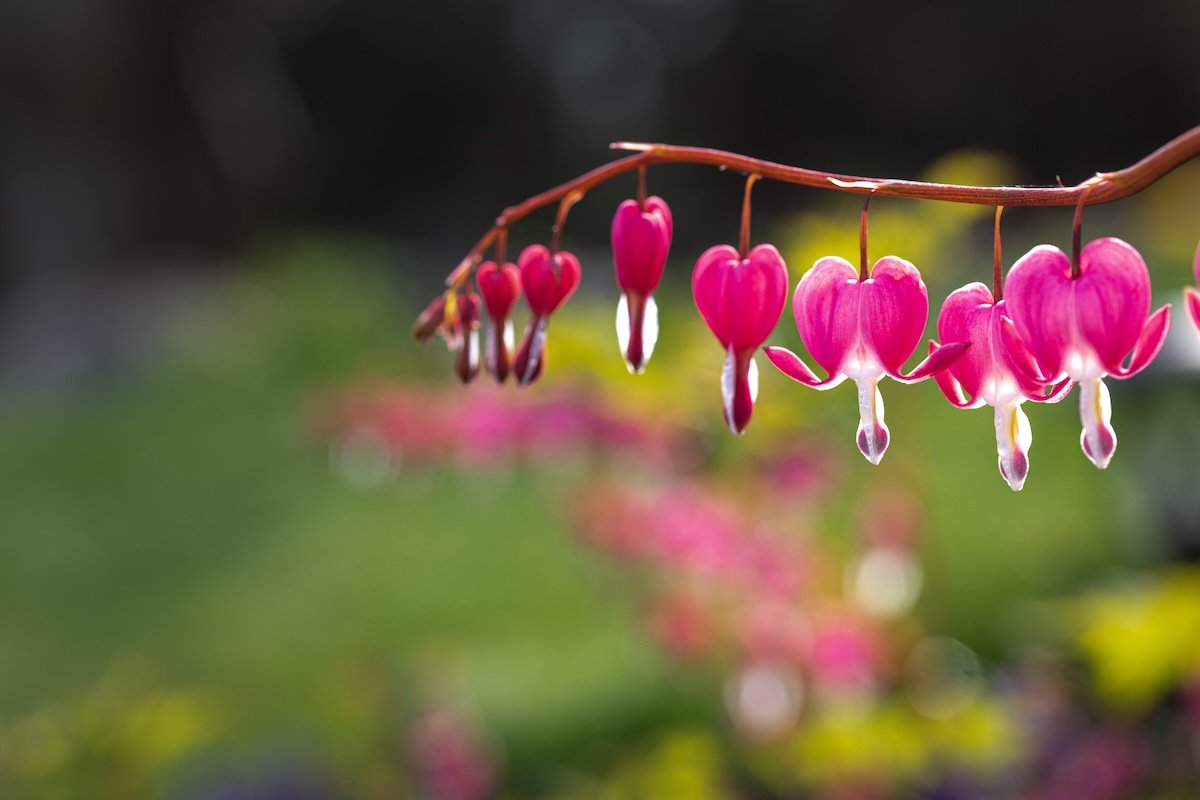
Add bleeding heart to your garden in fall, and come springtime it will bring arching stems bearing delicate 1- to 2-inch-long heart-shaped pink flowers. An herbaceous, bushy plant formerly known as Dicentra, bleeding heart has clumps of foliage that can go dormant in heat while flower stalks rise above it. Plant this one in part shade, in moist, well-draining soil with plenty of organic material. As summer wears on, bleeding heart will likely retreat, but it will be back on display after winter subsides.
Best For: Woodland gardens, interplanted with foliage ground covers.
USDA hardiness zones: 3 to 9
Size: 2 to 3 feet high and about 2 feet wide
Light: Partial to full shade
18. Lantana (Lantana camara)
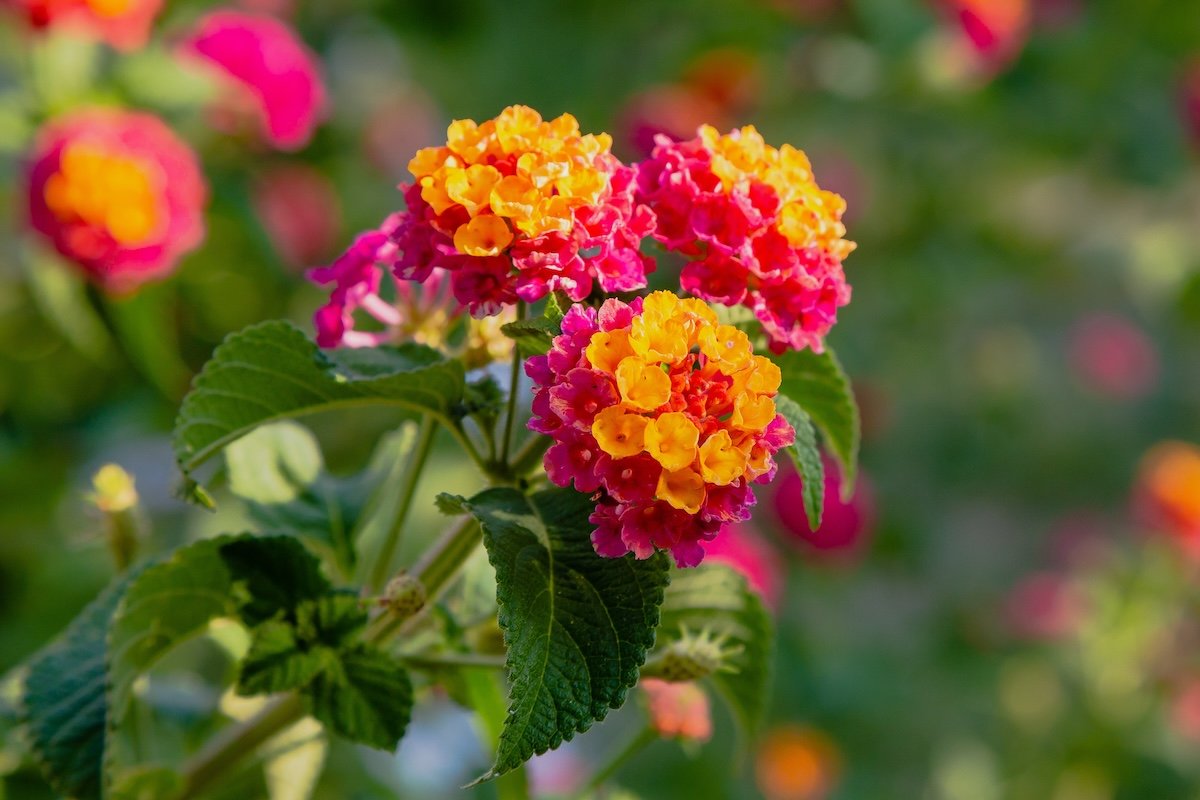
A sprawling, almost vine-like shrub, lantana decorates hot landscapes in late spring and summer with masses of delicate flower clusters in purple, orange, pink, yellow, red, or white. It is drought-tolerant once established and although it loves heat, it can feature in summer annual flower beds or containers in slightly cooler climates. Depending on where it grows, lantana can become shrub size. Butterflies flock to this hardy plant, which is deer-, pest-, and disease-resistant. Bear in mind that lantana is toxic to livestock, cats, and dogs.
Best For: Hot areas and drought-tolerant gardens to attract butterflies and hummingbirds.
USDA hardiness zones: 7 to 11
Size: 1 to 6 feet high; 3 to 5 feet wide where perennial
Light: Full sun
19. Yarrow (Achillea millefolium)
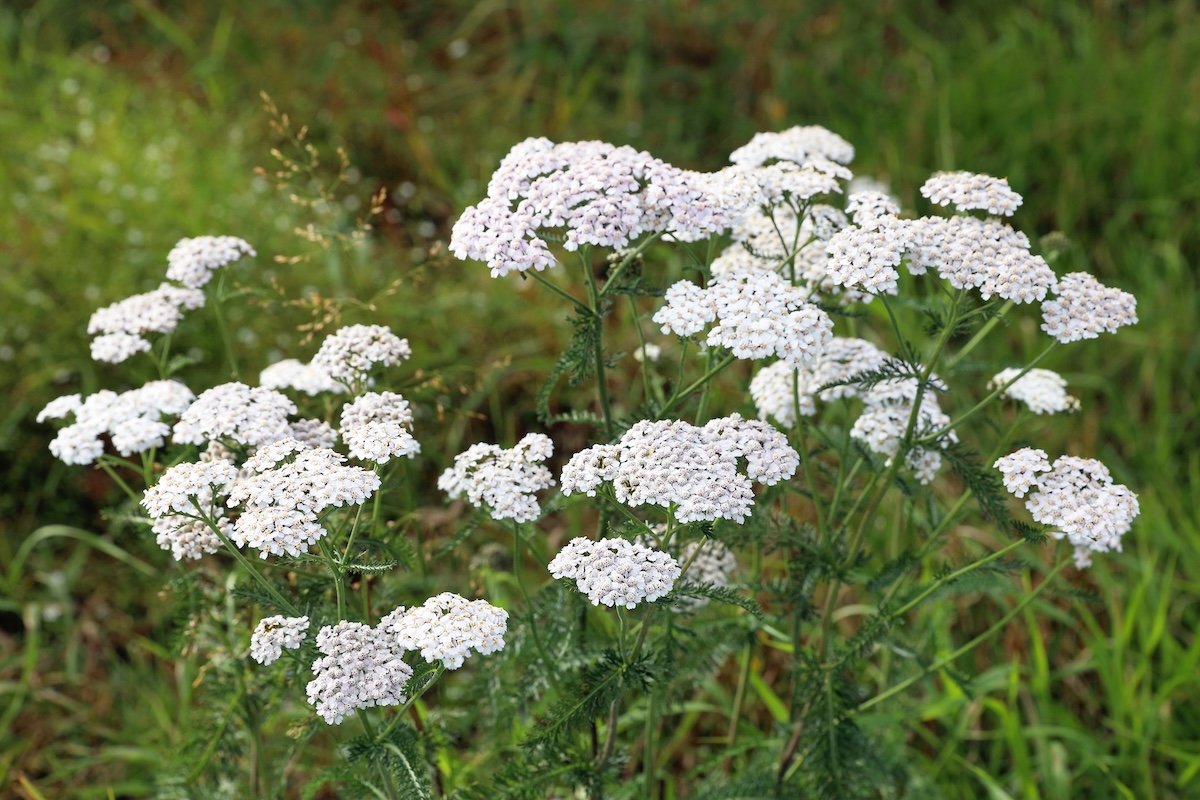
Yarrow blooms from spring to fall with masses of umbrella-shaped flower heads gracing the tops of tall stems bearing fern-like foliage. Popular as a cut flower, yarrow is also beautiful in the landscape. You’ll find yarrow in a rainbow of colors, including yellow, pink, red, white, and gold. It’s drought- and heat-tolerant, but yarrow seeds need a cool period to germinate, so it’s best to sow seeds in the fall. Yarrow can spread aggressively, so plant it in a place where you’d like to see a sea of color.
Best For: Naturalized areas like meadows and drought-tolerant butterfly gardens.
USDA hardiness zones: 3 to 9
Size: 1 to 3 feet high and wide
Light: Full sun
20. Cushion Spurge (Euphorbia epithymoides)
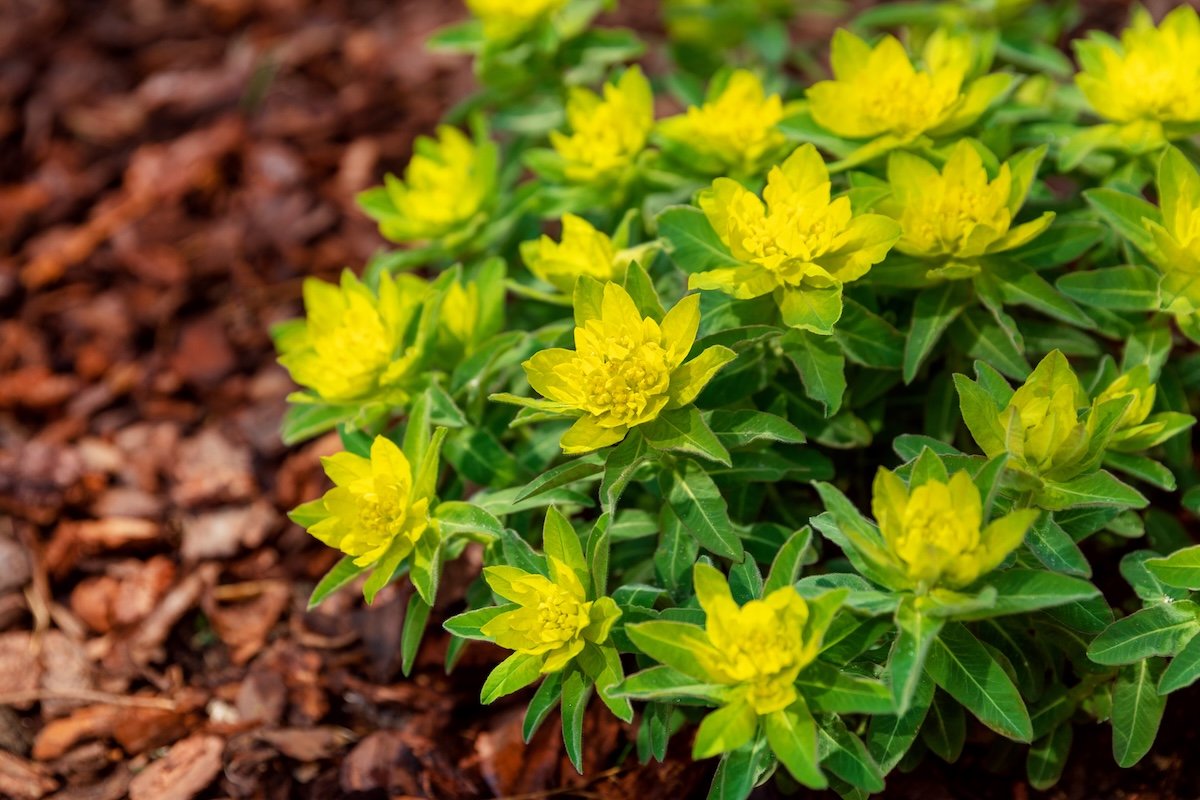
Many spurge types offer early spring color, and cushion spurge is no exception. Its small yellow flowers are surrounded by yellow/pale green bracts, creating the impression of a larger flower. The mounded plant can grow in poor soil like sand or in loamy soil. Although the plant thrives in sun, it might need a bit of afternoon shade in hot climates. It’s drought-, deer-, and pest-resistant, and easy to grow and maintain. However, its milky sap is slightly toxic and can cause itching on contact.
Best For: Small spaces in rock or cottage gardens, containers.
USDA hardiness zones: 4 to 8
Size: 1½ feet high and wide
Light: Full sun with some partial shade
21. Oriental Poppy (Papaver orientale)
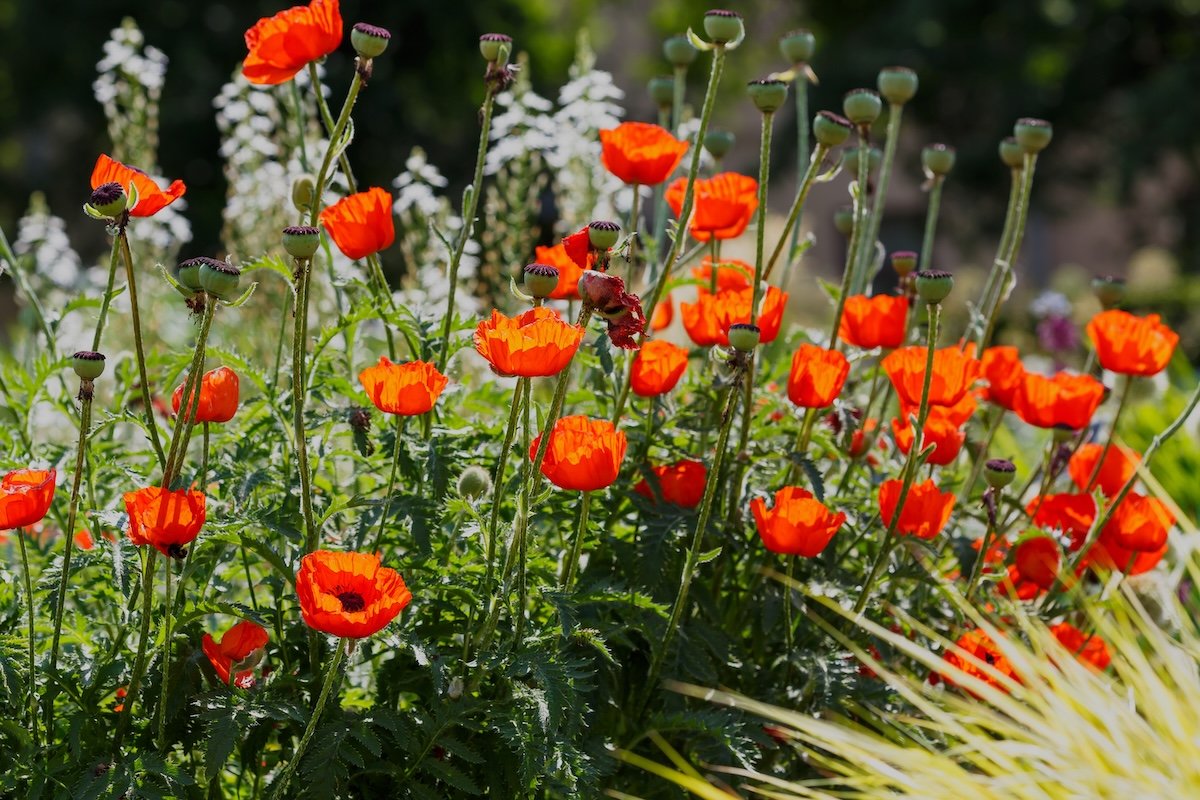
Create the feeling of your own “poppy field” or Georgia O’Keefe painting with oriental poppies. Though the flower petals are paperlike, they are large and full of interest around the center. Look for varieties in classic deep red, orange, coral, or even white. Sow seeds or plant nursery transplants about a month before your first expected frost to aim for blooms in late spring to early summer. Note that these flowers do best in cooler and drier regions of the country and require soil that drains well.
Best For: Asian or cottage garden mixed in with late summer bloomers
USDA hardiness zones: 3 to 7
Size: 3 feet high and nearly 2 feet wide
Light: Dappled to full sunlight
22. Mexican Bush Sage (Salvia leucantha)
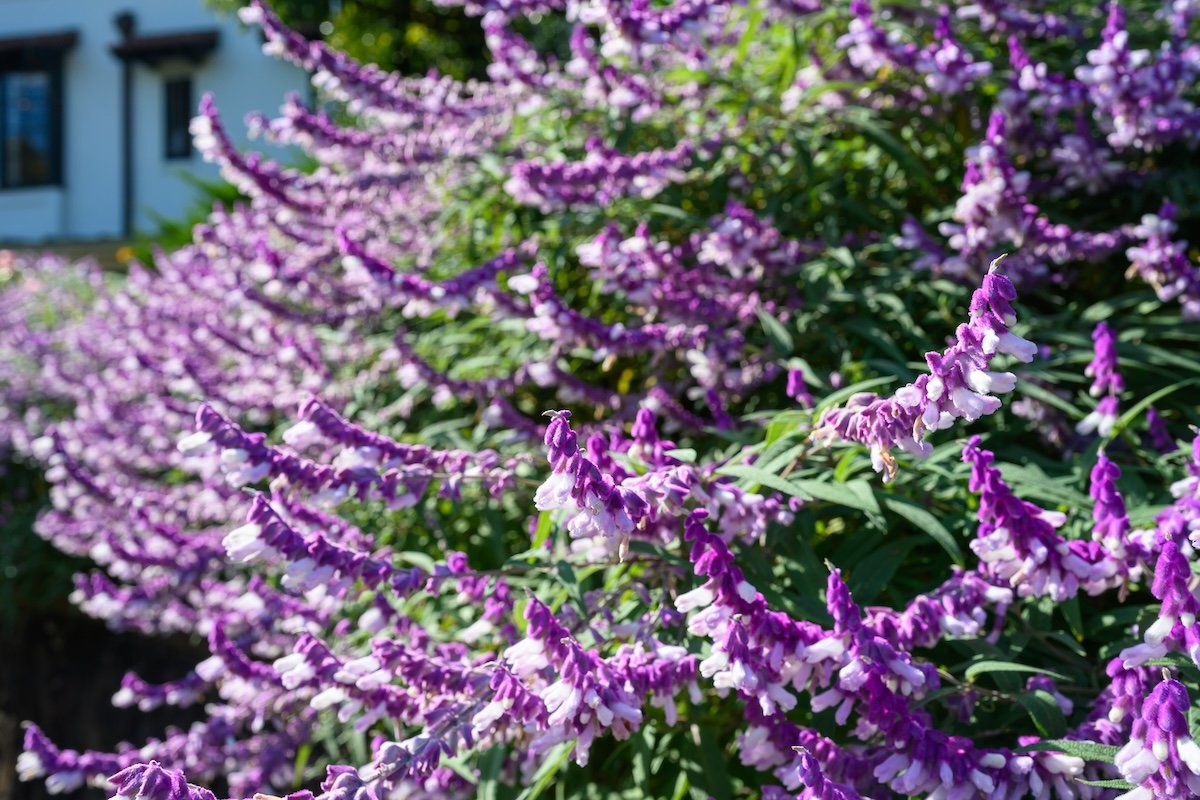
Gardeners in warm regions might want to consider planting Mexican bush sage or other salvias in fall to establish good root systems before spring. In its northern ranges, this big beauty might go all the way to the ground in winter, but it will come roaring back in spring. Mexican bush sage forms an ever-expanding clump of stalks bearing long leaves and velvety purple flower spikes. It thrives in sunny, hot locations and is drought-tolerant once established.
Best For: Borders, mass plantings, or butterfly gardens, especially on slopes.
USDA hardiness zones: 7 to 10
Size: 3 feet high and 3 feet wide
Light: Partial shade to full sun
Tips for Planting Perennials in the Fall
Spring is typically the time that plants are plentiful from nurseries, and that’s usually when many gardeners are ready to improve their landscapes. But there are garden centers and online sellers that have stock through fall (and even end-of-season sales) or seeds for fall sowing. Keep these tips in mind for fall planting:
- Try to plant 6 weeks before your expected first frost and while the ground is still warm (but not on a searing hot day).
- There is no need to add fertilizers when planting these flowers, although a top-dressing of compost or a slow-acting organic fertilizer can help; avoid high-nitrogen or rapid-acting fertilizers.
- After planting, add a 2- to 3-inch layer of organic mulch around the base of the plant to help insulate the soil. You can repurpose fallen leaves to add above compost as mulch.
- Water your new plants or seeds frequently the first few weeks if rain is scarce; continue watering until the ground freezes.
FAQ
Q. How late in the fall should you plant perennials?
The earlier you can plant spring-blooming perennials in fall, the better. This typically is 6 weeks before the average first frost, so you can often plant perennials in September. This gives plants warm soil with cool nights and time to set roots, which can help prevent frost heave. This happens when thawing of frozen ground pushes plants up out of the soil.
If some roots have taken hold and you have mulched the ground, the plant has a better shot. However, avoid planting on hot days or less than a month before frost is expected.
Q. What is the 3-year rule for perennials?
Although rule is a strong word for this principle and doesn’t apply to all flowering perennials, knowing about the “3 years” can help gardeners care for their new plants with realistic expectations about how they will look.
• The first year, most perennials need to grow roots, so they might not show much growth above the ground or flower as advertised; give them extra water to help the roots establish.
• In their second season, plants begin to grow a little more but modestly and might display more flowers.
• By the third year, perennials begin to shine and flower as expected; they also might need pruning.
Q. Is fall a good time to transplant perennials?
Yes, fall is a good time to plant many, but not all, perennials. One reason is that you have lived with your landscape for a summer and might be ready to add some color for the next year. Most of all, the combination of still-warm soil but cooler nights helps transplants ease into their new home without the stress of heat or cooler spring soil so the roots have a chance to establish for better spring health. Just be aware of your average first frost date and be sure to count backward when adding spring-flowering plants in fall.
Q. Which perennials should you not plant in the fall?
It’s best to wait and plant bare-root plants in late winter to early spring while they still are dormant, not in fall. This can include roses and other shrubs or fruiting trees. Perennial bulbs to plant in fall will bloom in spring, but wait until spring to plant summer-flowering bulbs. Some flowering plants are less hardy to cold and freeze than others. It is best to avoid planting those in fall, especially if you are on the low edge of their hardiness zone. If you live in a cold, damp area, you might want to wait until spring to transplant any flowering perennial subject to root rot, which can occur when roots sit in moist, cool soil.